Geranium 'Blushing Turtle'PBR
cranesbill 'Blushing Turtle'
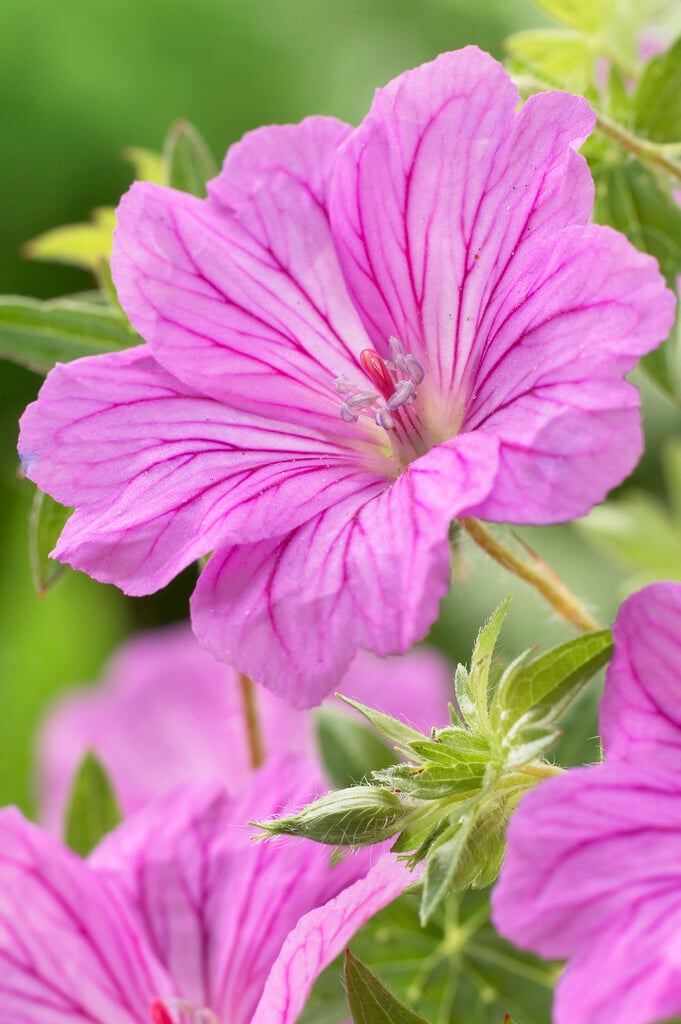
A vigorous, mound-forming to spreading, herbaceous perennial with finely divided, mid-green leaves. From summer to early autumn it produces an abundance of pink flowers with darker pink veins.
Buy this plant
Size
Ultimate height
0.1–0.5 metresTime to ultimate height
2–5 yearsUltimate spread
0.5–1 metresGrowing conditions
Moisture
Moist but well–drained, Well–drainedpH
Acid, Alkaline, NeutralColour & scent
| Stem | Flower | Foliage | Fruit | |
| Spring | Pink | Green | ||
|---|---|---|---|---|
| Summer | Pink | Green | ||
| Autumn | Green Red | |||
| Winter |
Position
- Full sun
- Partial shade
Aspect
East–facing or North–facing or South–facing or West–facing
Exposure
Exposed or Sheltered Hardiness
H5Botanical details
- Family
- Geraniaceae
- Native to GB / Ireland
- No
- Foliage
- Deciduous
- Habit
- Clump forming, Matforming
- Genus
Geranium can be annuals, biennials and perennials, herbaceous or evergreen, with rounded, usually palmately lobed or divided leaves, and lax inflorescences of rounded, 5-petalled flowers
- Name status
Accepted
How to grow
Cultivation
Grow in moderately fertile moist but well-drained soil in sun or partial shade.
Propagation
Propagate for home use by division in spring and by basal softwood cuttings in early to mid spring using bottom heat.
Suggested planting locations and garden types
- Cottage and informal garden
- Wildlife gardens
- Low Maintenance
- Ground cover
- Flower borders and beds
Pruning
Cut back flowered stems to the base after flowering is finished. In autumn to late winter cut back withered stems.
Pests
May be susceptible to damage by slugs and snails, sawfly and vine weevil.
Diseases
May be susceptible to powdery mildew in dry conditions.
Get involved
The Royal Horticultural Society is the UK’s leading gardening charity. We aim to enrich everyone’s life through plants, and make the UK a greener and more beautiful place.