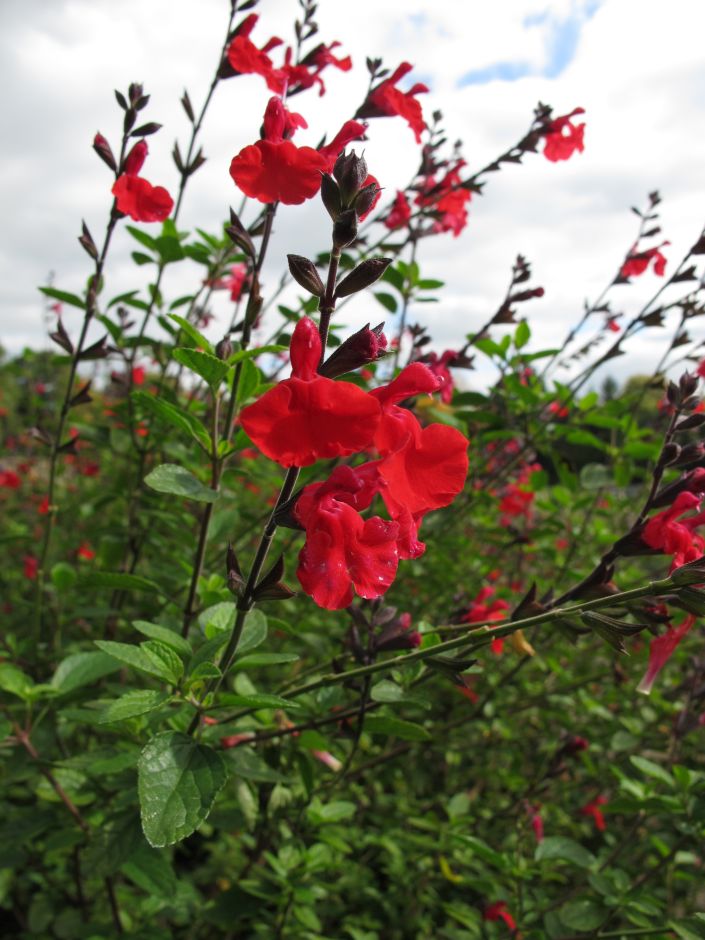
Salvia 'Jezebel'

RHS Plant Profile
sage 'Jezebel'
sage 'Jezebel' RHS / Joanna Kossak

Synonyms

Salvia 'Jezabel'

Award of Garden MeritPlants for pollinators
Shrubs

A bushy subshrub to 90cm tall, evergreen if not cut back by the frosts, with aromatic, small, ovate, mid to dark green leaves. Large bright cherry-red flowers are borne in terminal racemes over a long period from late spring to autumn

Position

Full sun

Soil Types

Chalk, Loam, Sand

Max Height

0.5-1 metres

Max Spread

0.5-1 metres

Size

Time to Maturity
2–5 years
Max Spread
0.5-1 metres
Max Height
0.5-1 metres

Growing Conditions

Chalk Loam Sand
Moisture
Moist but well–drained or Well–drained
pH
Acid or Alkaline or Neutral

Position

Full sun
Aspect
West–facing or South–facing
Exposure
Sheltered
Hardiness
H3
Drought Resistance
Yes

Colour & Scent

Fragrance Foliage
Season Stem Flower Foliage Fruit
Spring
Summer
Autumn
Winter

Botanical Details

Family
Lamiaceae
Native to GB/Ireland
No
Foliage
Evergreen
Habit
Bushy
Genus
Salvia can be annuals, biennials, herbaceous or evergreen perennials, or shrubs. They have paired, simple or pinnately lobed, often aromatic leaves and 2-lipped flowers in whorls, forming simple or branched spikes or racemes
Name Status
Accepted

How to Grow

Cultivation

Grow in light, moderately fertile, well-drained soil. Needs a sheltered position, but usually overwinters if given full sun and good drainage. Drought tolerant. See our video How to care for tender salvia for more advice

Propagation

Propagate by basal cuttings or softwood cuttings in spring or early summer or semi-ripe cuttings in late summer or autumn with bottom heat

Suggested planting locations and garden types

  • City and courtyard gardens
  • Cottage and informal garden
  • Patio and container plants
  • Coastal
  • Gravel garden
  • Mediterranean climate plants
  • Wildlife gardens
  • Flower borders and beds
  • Wall side borders

Pruning

Pruning group 9 in spring; cut back spent flower spikes to prolong flowering

Pests

May be susceptible to leafhoppers, slugs, snails and rosemary beetle

Diseases

May be susceptible to honey fungus (rarely), powdery mildews, verticillium wilt and foot and root rots