Betula utilis subsp. utilis 'Dark-Ness'
Himalayan birch 'Dark-Ness'
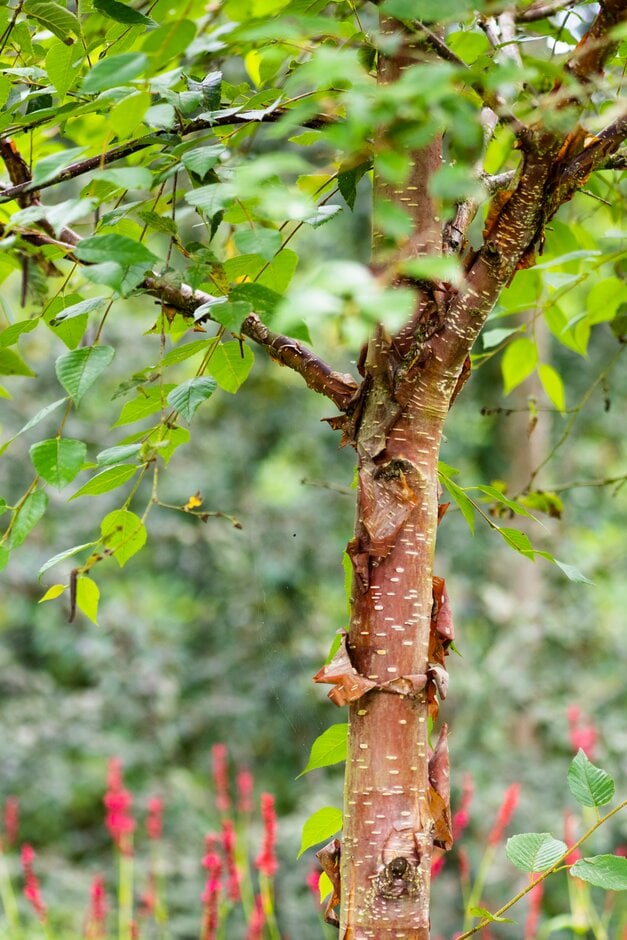
An upright, slim medium-sized deciduous tree with attractive dark brown, shiny bark with white markings (lenticels). Dark green foliage appears in the spring, turning to a buttery yellow colour in the autumn
Buy this plant
Size
Ultimate height
8–12 metresTime to ultimate height
20–50 yearsUltimate spread
Wider than 8 metresGrowing conditions
Moisture
Moist but well–drained, Well–drainedpH
Acid, Alkaline, NeutralColour & scent
| Stem | Flower | Foliage | Fruit | |
| Spring | Brown | Green | ||
|---|---|---|---|---|
| Summer | Brown | Green | ||
| Autumn | Brown | Yellow | ||
| Winter | Brown |
Position
- Full sun
- Partial shade
Aspect
East–facing or North–facing or South–facing or West–facing
Exposure
Exposed or Sheltered Hardiness
H7Botanical details
- Family
- Betulaceae
- Native to GB / Ireland
- No
- Foliage
- Deciduous
- Habit
- Bushy
- Genus
Betula can be deciduous trees or shrubs, usually colouring well in autumn and often with striking white, pink, or peeling brown bark; separate male and female catkins open before or with the leaves in spring
- Name status
Accepted
How to grow
Cultivation
Will grow in a wide range of situations, but best growth rate and habit will be achieved once established if planted in full sun
Propagation
Propagate by grafting
Suggested planting locations and garden types
- Architectural
- Cottage and informal garden
- Low Maintenance
- Flower borders and beds
Pruning
Requires little pruning. Pruning group 1
Pests
May be susceptible to birch borers, leaf-mining sawflies and aphids
Diseases
May be susceptible to honey fungus, a tree rust and powdery mildews
Get involved
The Royal Horticultural Society is the UK’s leading gardening charity. We aim to enrich everyone’s life through plants, and make the UK a greener and more beautiful place.