Nerine 'Mr John'
nerine 'Mr John'
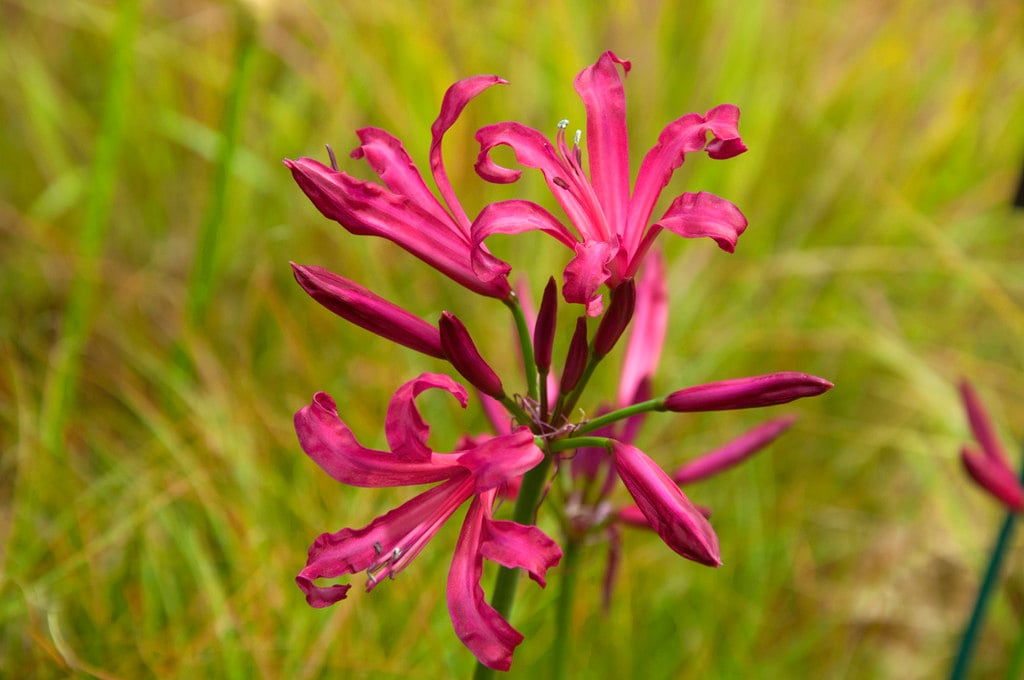
A bulbous perennial, to about 60cm tall, with open umbels of intense, very dark, purple-pink flowers on dark stems in early autumn, followed by strap-shaped leaves
Buy this plant
Size
Ultimate height
0.5–1 metresTime to ultimate height
5–10 yearsUltimate spread
0.1–0.5 metresGrowing conditions
Moisture
Moist but well–drained, Well–drainedpH
Acid, Alkaline, NeutralColour & scent
| Stem | Flower | Foliage | Fruit | |
| Spring | ||||
|---|---|---|---|---|
| Summer | ||||
| Autumn | Pink | Green | ||
| Winter | Green |
Position
- Full sun
Aspect
South–facing or West–facing
Exposure
Sheltered Hardiness
H3Botanical details
- Family
- Amaryllidaceae
- Native to GB / Ireland
- No
- Foliage
- Deciduous
- Habit
- Clump forming
- Potentially harmful
- Ornamental bulbs - not to be eaten. Wear gloves and other protective equipment when handling. Pets: Ornamental bulbs - not to be eaten - see the HTA guide to potentially harmful plants for further information and useful contact numbers
- Genus
Nerine are summer-dormant, perennial bulbs with erect leafless stems each bearing a terminal umbel of funnel-shaped flowers in autumn, and strap-shaped or linear leaves appearing after the flowers
- Name status
Accepted
How to grow
Cultivation
Plant in early spring in a moderately fertile, well-drained soil. Protect in colder areas with a deep, dry mulch over winter. See also Nerine cultivation
Propagation
Propagate by division after flowering
Suggested planting locations and garden types
- Gravel garden
- Mediterranean climate plants
- City and courtyard gardens
- Coastal
- Cottage and informal garden
- Patio and container plants
- Wall side borders
- Cut flowers
- Flower borders and beds
Pruning
No pruning required
Pests
May be susceptible to slugs
Diseases
Generally disease-free
Get involved
The Royal Horticultural Society is the UK’s leading gardening charity. We aim to enrich everyone’s life through plants, and make the UK a greener and more beautiful place.