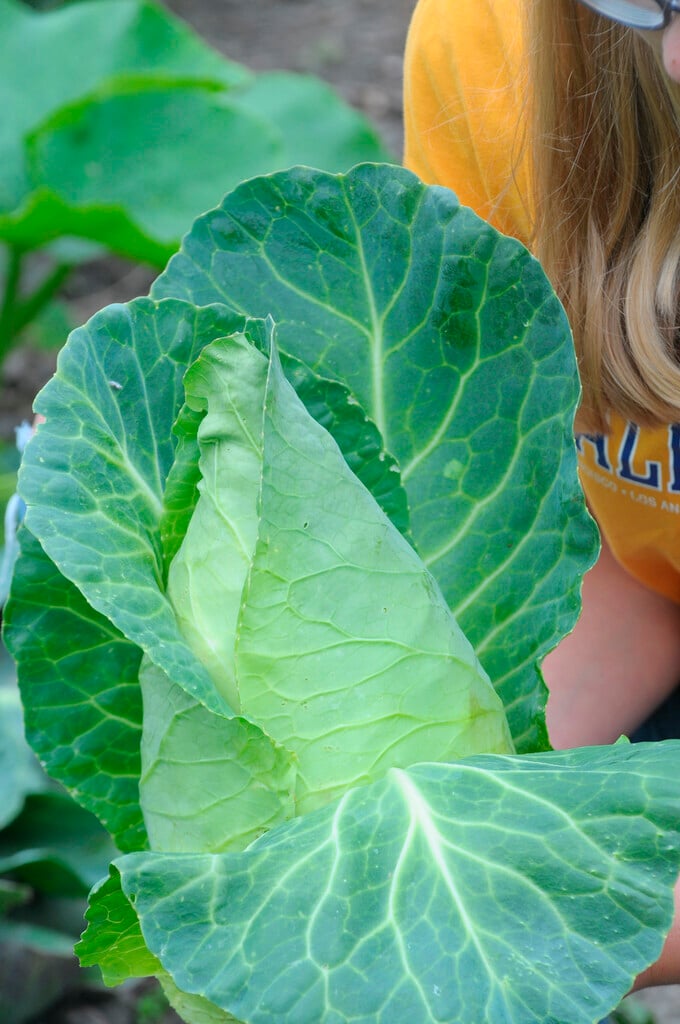
Brassica oleracea (Capitata Group) 'Caraflex'

RHS Plant Profile
cabbage 'Caraflex'
cabbage 'Caraflex' visionspictures.com
Award of Garden Merit
Annual Biennial

A pointed cabbage variety that is quick to mature with a slightly larger head and good standing ability, which can be harvested up to October

Position

Full sun

Soil Types

Clay, Loam, Sand

Max Height

0.5-1 metres

Max Spread

0.1-0.5 metres

Size

Time to Maturity
1 year
Max Spread
0.1-0.5 metres
Max Height
0.5-1 metres

Growing Conditions

Clay Loam Sand
Moisture
Well–drained
pH
Neutral or Alkaline

Position

Full sun
Aspect
West–facing or South–facing
Exposure
Sheltered
Hardiness
H2

Colour & Scent

Season Stem Flower Foliage Fruit
Spring
Summer
Autumn
Winter

Botanical Details

Family
Brassicaceae
Native to GB/Ireland
No
Foliage
Deciduous
Habit
Clump forming
Genus
Brassicas can be annual, biennial or perennial plants, most are upright with alternate, often glaucous leaves, long taproots and clusters of cross-shaped, yellow or white flowers. The genus includes a number of species bred to produce food crops, such as cabbages, turnips, mustards and oilseed rape, as well as others grown for their ornamental value
Name Status
Accepted

How to Grow

Cultivation

Grow in fertile, moist but well drained soil in full sun. Sow indoors January to February in a seed tray of good quality compost and cover with 6mm of compost and transplant out when two to three true leaves appear. Or sow direct between March - June at a depth of 1cm with 30cm between each plant. See vegetable cultivation

Propagation

Propagate by seed. See sowing vegetable seeds

Pruning

No pruning required

Pests

May be susceptible to birds, cabbage caterpillars, cabbage gall weevil, cabbage root fly, cabbage whitefly, cutworms, flea beetle, mealy cabbage aphid, slugs and snails, swede midge

Diseases

May be susceptible to black rot, club root, downy mildew, foot and root rot, leaf spot, white blister