Helleborus (Rodney Davey Marbled Group) Dorothy's Dawn ('Epb 29'PBR) (Frostkiss Series)
hellebore [Dorothy's Dawn]
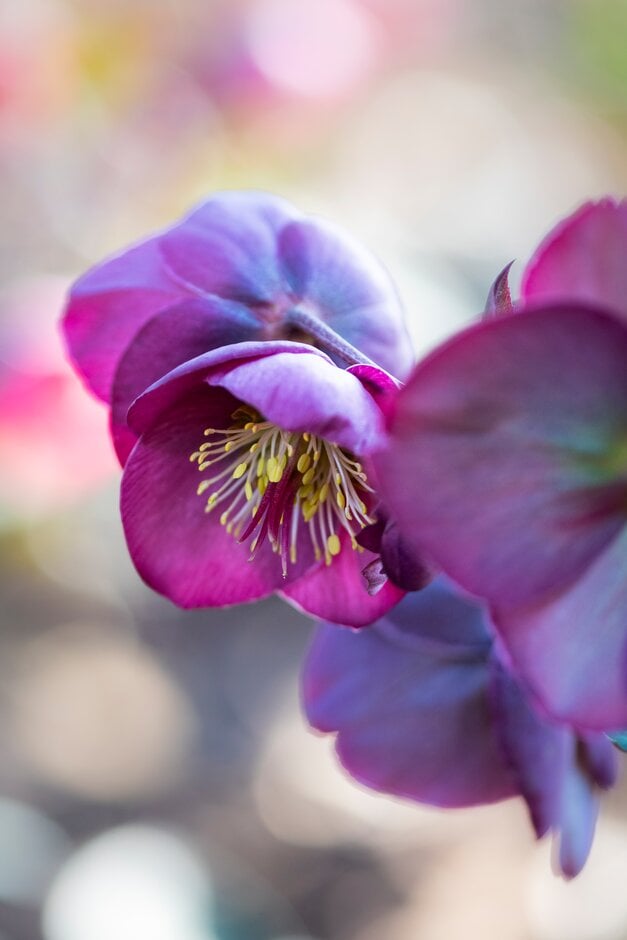
A clump-forming, evergreen perennial to about 40cm. The leathery, divided leaves have white marbling, more distinct in winter, and large, outward-facing, light pink blooms with a large boss of cream stamens, from mid-winter to mid-spring
Size
Ultimate height
0.1–0.5 metresTime to ultimate height
2–5 yearsUltimate spread
0.1–0.5 metresGrowing conditions
Moisture
Moist but well–drainedpH
Alkaline, NeutralColour & scent
| Stem | Flower | Foliage | Fruit | |
| Spring | Cream Pink | Green White | ||
|---|---|---|---|---|
| Summer | Green White | |||
| Autumn | Green White | |||
| Winter | Cream Pink | Green White |
Position
- Full sun
- Partial shade
Aspect
North–facing or South–facing or East–facing or West–facing
Exposure
Sheltered Hardiness
H7Botanical details
- Family
- Ranunculaceae
- Native to GB / Ireland
- No
- Foliage
- Evergreen
- Habit
- Clump forming
- Potentially harmful
- Harmful if eaten, skin irritant. Wear gloves and other protective equipment when handling. Pets: Harmful if eaten, skin irritant. For further information and contact numbers regarding pets, see the HTA guide to potentially harmful plants
- Genus
Helleborus can be rhizomatous, herbaceous or semi-evergreen perennials forming a clump of pedate basal leaves, or evergreen with erect, leafy stems. Large, bowl-shaped flowers are borne in loose clusters in late winter or spring
- Name status
Trade
How to grow
Cultivation
Best in partial shade in fertile, humus-rich, neutral to alkaline soil which is moist but well drained. Mulch in autumn and protect from strong, cold wind
Propagation
Propagate by division in late spring, after flowering
Suggested planting locations and garden types
- Cottage and informal garden
- Wildlife gardens
- Flower borders and beds
- Underplanting of roses and shrubs
Pruning
Remove faded or damaged foliage as the flowers appear
Pests
May be susceptible to hellebore aphid, hellebore leaf miner and snails
Diseases
May be susceptible to hellebore leaf spot and hellebore black death
Get involved
The RHS is the UK’s gardening charity, helping people and plants to grow - nurturing a healthier, happier world, one person and one plant at a time.