Calendula PowerDaisy Tango ('Kercaltan'PBR) (PowerDaisy Series)
marigold [PowerDaisy Tango]
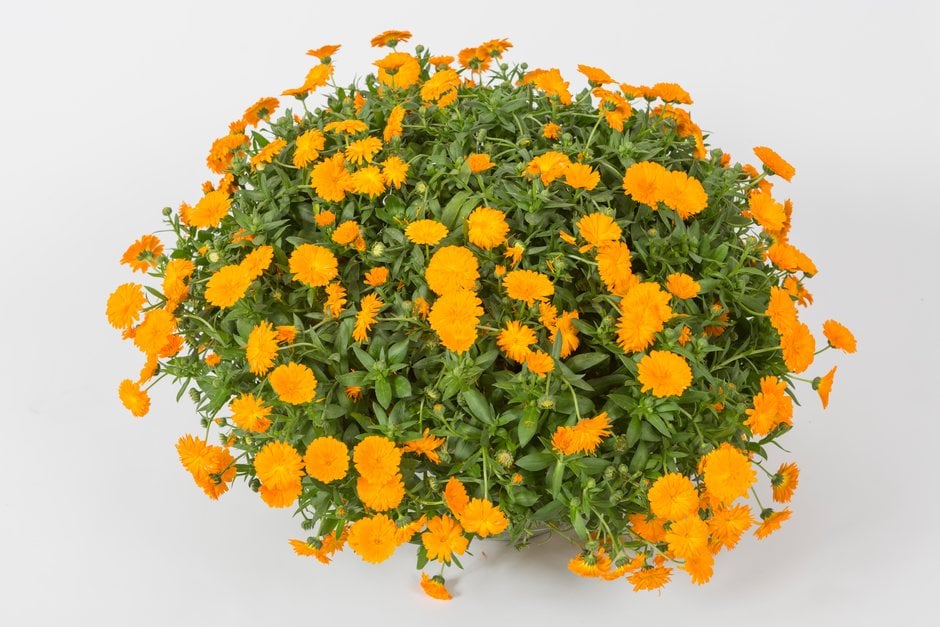
A compact, mound-forming, shrubby plant to 40cm tall with glossy green foliage. Orange, daisy-like flowerheads cover the foliage from late spring until late autumn
Size
Ultimate height
0.1–0.5 metresTime to ultimate height
1–2 yearsUltimate spread
0.1–0.5 metresGrowing conditions
Moisture
Well–drainedpH
Acid, Alkaline, NeutralColour & scent
| Stem | Flower | Foliage | Fruit | |
| Spring | Green | |||
|---|---|---|---|---|
| Summer | Orange | Green | ||
| Autumn | Orange | Green | ||
| Winter |
Position
- Full sun
- Partial shade
Aspect
South–facing or West–facing or East–facing
Exposure
Exposed or Sheltered Hardiness
H5Botanical details
- Family
- Asteraceae
- Native to GB / Ireland
- No
- Foliage
- Deciduous
- Habit
- Bushy
- Genus
Calendula can be annuals or woody-based perennials, with simple, aromatic leaves and showy, orange or yellow, daisy-like flower-heads in summer and autumn
- Name status
Trade
How to grow
Cultivation
Grow in a light, poor to moderately fertile, free-draining soil in full sun or partial shade. Deadhead regularly to prolong flowering
Propagation
Propagate by softwood cuttings in summer
Suggested planting locations and garden types
- Cottage and informal garden
- Patio and container plants
- City and courtyard gardens
- Flower borders and beds
- Garden edging
Pruning
Cut back after flowering; deadhead regularly to prolong flowering and pinch out terminal shoots to encourage bushy growth
Pests
May be susceptible to aphids
Diseases
Generally disease-free; this cultivar shows good resistance to powdery mildews
Get involved
The RHS is the UK’s gardening charity, helping people and plants to grow - nurturing a healthier, happier world, one person and one plant at a time.