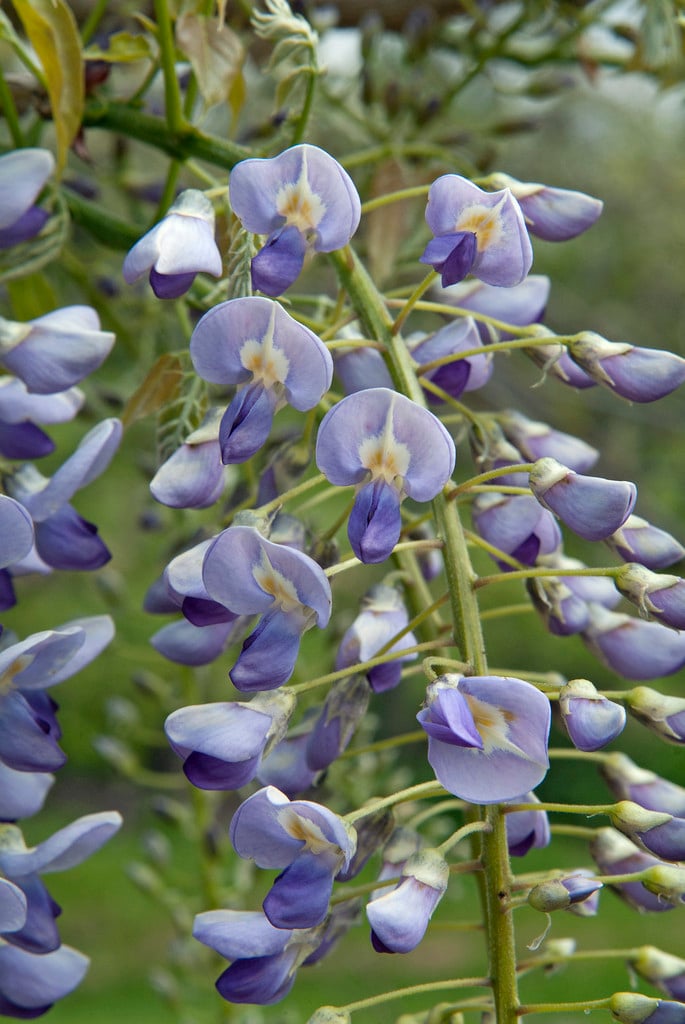
Wisteria × valderi 'Lavender Lace'

RHS Plant Profile
Valder's wisteria 'Lavender Lace'
Valder's wisteria 'Lavender Lace' RHS

Synonyms

Wisteria floribunda 'Lavender Lace'
Wisteria 'Lavender Lace'

Climber Wall Shrub

A vigorous, deciduous climber twining clockwise and reaching up to 9m tall. Leaves comprising up to 15 leaflets emerge bronze-green in the spring and turn yellow in the autumn. Drooping flower racemes up to 50cm long are borne in late spring and early summer; each raceme may have in excess of one hundred sweetly-scented flowers with pale violet standards and deeper colouring on the wings and keels

Position

Full sun, Partial shade

Soil Types

Chalk, Clay, Loam, Sand

Max Height

8-12 metres

Max Spread

4-8 metres

Size

Time to Maturity
10–20 years
Max Spread
4-8 metres
Max Height
8-12 metres

Growing Conditions

Chalk Clay Loam Sand
Moisture
Moist but well–drained
pH
Acid or Alkaline or Neutral

Position

Full sun Partial shade
Aspect
South–facing or West–facing
Exposure
Sheltered
Hardiness
H5

Colour & Scent

Fragrance Flower
Season Stem Flower Foliage Fruit
Spring
Summer
Autumn
Winter

Botanical Details

Family
Fabaceae
Native to GB/Ireland
No
Foliage
Deciduous
Habit
Climbing
Potentially harmful
Harmful if eaten. Wear gloves and other protective equipment when handling. Pets: Harmful if eaten - for further information and contact numbers regarding pets, see the HTA guide to potentially harmful plants
Genus
Wisteria are vigorous woody climbers with twining stems bearing pinnate leaves and long pendulous racemes of fragrant pea-like flowers in spring and early summer
Name Status
Accepted

How to Grow

Cultivation

A large, long-lived climber so choosing the right site is important. Can be grown informally through large tree or more formally against a house wall or trained as a free-standing half standard in a container. Will grow in most soils that are moist but well-drained. See wisteria cultivation for more advice

Propagation

Propagate by layering, softwood cuttings, hardwood cuttings or grafting

Suggested planting locations and garden types

  • Cottage and informal garden
  • Flower borders and beds
  • Wall side borders
  • Climber and wall shrubs

Pruning

See pruning wisteria

Pests

May be susceptible to aphids, glasshouse red spider mite, and scale insects including wisteria scale

Diseases

May be susceptible to honey fungus (rarely), phytophthora root rot, coral spot, fungal leaf spot, virus diseases, and powdery mildews