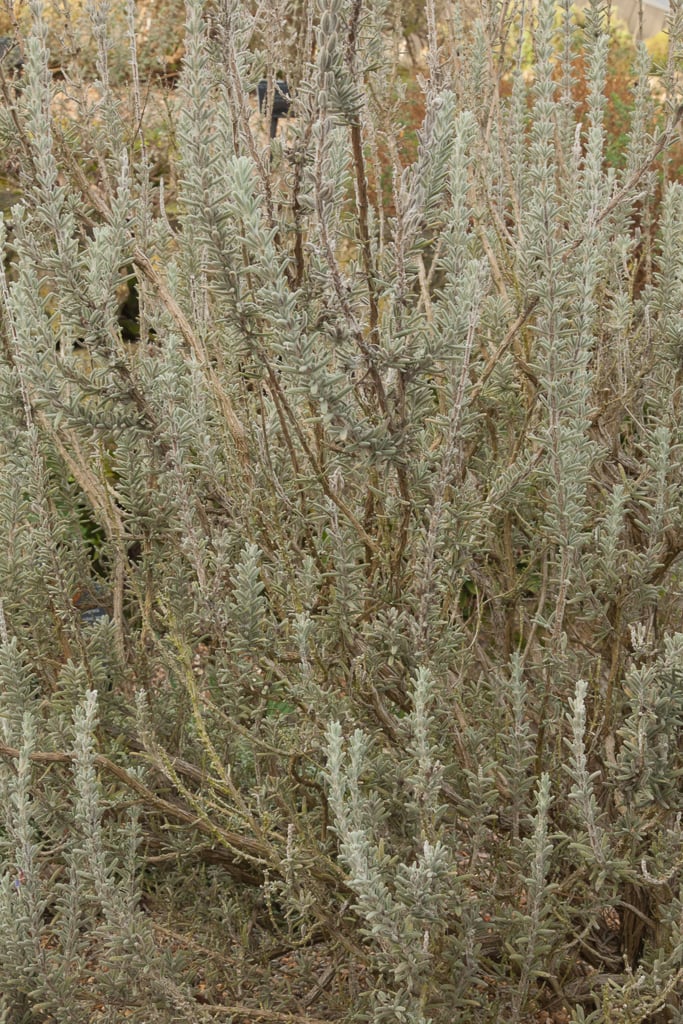
Salvia × mendizabalii (Ro)

<em>Salvia</em> × <em>mendizabalii</em> (Ro) John Fielding

Synonyms

Rosmarinus × mendizabalii

Plants for pollinators
Shrubs

A bushy shrub native of southern Spain, has a dense habit with woolly, fragrant silvery-green linear leaves and intense purple-blue lipped flowers in late winter and early spring.

Position

Full sun

Soil Types

Chalk, Loam, Sand

Max Height

0.1-0.5 metres

Max Spread

0.1-0.5 metres

Size

Time to Maturity
2–5 years
Max Spread
0.1-0.5 metres
Max Height
0.1-0.5 metres

Growing Conditions

Chalk Loam Sand
Moisture
Well–drained
pH
Alkaline or Neutral

Position

Full sun
Aspect
South–facing or West–facing
Exposure
Exposed or Sheltered
Hardiness
H4
Drought Resistance
Yes

Colour & Scent

Fragrance Foliage
Season Stem Flower Foliage Fruit
Spring
Summer
Autumn
Winter

Botanical Details

Family
Lamiaceae
Native to GB/Ireland
No
Foliage
Evergreen
Habit
Bushy
Genus
Salvia can be annuals, biennials, herbaceous or evergreen perennials, or shrubs. They have paired, simple or pinnately lobed, often aromatic leaves and 2-lipped flowers in whorls, forming simple or branched spikes or racemes
Name Status
Correct
Horticultural Group
This genus has changed from Rosmarinus to Salvia

How to Grow

Cultivation

Will grow well in coastal settings preferably in chalky rocky soil in full sun. Can be trimmed back after flowering if used as an informal hedge.

Propagation

Propagate by semi-hardwood cuttings

Suggested planting locations and garden types

  • City and courtyard gardens
  • Coastal
  • Cottage and informal garden
  • Mediterranean climate plants
  • Patio and container plants
  • Rock garden
  • Wildlife gardens
  • Banks and slopes

Pruning

Pruning group 9 in spring; cut back spent flower spikes to prolong flowering

Pests

Generally pest-free

Diseases

High Risk Host for Xylella fastidiosa. May be susceptible to honey fungus (rarely), powdery mildews, verticillium wilt and foot and root rots