Not the plant you're looking for? Search over 300,000 plants

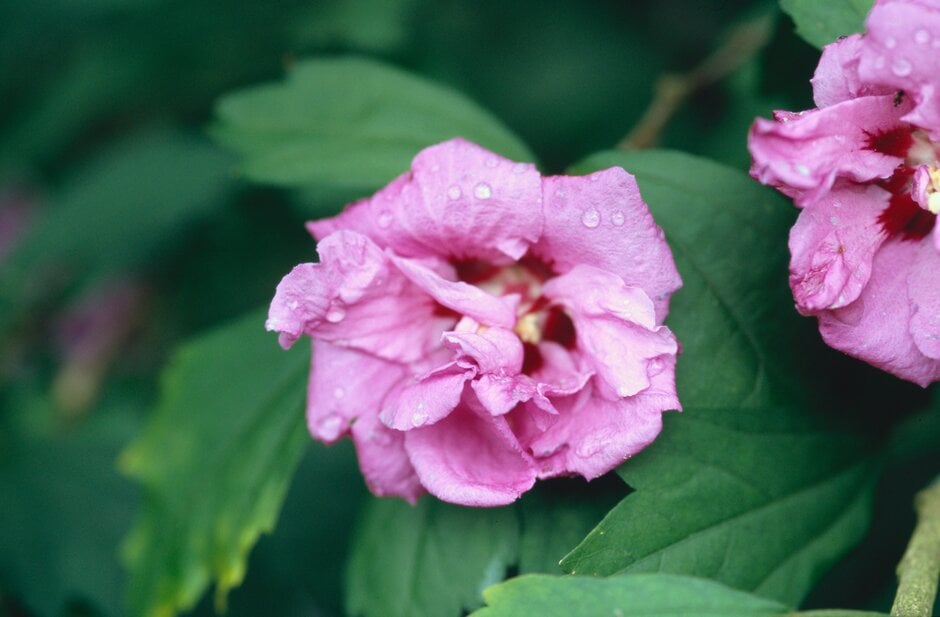
Hibiscus syriacus 'Souvenir de Charles Breton'

This beautiful semi-double variety grows up to about 2 metres and bears large, lilac-pink to purple flowers with red sunbursts at the throat. The dark green leaves are three-lobed, have toothed edges and turn yellow in the autumn. With the right conditions expect abundant flowers from July until October.

Size
Ultimate height
1.5–2.5 metres
Time to ultimate height
5–10 years
Ultimate spread
0.5–1 metres
Growing conditions
Chalk
Clay
Loam
Sand
Moisture
Moist but well–drained, Well–drained
pH
Acid, Neutral, Alkaline
Colour & scent
StemFlowerFoliageFruit
Spring Green
Summer Purple Pink Red Green
Autumn Purple Pink Red Yellow
Winter
Position
  • Full sun
Aspect

East–facing or South–facing or West–facing

Exposure
Sheltered
Hardiness
H5
Botanical details
Family
Malvaceae
Native to GB / Ireland
No
Foliage
Deciduous
Habit
Bushy, Columnar upright
Genus

Hibiscus can be deciduous or evergreen shrubs, trees, annuals or perennials, with simple or palmately lobed leaves and large, funnel-shaped flowers over a long flowering season

Name status

Accepted

How to grow

Cultivation

Grows best in neutral to slightly acidic or slightly alkaline, humus-rich, moist but well-drained soil. Plant in a warm sheltered position in full sun to encourage flowering. Can also be grown in pots. Feed in spring, with a slow-release, high potash formula, such as rose food, and mulch in autumn to help maintain soil moisture levels and suppress weeds.

Propagation

Propagate by softwood cuttings in late spring, by semi-ripe cuttings in summer, or by layering in spring or autumn.

Suggested planting locations and garden types
  • Coastal
  • Cottage and informal garden
  • City and courtyard gardens
  • Patio and container plants
  • Wall side borders
Pruning

Very little pruning required, especially in the first three years. After three years prune annually after flowering to maintain its shape and to help ensure the outer branches don't fall outwards - pruning group 1.

Pests

May be susceptible to aphids, scale insects, mealybugs and glasshouse whitefly when grown under glass

Diseases

May be susceptible to honey fungus (rarely) and powdery mildews

Get involved

The Royal Horticultural Society is the UK’s leading gardening charity. We aim to enrich everyone’s life through plants, and make the UK a greener and more beautiful place.