Platanus orientalis var. insularis
Cyprian plane
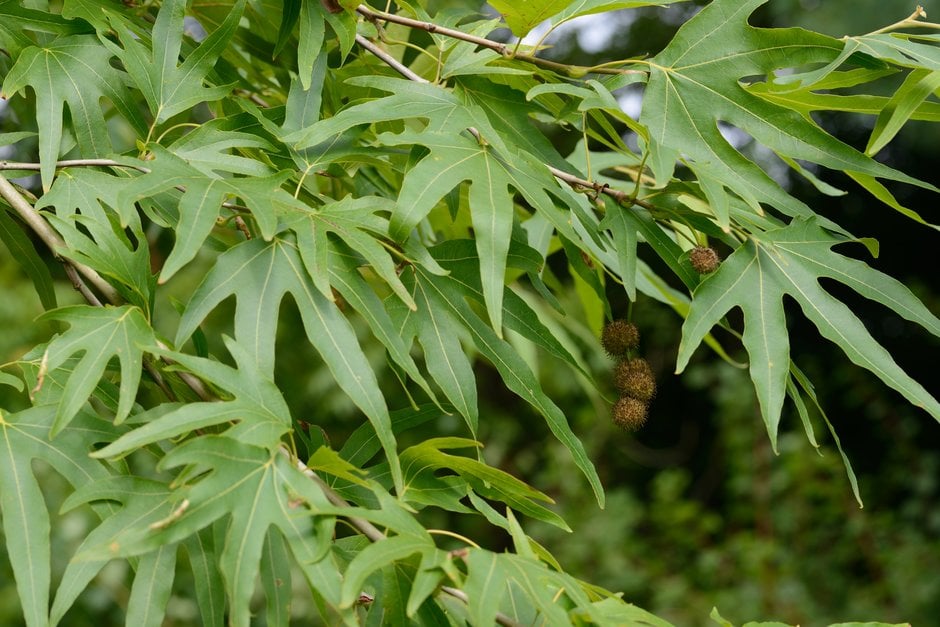
A medium-sized tree to around 15m, pyramidal when young and spreading with age. It has flaking grey/green/cream bark and bright green foliage with deep, narrow lobes turning red and orange in autumn. Inconspicuous green flowers are followed by spiky, spherical fruit
Size
Ultimate height
Higher than 12 metresTime to ultimate height
20–50 yearsUltimate spread
Wider than 8 metresGrowing conditions
Moisture
Well–drainedpH
Acid, Alkaline, NeutralColour & scent
| Stem | Flower | Foliage | Fruit | |
| Spring | Green Grey Silver Cream | Green | Green | |
|---|---|---|---|---|
| Summer | Green Grey Silver Cream | Green | ||
| Autumn | Green Grey Silver Cream | Red Orange | ||
| Winter | Green Grey Silver Cream |
Position
- Full sun
Aspect
South–facing or North–facing or West–facing or East–facing
Exposure
Exposed or Sheltered Hardiness
H6Botanical details
- Family
- Platanaceae
- Native to GB / Ireland
- No
- Foliage
- Deciduous
- Habit
- Columnar upright
- Genus
Platanus are vigorous, large deciduous trees of stately appearance, with maple-like foliage and attractively patterned bark
- Name status
Correct
How to grow
Cultivation
Grow in fertile, well-drained soil in full sun
Propagation
Propagate from hardwood cuttings in winter
Suggested planting locations and garden types
- Coastal
- Low Maintenance
Pruning
Pests
May be susceptible to lace bugs
Diseases
May be susceptible to plane anthracnose and honey fungus
Get involved
The Royal Horticultural Society is the UK’s leading gardening charity. We aim to enrich everyone’s life through plants, and make the UK a greener and more beautiful place.