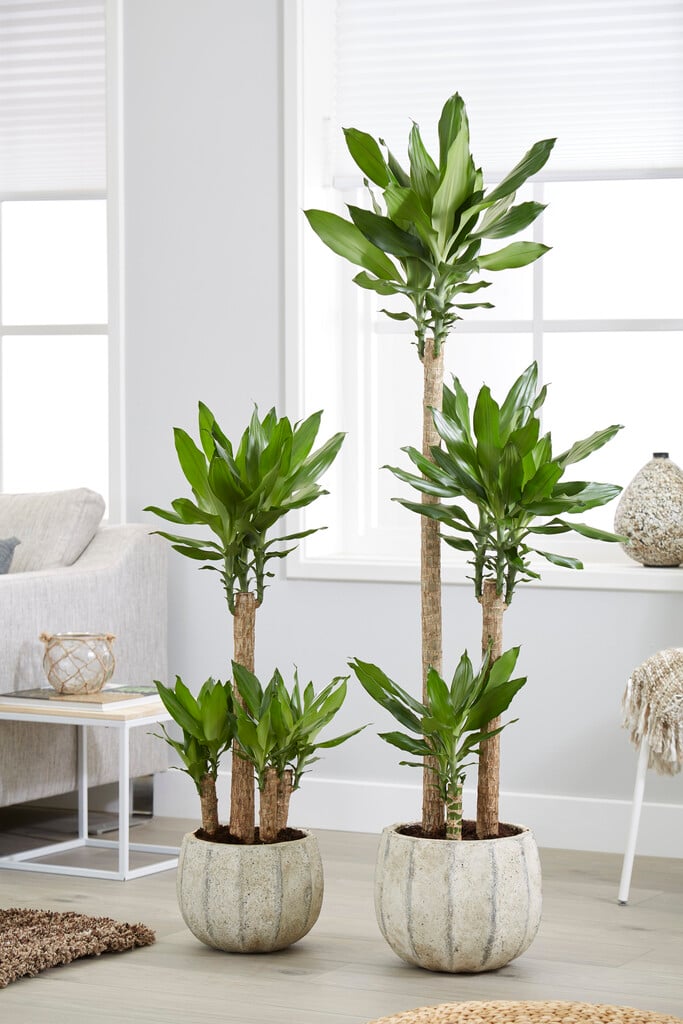
Dracaena steudneri

RHS Plant Profile
northern large-leaved dragon tree

Other common names

Steudner's dragon tree

Shrubs Trees

A slow-growing, tropical evergreen shrub or tree, with upright, palm-like stems, reaching up to 15m high in its native range but usually much smaller in cultivation. Leaves are leathery, lance-shaped and clustered at the tips of the stems, and can grow to be over 1m long. Mature plants sometimes produce long clusters of small, scented greenish-white flowers, which open at night, and are followed by round, dark purple-black berries

Position

Full sun, Partial shade

Soil Types

Loam, Sand

Max Height

4-8 metres

Max Spread

2.5-4 metres

Size

Time to Maturity
10–20 years
Max Spread
2.5-4 metres
Max Height
4-8 metres

Growing Conditions

Loam Sand
Moisture
Moist but well–drained
pH
Acid or Alkaline or Neutral

Position

Full sun Partial shade
Aspect
East–facing or South–facing or West–facing
Exposure
Exposed or Sheltered
Hardiness
H1B

Colour & Scent

Fragrance Flower
Season Stem Flower Foliage Fruit
Spring
Summer
Autumn
Winter

Botanical Details

Family
Asparagaceae
Native to GB/Ireland
No
Foliage
Evergreen
Habit
Columnar upright
Potentially harmful
Pets (dogs, cats, rabbits, rodents): Harmful if eaten. For further information and contact numbers regarding pets, see the HTA guide to potentially harmful plants
Genus
Dracaena are evergreen trees, the few branches bearing linear to lance-shaped leaves often crowded towards the tips; on mature plants, small greenish-white flowers may be followed by orange or red berries
Name Status
Unresolved

How to Grow

Cultivation

Grow in a moist but free-draining potting mix, in full sun. Plants will not tolerate frost, and are usually grown as houseplants, in a greenhouse or in containers that can be moved indoors over winter. Water moderately in the growing season, preferably with rainwater, and apply a balanced liquid feed monthly. Keep almost dry in winter. See Dracaena and houseplant cultivation for further advice

Propagation

Propagate by seed, sown at 18-20°C in spring, or by semi-ripe cuttings in late spring to early summer; bottom heat may be required for rooting

Suggested planting locations and garden types

  • Architectural
  • Houseplants
  • Low Maintenance
  • Conservatory and greenhouse

Pruning

No pruning required

Pests

May be susceptible to scale insects, glasshouse red spider mite, thrips and mealybugs

Diseases

Generally disease-free