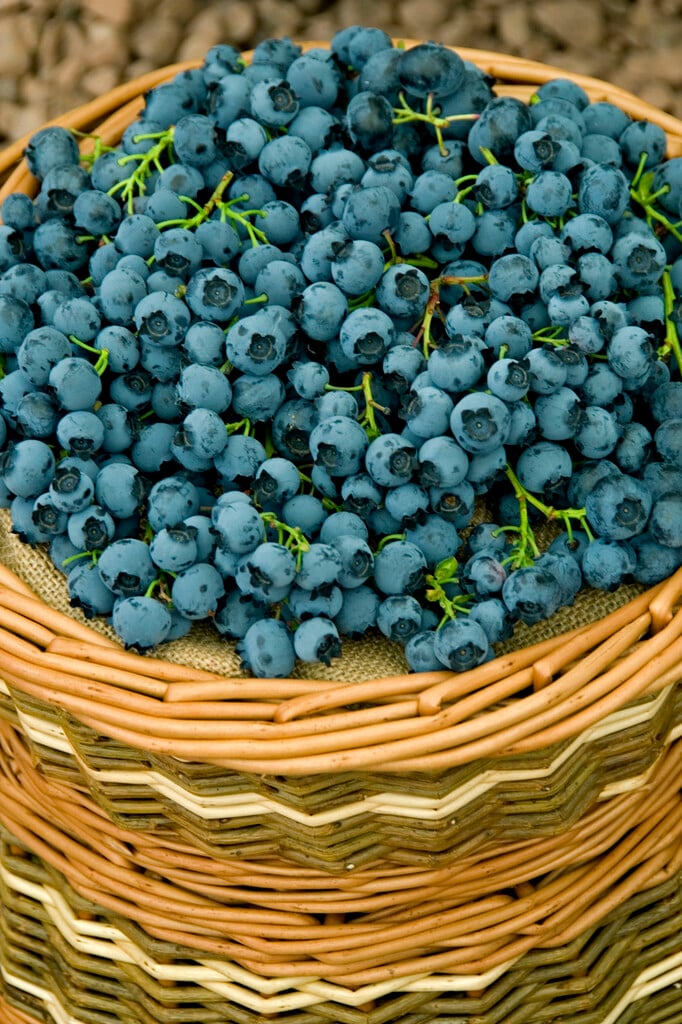
Vaccinium corymbosum 'Bluetta' (F)

RHS Plant Profile
blueberry 'Bluetta'
blueberry 'Bluetta' visionspictures.com

Synonyms

Vaccinium 'Bluetta'

Plants for pollinators
Fruit Edible Shrubs

A deciduous shrub reaching 60cm high. It has small dark green leaves which turn red in autumn before falling. The flowers are small white bells developing into edible blue berries in early summer.

Position

Full sun, Partial shade

Soil Types

Loam, Sand

Max Height

0.5-1 metres

Max Spread

0.5-1 metres

Size

Time to Maturity
2–5 years
Max Spread
0.5-1 metres
Max Height
0.5-1 metres

Growing Conditions

Loam Sand
Moisture
Moist but well–drained
pH
Acid

Position

Full sun Partial shade
Aspect
East–facing or North–facing or South–facing or West–facing
Exposure
Sheltered
Hardiness
H7

Colour & Scent

Season Stem Flower Foliage Fruit
Spring
Summer
Autumn
Winter

Botanical Details

Family
Ericaceae
Native to GB/Ireland
No
Foliage
Deciduous
Habit
Spreading branched, Bushy
Genus
Vaccinium can be evergreen or deciduous shrubs or small trees, with simple leaves and small, bell- or urn-shaped flowers followed by juicy, sometimes edible berries
Name Status
Accepted
Horticultural Group
This genus produces fruit, but not necessarily edible fruit

How to Grow

Cultivation

Plant in a sheltered site in well-drained, moisture-retentive, acidic soil, (pH 4.5-5.5) in sun or part shade. Alternatively grow in containers or raised beds filled with peat-free, ericaceous compost . Pot grown plants benefit from winter protection. For optimal pollination and yield plant three different cultivars. See blueberry cultivation for further advice

Propagation

Propagate by softwood cuttings in late spring or semi-ripe cuttings in summer

Suggested planting locations and garden types

  • Wildlife gardens
  • City and courtyard gardens
  • Cottage and informal garden
  • Patio and container plants
  • Edible fruit

Pruning

Remove old, spindly stems as necessary. See blueberry pruning

Pests

Generally pest-free

Diseases

May be susceptible to honey fungus (rarely), powdery mildews, root rot and chlorosis due to iron and manganese deficiency; see nutrient deficiencies