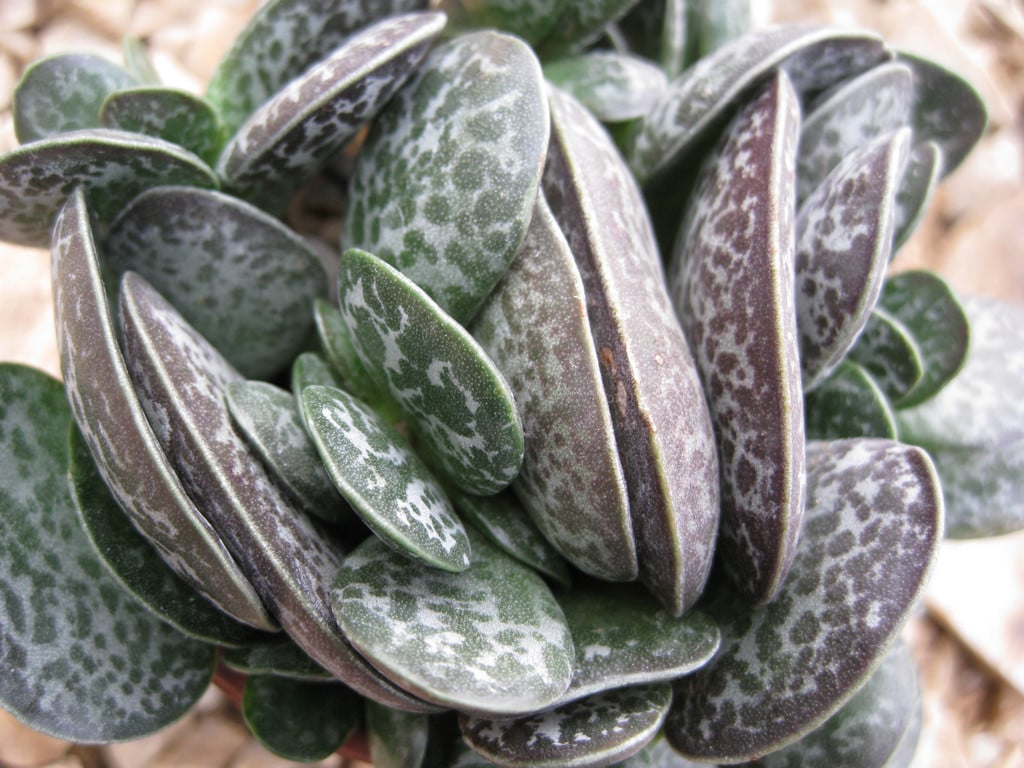
Adromischus maculatus

RHS Plant Profile
spotted adromischus
spotted adromischus RHS
Award of Garden Merit
Cactus Succulent

A perennial succulent with a sparsely branched brown caudex. Inversely lance-shaped bright green leaves to 5cm (2in) long are often spotted or mottled with deep reddish-purple and often the leaves have horny margins. Spike-like cymes, 25-20cm (10-12in) long, of tubular green flowers 1.5cm (¾in) long with pinkish-white, or pale purple lobes, are borne in summer

Position

Full sun

Soil Types

Loam, Sand

Max Height

0.1-0.5 metres

Max Spread

0.1-0.5 metres

Size

Time to Maturity
2–5 years
Max Spread
0.1-0.5 metres
Max Height
0.1-0.5 metres

Growing Conditions

Loam Sand
Moisture
Well–drained
pH
Acid or Alkaline or Neutral

Position

Full sun
Aspect
West–facing or South–facing
Exposure
Sheltered
Hardiness
H2
Drought Resistance
Yes

Colour & Scent

Season Stem Flower Foliage Fruit
Spring
Summer
Autumn
Winter

Botanical Details

Family
Crassulaceae
Native to GB/Ireland
No
Foliage
Evergreen
Habit
Bushy
Genus
Adromischus are a genus of easily-propagated leaf succulents native to South Africa. Stems are thick and flowers bright green.
Name Status
Correct
Plant Range
S Africa (Cape)

How to Grow

Cultivation

Grow under glass in a sharply draining or proprietary cactus compost in full sunlight with good ventilation. Water during the growing season in spring to autumn, only when the soil has become dry. Withhold water altogether in the winter months and keep cool, but not lower than 7°C (45°F). A low nitrogen fertiliser can be applied two or three times during the growing season. See houseplant cacti and succulent cultivation for more detailed advice

Propagation

Propagate by seed at 19-24°C (66-75°F) in spring. May also be propagated from leaf cuttings and stem cuttings in summer

Suggested planting locations and garden types

  • Patio and container plants
  • Sub-tropical

Pruning

No pruning required

Pests

May be susceptible to mealybugs and greenfly

Diseases

Generally disease-free but may be susceptible to root rots in wet soil