Begonia albopicta (C)
guinea-wing begonia
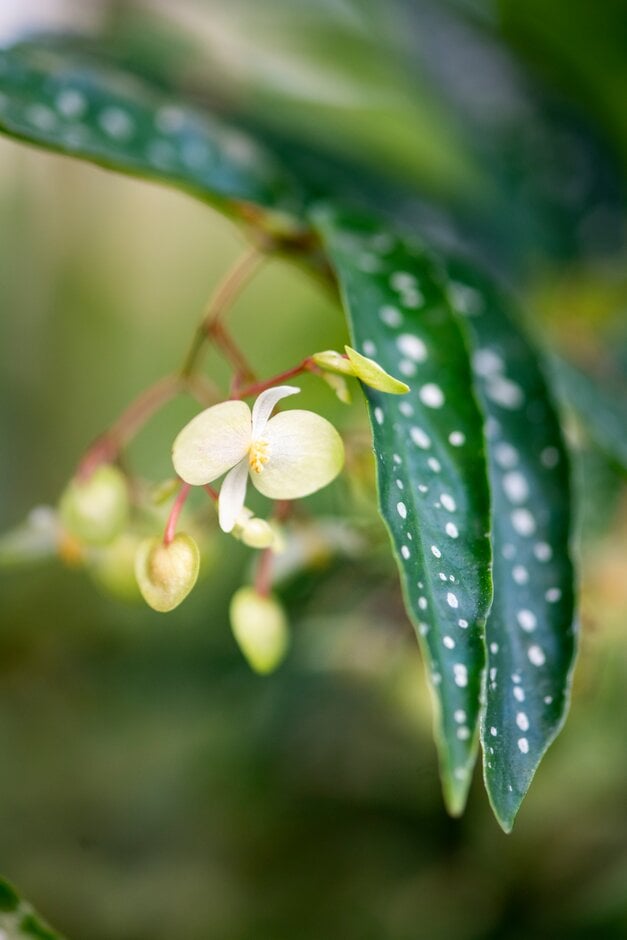
A semi-pendent to upright, well-branched, cane-stemmed begonia with wavy-edged, lance-shaped leaves about 8cm long, glossy green with small, silver spots. Hanging clusters of simple, greenish-white flowers are produced in summer
Size
Ultimate height
0.1–0.5 metresTime to ultimate height
2–5 yearsUltimate spread
0.5–1 metresGrowing conditions
Moisture
Well–drainedpH
Acid, NeutralColour & scent
| Stem | Flower | Foliage | Fruit | |
| Spring | Green Grey Silver | |||
|---|---|---|---|---|
| Summer | White | Green Grey Silver | ||
| Autumn | Green Grey Silver | |||
| Winter | Green Grey Silver |
Position
- Partial shade
Aspect
East–facing or West–facing
Exposure
Sheltered Hardiness
H2Botanical details
- Family
- Begoniaceae
- Native to GB / Ireland
- No
- Foliage
- Evergreen
- Habit
- Bushy
- Genus
Begonia can be annuals, evergreen or deciduous perennials or shrubs, with fibrous, tuberous or rhizomatous roots and usually asymmetrical leaves, often strikingly patterned, and small or large flowers, both male and female in the same cluster
- Name status
Correct
- Horticultural Group
- Cane-stem begonias are erect, evergreen perennials with fibrous roots and cane-like stems with asymmetrical, strongly toothed leaves, often strikingly marked, and showy flower clusters in spring or summer
How to grow
Cultivation
Grow in light, well-drained, peat-free, acid to neutral potting compost. Place in filtered light with shade from hot sun at an optimum of 15C to 22C, with high humidity. Will not tolerate continuous direct sunlight or waterlogging. Water moderately when in growth and apply a balanced liquid fertiliser at alternative waterings. See begonias: houseplants for further information
Propagation
Propagate by stem cuttings
Suggested planting locations and garden types
- Houseplants
- Conservatory and greenhouse
Pruning
Cut back overlong canes to two or three buds in late spring
Pests
May be susceptible to caterpillars, mealybugs, mites, glasshouse thrips, vine weevil and aphids
Diseases
May be susceptible to grey mould, powdery mildews and stem rot
Get involved
The Royal Horticultural Society is the UK’s leading gardening charity. We aim to enrich everyone’s life through plants, and make the UK a greener and more beautiful place.