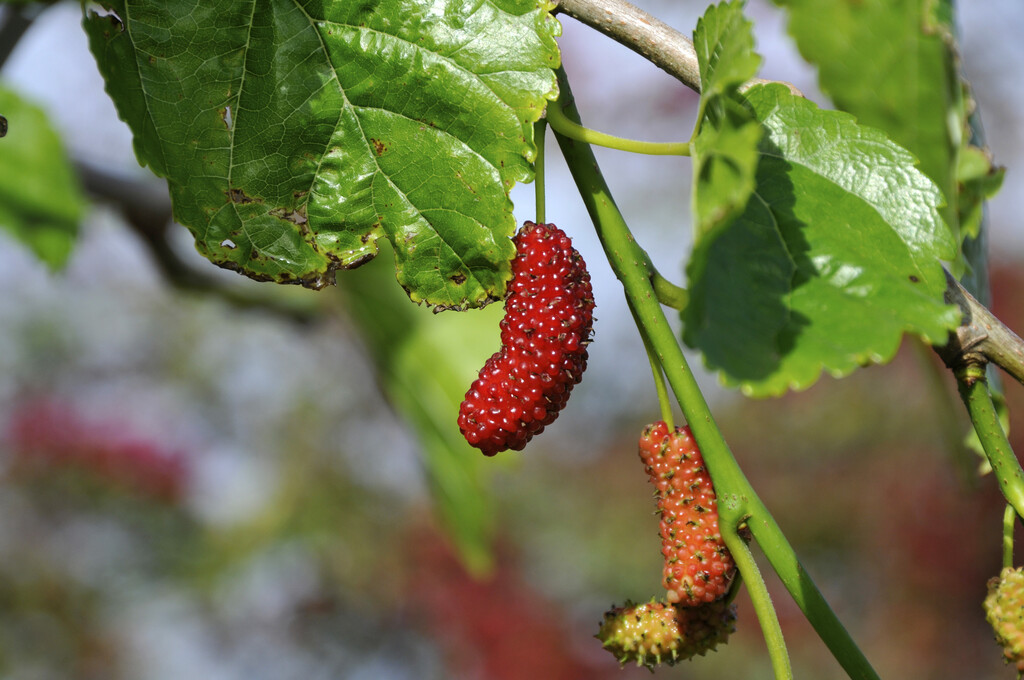
Morus rubra

RHS Plant Profile
red mulberry
red mulberry visionspictures.com

Other common names

American mulberry

Fruit Edible Trees

A medium-sized, upright, deciduous tree with dark green, oval-shaped leaves which turn yellow in autumn. Inconspicuous pale green catkin-like flowers appear in May and June, followed on female varieties by cylinder-shaped sweet and juicy red to dark purple blackberry-like fruits

Position

Full sun

Soil Types

Chalk, Clay, Loam, Sand

Max Height

8-12 metres

Max Spread

4-8 metres

Size

Time to Maturity
20–50 years
Max Spread
4-8 metres
Max Height
8-12 metres

Growing Conditions

Chalk Clay Loam Sand
Moisture
Moist but well–drained or Well–drained
pH
Acid or Alkaline or Neutral

Position

Full sun
Aspect
South–facing or West–facing
Exposure
Sheltered
Hardiness
H6

Colour & Scent

Season Stem Flower Foliage Fruit
Spring
Summer
Autumn
Winter

Botanical Details

Family
Moraceae
Native to GB/Ireland
No
Foliage
Deciduous
Habit
Bushy, Spreading branched
Genus
Morus are deciduous trees and shrubs with broadly ovate, sometimes deeply lobed leaves and inconspicuous green flowers followed by usually edible white, red or black fruit
Name Status
Correct
Plant Range
SE Canada & E USA

How to Grow

Cultivation

Grow in moist, humus-rich, fertile soils with shelter from cold, dry winds. See mulberry cultivation

Propagation

Propagate by semi-hardwood cuttings in mid-summer

Suggested planting locations and garden types

  • Architectural
  • Cottage and informal garden
  • Edible fruit

Pruning

Pruning group 1, prune in late summer to early winter to avoid bleeding

Pests

Generally pest-free

Diseases

May be susceptible to mulberry leaf spot, mulberry canker, coral spot, powdery mildews and honey fungus (rarely)