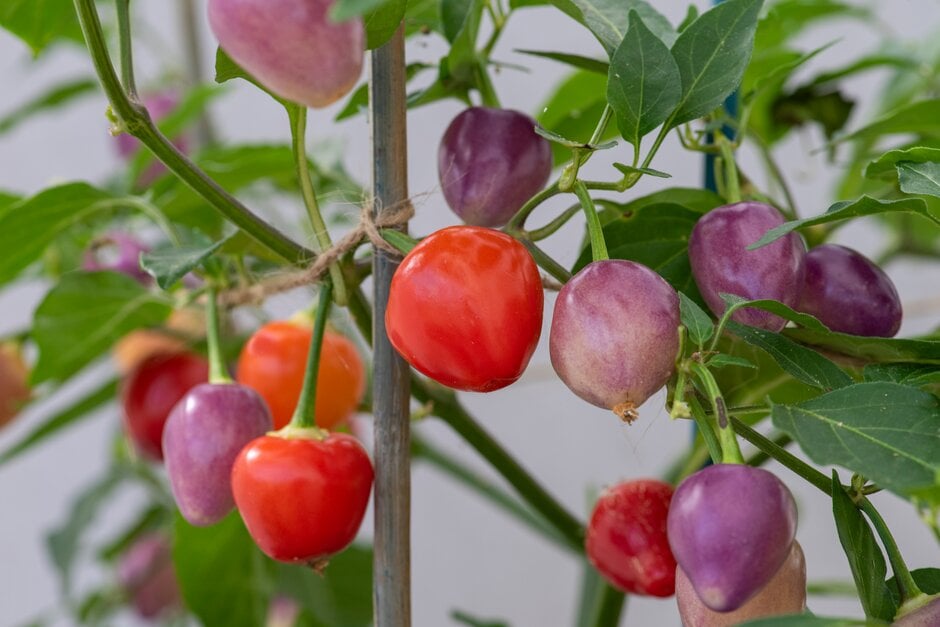
Capsicum baccatum 'Spangles'

<em>Capsicum</em> <em>baccatum</em> 'Spangles' RHS
Award of Garden Merit
Annual Biennial Fruit Edible

A bushy annual with ovate, mid-green leaves. As both an ornamental and edible variety, it produces small, attractive white flowers with green markings from the leaf axils in summer, which go on to produce colourful, thick-skinned, round edible fruits. These change from pale purple to white to orange then finally bright red as they ripen. Medium-hot flavour and perfect for making chilli sauce

Position

Full sun

Soil Types

Loam

Max Height

0.5-1 metres

Max Spread

0.5-1 metres

Size

Time to Maturity
1 year
Max Spread
0.5-1 metres
Max Height
0.5-1 metres

Growing Conditions

Loam
Moisture
Moist but well–drained
pH
Neutral or Acid

Position

Full sun
Aspect
South–facing or West–facing
Exposure
Sheltered
Hardiness
H1C

Colour & Scent

Season Stem Flower Foliage Fruit
Spring
Summer
Autumn
Winter

Botanical Details

Family
Solanaceae
Native to GB/Ireland
No
Foliage
Deciduous
Habit
Bushy
Potentially harmful
Humans/Pets: Irritant if eatenskin/eye irritant. Wear gloves and other protective equipment when handling For further information and contact numbers regarding pets, see the HTA guide to potentially harmful plants
Genus
Capsicum are annual or perennial plants, with simple, alternate leaves, and tubular or bell-shaped flowers. They are grown for their glossy, many-seeded edible fruits, including chilli and bell peppers, and as indoor ornamental plants
Name Status
Unresolved

How to Grow

Cultivation

Grow in a peat-free, loam-based compost in bright, filtered light. When in growth, water freely and apply a balanced liquid fertiliser every 10 days until fruit begins to colour. See how to grow: chilli peppers for further advice

Propagation

Propagate by seed sown at 21ºC (70ºF) in late winter

Suggested planting locations and garden types

  • Patio and container plants
  • Conservatory and greenhouse
  • Edible fruit

Pruning

Pinch out growing tips to encourage branching

Pests

May be susceptible to glasshouse red spider mite and aphids

Diseases

May be susceptible to virus diseases, fungal wilt, anthracnose and powdery mildews