 RHS
RHS 

Fruit Edible
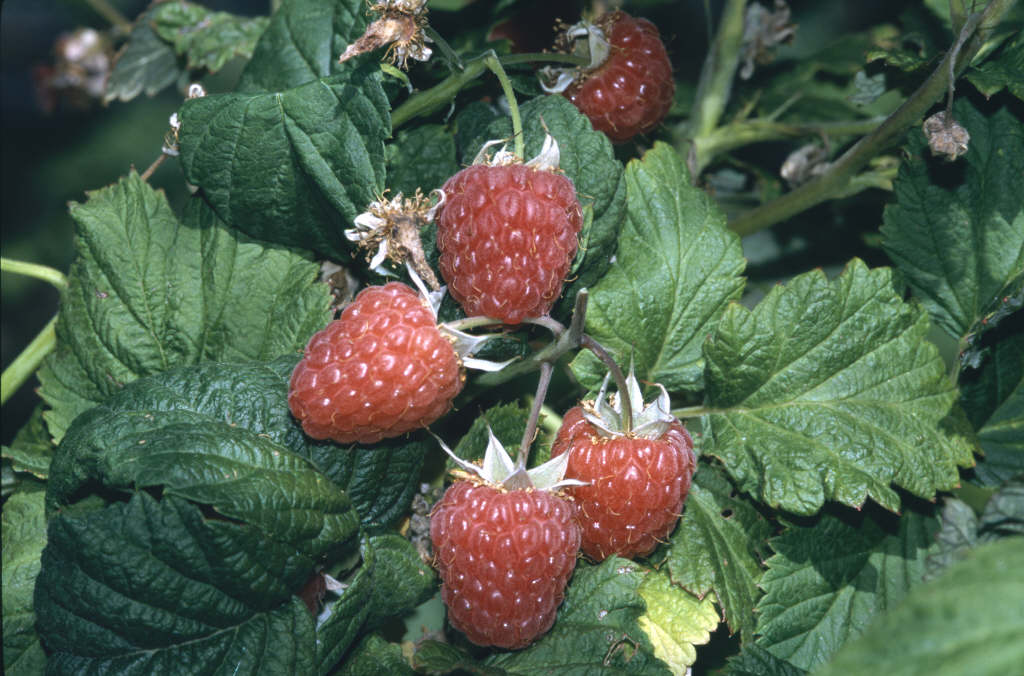
An early to midsummer cropping cultivar with compact growth, red fruits, good flavour and yield
Position
Full sun
Soil Types
Loam, Sand
Max Height
1.5-2.5 metres
Max Spread
0.1-0.5 metres
RHS An early to midsummer cropping cultivar with compact growth, red fruits, good flavour and yield
1.5-2.5 metres
0.1-0.5 metres
| Season | Stem | Flower | Foliage | Fruit |
|---|---|---|---|---|
| Spring | ||||
| Summer | ||||
| Autumn | ||||
| Winter |
Grow raspberries in rows between parallel wires for support. mulch with acidic material such as composted bark. May have the potential to become a nuisance if not managed well. See raspberry cultivation
Propagate by division in the dormant season. Lift new canes along with their rootballs. Choose only newly planted, disease-free stock from which to propagate
Prune as for summer fruiting raspberries, removing all fruited canes down to ground level in early to mid autumn. Train in new growth
May be susceptible to aphids, leafhoppers, raspberry beetle, glasshouse red spider mite and raspberry leaf and bud mite
May be susceptible to grey moulds and honey fungus (rarely)