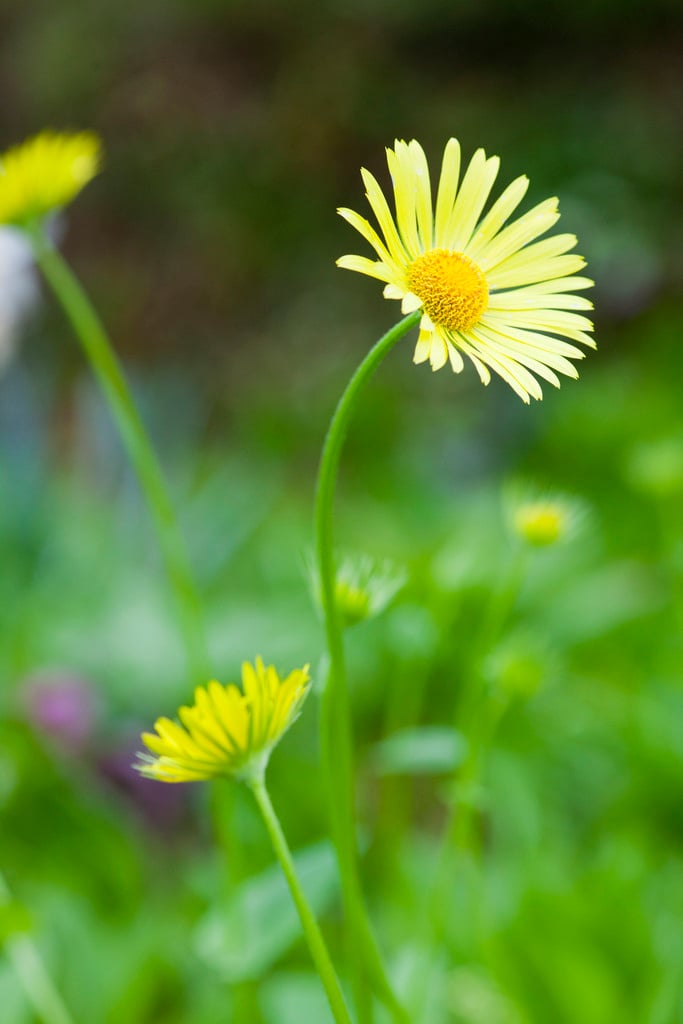
Doronicum orientale

RHS Plant Profile
Caucasian leopard's bane
Caucasian leopard's bane RHS

Synonyms

Doronicum caucasicum

Plants for pollinators
Herbaceous Perennial

A slow-spreading, rhizomatous perennial with gently scalloped basal leaves with heart-shaped bases and a few stem leaves. Produces solitary, golden-yellow flower heads, 2.5-5cm across on slender stems in mid and late spring

Position

Partial shade

Soil Types

Loam, Sand

Max Height

0.1-0.5 metres

Max Spread

0.5-1 metres

Size

Time to Maturity
2–5 years
Max Spread
0.5-1 metres
Max Height
0.1-0.5 metres

Growing Conditions

Loam Sand
Moisture
Moist but well–drained
pH
Acid or Neutral

Position

Partial shade
Aspect
North–facing or West–facing or East–facing
Exposure
Sheltered
Hardiness
H5

Colour & Scent

Season Stem Flower Foliage Fruit
Spring
Summer
Autumn
Winter

Botanical Details

Family
Asteraceae
Native to GB/Ireland
No
Foliage
Deciduous
Habit
Clump forming
Genus
Doronicum are rhizomatous or tuberous-rooted herbaceous perennials with heart-shaped basal leaves and bright yellow daisy-like flower-heads
Name Status
Correct
Plant Range
SE Europe, Turkey, Caucasus

How to Grow

Cultivation

Grow in moist but well-drained, reasonably fertile, preferably sandy soil in partial shade

Propagation

Propagate by division in early autumn or propagate by seed in containers in a cold frame in spring

Suggested planting locations and garden types

  • Coastal
  • Cottage and informal garden
  • Wildlife gardens
  • Cut flowers
  • Flower borders and beds

Pruning

Deadhead flowers for a second flush of blooms

Pests

Generally pest-free but leaf and bud eelworm may be troublesome

Diseases

May be susceptible to leaf spot, root rot and powdery mildews