Fumaria officinalis
common fumitory
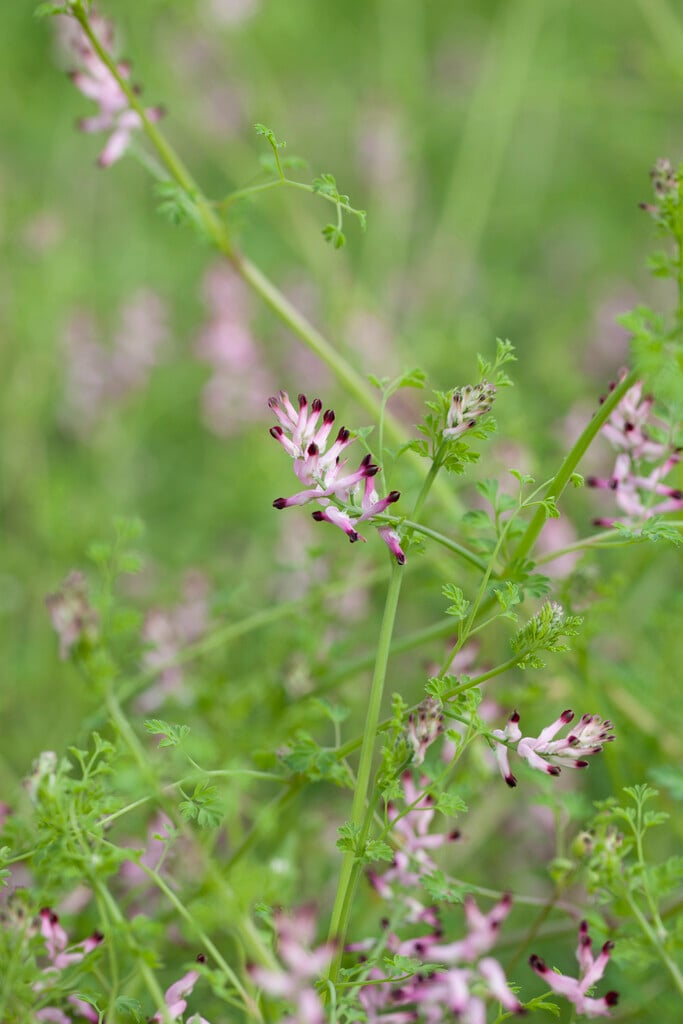
A scrambling, herbaceous annual, commonly found on farmland and waste ground in the countryside, with small, deeply divided grey-green foliage. Upright spikes of pink flowers with dark crimson red tips appear from April to October. Often seen as a weed in gardens, but a food source for some insects and birds
Size
Ultimate height
0.1–0.5 metresTime to ultimate height
1 yearUltimate spread
0.1–0.5 metresGrowing conditions
Moisture
Moist but well–drainedpH
Acid, Alkaline, NeutralColour & scent
| Stem | Flower | Foliage | Fruit | |
| Spring | Pink Red | Grey Silver Green | ||
|---|---|---|---|---|
| Summer | Pink Red | Grey Silver Green | ||
| Autumn | Pink Red | Grey Silver Green | ||
| Winter |
Position
- Full sun
- Partial shade
Aspect
East–facing or South–facing or West–facing
Exposure
Exposed or Sheltered Hardiness
H5Botanical details
- Family
- Papaveraceae
- Native to GB / Ireland
- Yes
- Foliage
- Deciduous
- Habit
- Trailing
- Name status
Correct
How to grow
Cultivation
Grow in light, well-drained soil in a sunny location. Has the potential to become a nuisance if left unmanaged in some gardens, but can be easily removed by hand
Propagation
Propagate by seed. Self-seeds freely as self-fertile
Suggested planting locations and garden types
- Wildlife gardens
Pruning
No pruning required
Pests
Generally pest-free
Diseases
Generally disease-free
Get involved
The Royal Horticultural Society is the UK’s leading gardening charity. We aim to enrich everyone’s life through plants, and make the UK a greener and more beautiful place.