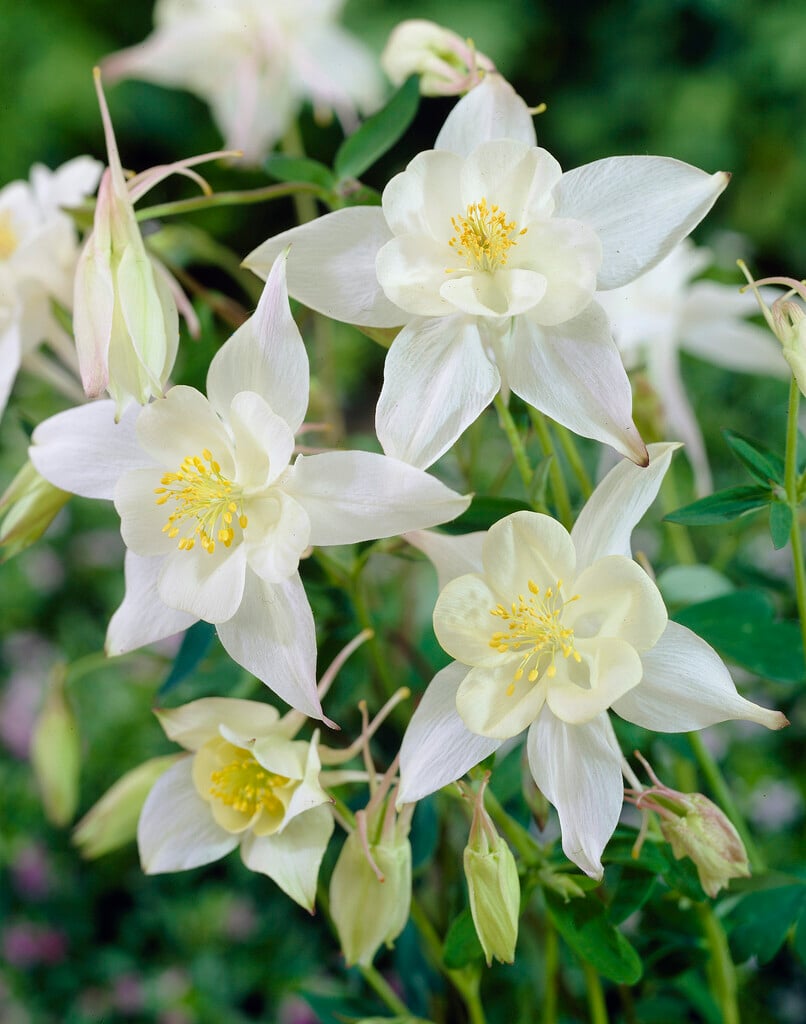
Aquilegia 'Silver Queen'

<em>Aquilegia</em> 'Silver Queen' visionspictures.com
Plants for pollinators
Herbaceous Perennial

A clump-forming perennial to 70cm high, with lobed and divided light green leaves. Large white flowers with long, fine spurs are borne on tall stems above the foliage from early to mid-summer

Position

Full sun, Partial shade

Soil Types

Chalk, Clay, Loam, Sand

Max Height

0.5-1 metres

Max Spread

0.1-0.5 metres

Size

Time to Maturity
2–5 years
Max Spread
0.1-0.5 metres
Max Height
0.5-1 metres

Growing Conditions

Chalk Clay Loam Sand
Moisture
Moist but well–drained
pH
Acid or Alkaline or Neutral

Position

Full sun Partial shade
Aspect
East–facing or South–facing or West–facing
Exposure
Sheltered
Hardiness
H5

Colour & Scent

Season Stem Flower Foliage Fruit
Spring
Summer
Autumn
Winter

Botanical Details

Family
Ranunculaceae
Native to GB/Ireland
No
Foliage
Deciduous
Habit
Bushy, Columnar upright
Genus
Aquilegia are clump-forming herbaceous perennials with long-stalked, ternately divided basal leaves and erect, leafy stems bearing bell-shaped flowers with spreading, coloured sepals and petals with spurs, on branched stems
Name Status
Unresolved

How to Grow

Cultivation

Grow in fertile, moist but well-drained soil in full sun or partial shade. See aquilegia cultivation for more detailed advice

Propagation

Propagate by seed, though self-seeded plants may not come true. Established plants can also be propagated by division in spring, but they dislike root disturbance and will be slow to recover

Suggested planting locations and garden types

  • Cottage and informal garden
  • Patio and container plants
  • Wildlife gardens
  • Cut flowers
  • Flower borders and beds
  • Underplanting of roses and shrubs

Pruning

Deadhead to encourage flowering. Cut foliage back to the ground as it fades

Pests

May be susceptible to aphids, aquilegia gall midge, aquilegia sawfly and caterpillars

Diseases

May be susceptible to powdery mildews and aquilegia downy mildew