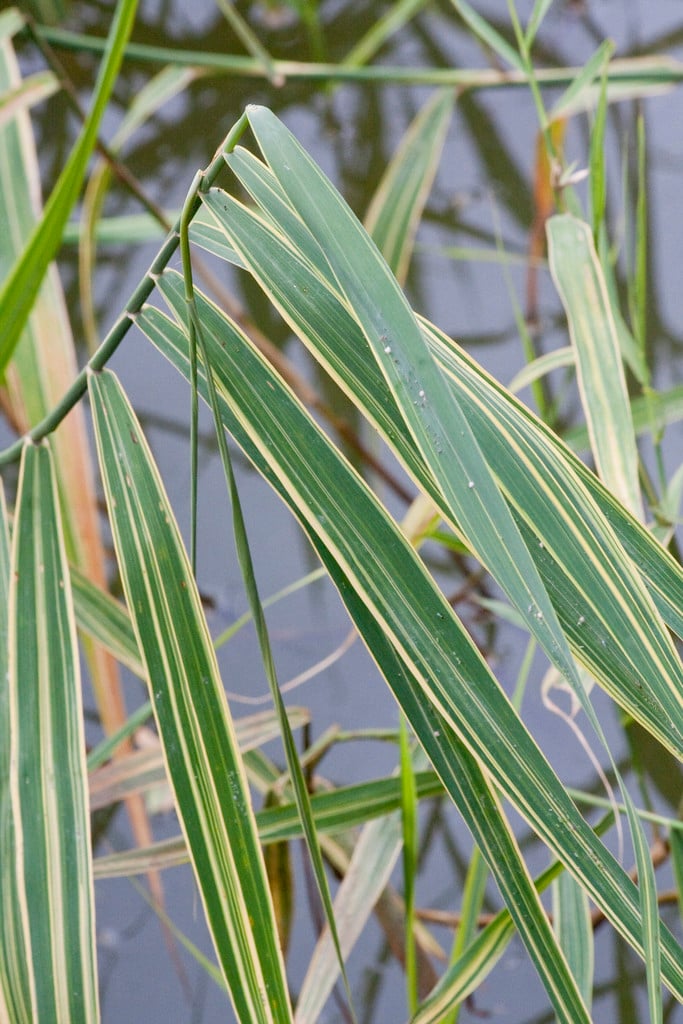
Phragmites australis subsp. australis 'Variegatus' (v)
reed 'Variegatus'
A rapidly-spreading deciduous grass that will form an extensive colony of erect, leafy stems to 2m. Drooping, linear leaves with yellow variegation turn light brown in autumn, and terminal dark purple flowering panicles are borne from late summer
Buy this plant
Size
Ultimate height
1.5–2.5 metresTime to ultimate height
5–10 yearsUltimate spread
2.5–4 metresGrowing conditions
Moisture
Moist but well–drained, Poorly–drainedpH
Acid, Alkaline, NeutralColour & scent
| Stem | Flower | Foliage | Fruit | |
| Spring | Green Variegated Yellow | |||
|---|---|---|---|---|
| Summer | Purple | Green Variegated Yellow | ||
| Autumn | Brown | |||
| Winter |
Position
- Full sun
Aspect
South–facing or West–facing
Exposure
Exposed or Sheltered Hardiness
H7Botanical details
- Family
- Poaceae
- Native to GB / Ireland
- No
- Foliage
- Deciduous
- Habit
- Columnar upright
- Genus
Phragmites are vigorous rhizomatous perennial grasses with linear leaves and large feathery purple panicles of flowers in late summer
- Name status
Accepted
How to grow
Cultivation
Unlike the green-leaved forms, this particular cultivar of reed is suited not only to wetlands, but may also be grown in moisture retentive sites where it is less vigorous, though still has the potential to become a nuisance if not managed well. Suitable for bog gardens
Propagation
Divide in early spring or summer
Suggested planting locations and garden types
- Wildlife gardens
- Wildflower meadow
Pruning
Cut back in autumn or winter
Pests
Generally pest-free
Diseases
Generally disease-free
Get involved
The Royal Horticultural Society is the UK’s leading gardening charity. We aim to enrich everyone’s life through plants, and make the UK a greener and more beautiful place.