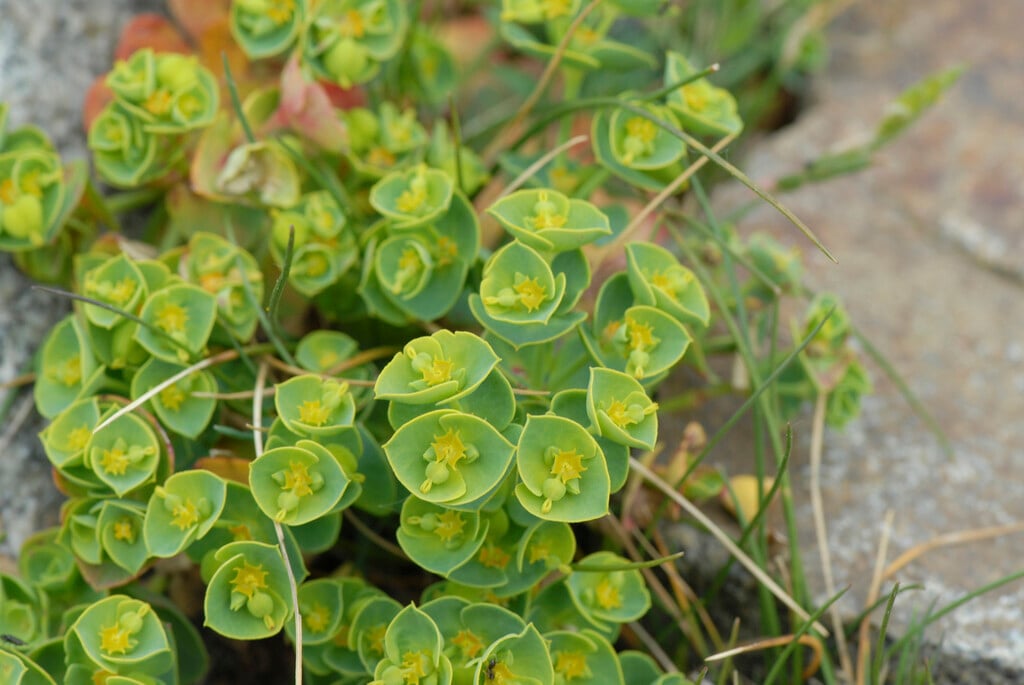
Euphorbia portlandica
Portland spurge
An uncommon native biennial or short-lived perennial, found on the coast around Ireland, Wales and south-west England. Distinctive red stems, which can reach up to 40cm, carry whorls of narrow, rather fleshy, smooth, blue-green leaves. Small clusters of yellow-green, cup-shaped flowers, surrounded by green bracts, develop from May to August

Buy this plant
Size
Ultimate height
0.1–0.5 metresTime to ultimate height
2–5 yearsUltimate spread
0.1–0.5 metresGrowing conditions
Moisture
Well–drainedpH
Alkaline, NeutralColour & scent
| Stem | Flower | Foliage | Fruit | |
| Spring | Red | Green | Green | |
|---|---|---|---|---|
| Summer | Red | Green | Green | |
| Autumn | Red | Green | ||
| Winter |
Position
- Full sun
Aspect
South–facing or West–facing
Exposure
Exposed or ShelteredDrought resistance
Yes Hardiness
H5Botanical details
- Family
- Euphorbiaceae
- Native to GB / Ireland
- Yes
- Foliage
- Deciduous
- Habit
- Clump forming
- Potentially harmful
- Humans/Pets: IRRITANT to skin/eye, harmful if eaten. Wear gloves and other protective equipment when handling. For further information and contact numbers regarding pets, see the HTA guide to potentially harmful plants
- Genus
Euphorbia can be annuals, perennials, shrubs or succulents, with milky sap and small flowers held within cupped, often colourful bracts
- Name status
Correct
How to grow
Cultivation
Grows naturally on sand dunes and grassy areas by the sea, so very tolerant of coastal conditions. Needs free-draining soil in a sunny spot
Propagation
Propagate by seed
Suggested planting locations and garden types
- Coastal
- Gravel garden
Pruning
No pruning required
Pests
Generally pest-free
Diseases
Generally disease-free
Get involved
The Royal Horticultural Society is the UK’s leading gardening charity. We aim to enrich everyone’s life through plants, and make the UK a greener and more beautiful place.