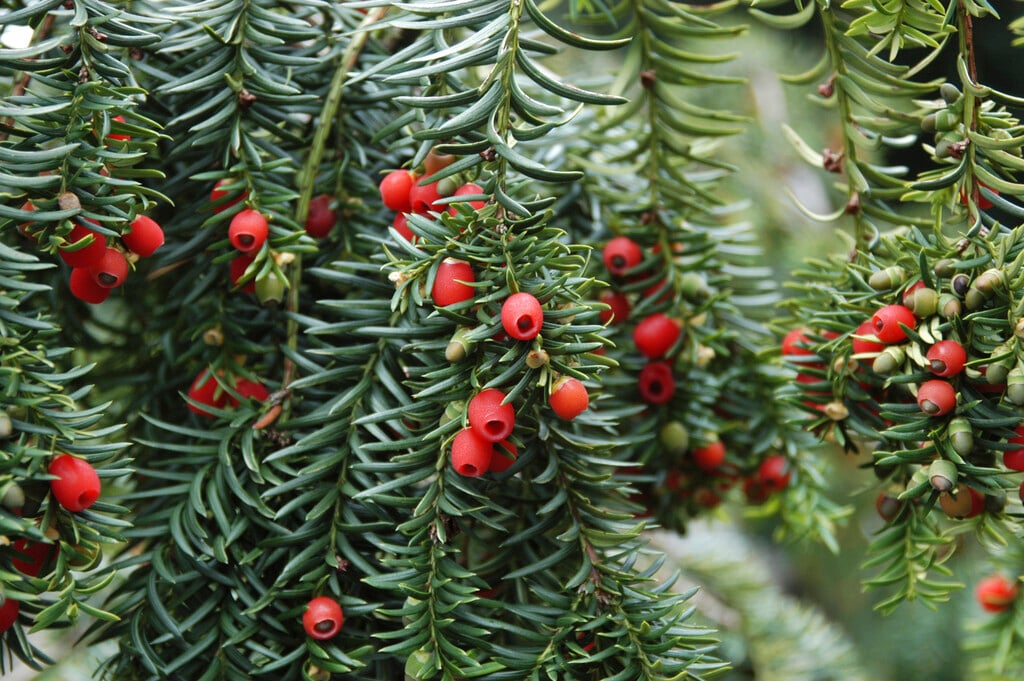
Taxus baccata 'Dovastoniana' (m or f)

RHS Plant Profile
Dovaston's yew
Dovaston's yew visionspictures.com

Other common names

westfelton yew

Synonyms

Taxus baccata 'Dovastonii'

Shrubs Trees

A small, domed evergreen tree to approximately 8m height and spread, with branches almost down to ground level. It has dark green narrow leaves held on slightly sparse braches, creating less shade. Tolerant of pollution

Position

Full shade, Full sun, Partial shade

Soil Types

Chalk, Clay, Loam, Sand

Max Height

4-8 metres

Max Spread

wider than 8 metres

Size

Time to Maturity
20–50 years
Max Spread
wider than 8 metres
Max Height
4-8 metres

Growing Conditions

Chalk Clay Loam Sand
Moisture
Well–drained
pH
Acid or Alkaline or Neutral

Position

Full shade Full sun Partial shade
Aspect
East–facing or North–facing or South–facing or West–facing
Exposure
Exposed
Hardiness
H7

Colour & Scent

Season Stem Flower Foliage Fruit
Spring
Summer
Autumn
Winter

Botanical Details

Family
Taxaceae
Native to GB/Ireland
No
Foliage
Evergreen
Habit
Bushy, Spreading branched
Potentially harmful
TOXIC if eaten. Wear gloves and other protective equipment when handling. TOXIC to pets if eaten - see the HTA guide to potentially harmful plants for further information and useful contact numbers
Genus
Taxus are small evergreen trees or large shrubs of rounded habit, with dense, linear leaves, insignificant flowers and, on female plants, conspicuous fleshy red arils surrounding the solitary seeds
Name Status
Accepted

How to Grow

Cultivation

Grow in any well drained soil. Both male and female plants available - females will have red berries, males masses of pale yellow flowers making clouds of pollen. For more information see tree cultivation.

Propagation

Propagate by semi-ripe cuttings

Suggested planting locations and garden types

  • Architectural
  • Low Maintenance
  • Hedging and screens

Pruning

Pruning group 1 if grown as a tree. As a hedge, Yew is pruned in late summer or more often for a very formal appearance. Yew is also suitable for topiary.

Pests

May be susceptible to tortrix moth, vine weevil, gall mites and scale insects

Diseases

May be susceptible to phytophthora root diseases