Digitalis 'John Innes Tetra'
foxglove 'John Innes Tetra'
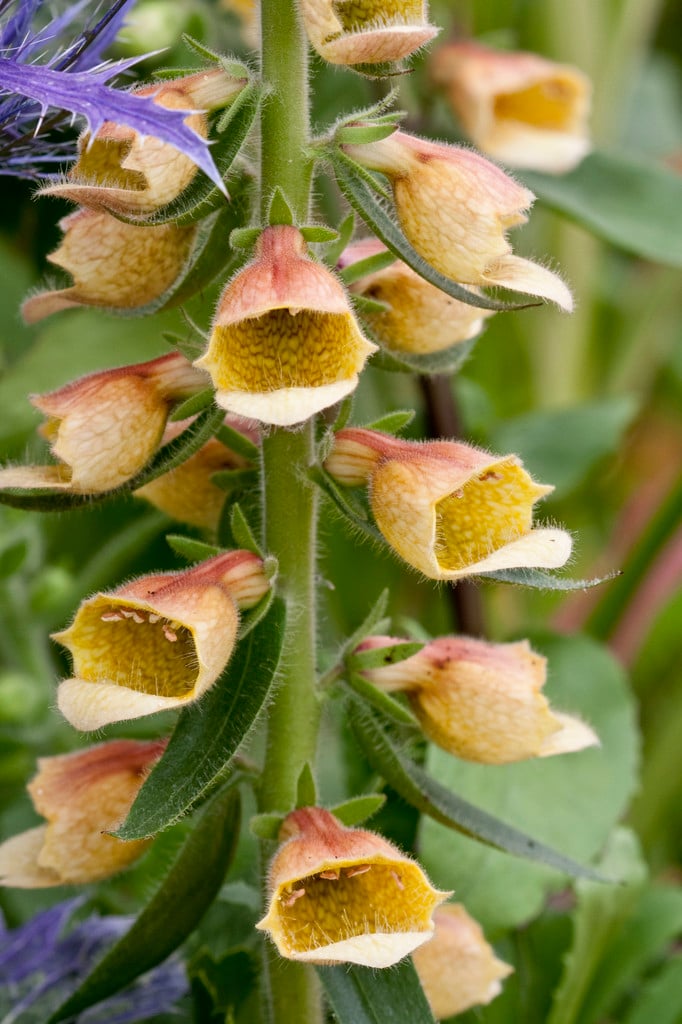
A rosette-forming herbaceous perennial, 60cm high, with lance-shaped, dark green leaves, and spikes of soft coppery yellow flowers, spotted and flushed with bronze, from mid to late summer
Size
Ultimate height
0.5–1 metresTime to ultimate height
2–5 yearsUltimate spread
0.1–0.5 metresGrowing conditions
Moisture
Moist but well–drainedpH
Acid, NeutralColour & scent
| Stem | Flower | Foliage | Fruit | |
| Spring | Green | |||
|---|---|---|---|---|
| Summer | Bronze Orange Pink Yellow | Green | ||
| Autumn | Green | |||
| Winter | Green |
Position
- Full sun
- Partial shade
Aspect
West–facing or East–facing or South–facing or North–facing
Exposure
Exposed or Sheltered Hardiness
H6Botanical details
- Family
- Plantaginaceae
- Native to GB / Ireland
- No
- Foliage
- Semi evergreen
- Habit
- Clump forming
- Potentially harmful
- TOXIC if eaten. Wear gloves and other protective equipment when handling TOXIC to pets - see the HTA guide to potentially harmful plants for further information and useful contact numbers
- Genus
Digitalis can be biennials or usually short-lived perennials forming a rosette of simple leaves with bell-shaped flowers in slender, erect, usually one-sided racemes
- Name status
Accepted
How to grow
Cultivation
Grow in moist but well-drained humus-rich soil in sun, and add organic mulch. See foxglove cultivation for further advice
Propagation
Propagate by seed, or by division, removing offsets, in spring; it will also self-seed
Suggested planting locations and garden types
- City and courtyard gardens
- Cottage and informal garden
- Patio and container plants
- Wildlife gardens
- Cut flowers
- Flower borders and beds
Pruning
No pruning required except deadheading the flowering stems if self-seeding is not wanted, and which may encourage stronger growth the following year
Pests
May be susceptible to caterpillars but generally pest-free
Diseases
May be susceptible to fungal leaf spots, powdery mildews, downy mildews, crown rots and root rots
Get involved
The Royal Horticultural Society is the UK’s leading gardening charity. We aim to enrich everyone’s life through plants, and make the UK a greener and more beautiful place.