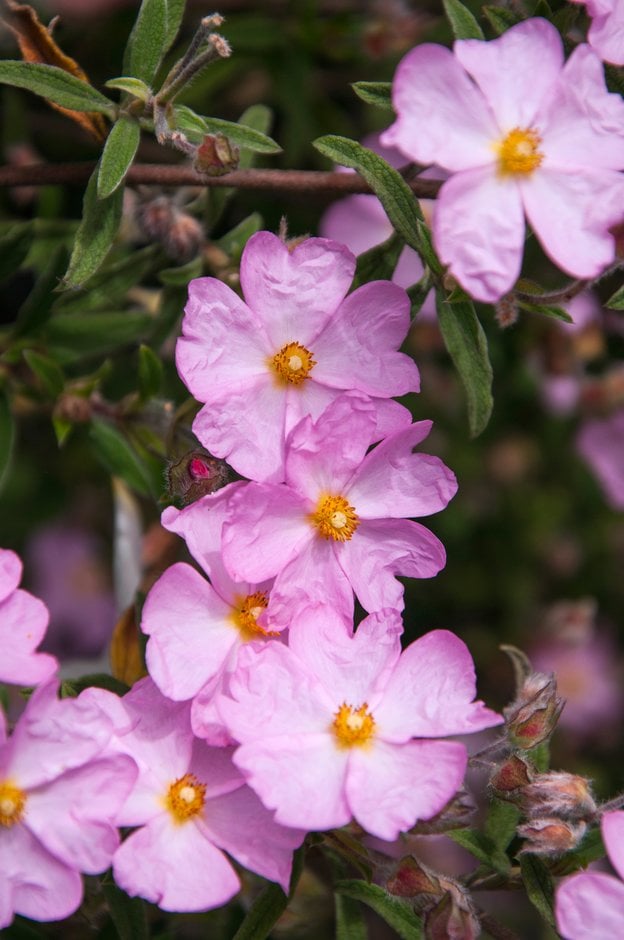
Size
Ultimate height
0.5–1 metresTime to ultimate height
2–5 yearsUltimate spread
0.5–1 metresGrowing conditions
Moisture
Well–drainedpH
Acid, Alkaline, NeutralColour & scent
| Stem | Flower | Foliage | Fruit | |
| Spring | Green Grey Silver | |||
|---|---|---|---|---|
| Summer | Pink | Green Grey Silver | ||
| Autumn | Green Grey Silver | |||
| Winter | Green Grey Silver |
Position
- Full sun
Aspect
South–facing or West–facing
Exposure
Sheltered Hardiness
H4Botanical details
- Family
- Cistaceae
- Native to GB / Ireland
- No
- Foliage
- Evergreen
- Habit
- Bushy
- Genus
Cistus are evergreen shrubs with simple, opposite leaves and 5-petalled, bowl-shaped, white, pink or purplish flowers, each lasting a single day, over a long period in summer
- Name status
Correct
- Plant range
- Sicily, Cyprus
How to grow
Cultivation
Grows best in well-drained, especially poor, sandy, soil in a sheltered site in full sun. Generally lime-tolerant, but may become chlorotic on very chalky soils
Propagation
Root softwood cuttings form late spring to early summer; semi-ripe cuttings from midsummer to late summer
Suggested planting locations and garden types
- Cottage and informal garden
- Mediterranean climate plants
- City and courtyard gardens
- Coastal
- Gravel garden
- Rock garden
- Banks and slopes
- Flower borders and beds
Pruning
Pruning group 8 or pruning group 9 if necessary; they do not respond well to hard pruning so old leggy plants are best replaced. Pinch back young plants after flowering to encourage a bushy habit
Pests
Generally pest-free
Diseases
May be susceptible to honey fungus
Get involved
The RHS is the UK’s gardening charity, helping people and plants to grow - nurturing a healthier, happier world, one person and one plant at a time.