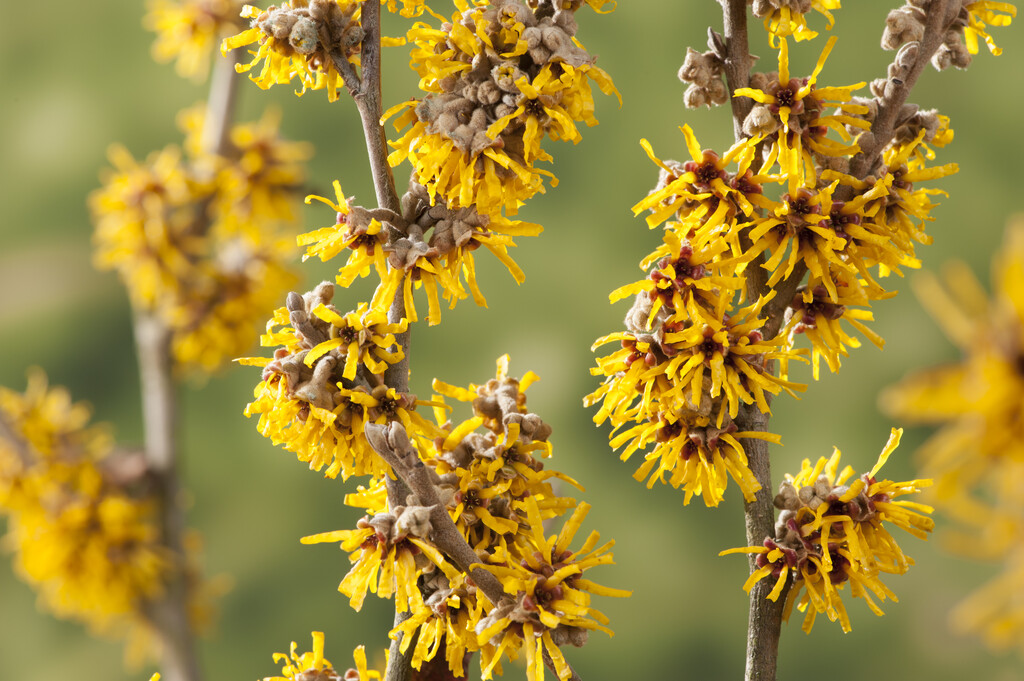
Hamamelis 'Brevipetala'

RHS Plant Profile
witch hazel 'Brevipetala'
witch hazel 'Brevipetala' visionspictures.com

Synonyms

Hamamelis mollis 'Brevipetala'
Hamamelis mollis 'Jim Wells'
Hamamelis mollis 'Aurantiaca'

Trees Shrubs

A deciduous shrub or small tree to 4m high, with ascending branches creating a vase-shaped form. Leaves are broadly ovate, mid to dark green, softly hairy with broadly serrated margins, and turn shades of yellow in autumn. Produces dense clusters of very fragrant flowers on bare stems in late winter and early spring, each with four short, narrow, golden yellow petals

Position

Full sun, Partial shade

Soil Types

Chalk, Clay, Loam, Sand

Max Height

2.5-4 metres

Max Spread

2.5-4 metres

Size

Time to Maturity
10–20 years
Max Spread
2.5-4 metres
Max Height
2.5-4 metres

Growing Conditions

Chalk Clay Loam Sand
Moisture
Moist but well–drained
pH
Acid or Neutral

Position

Full sun Partial shade
Aspect
East–facing or South–facing or West–facing
Exposure
Sheltered
Hardiness
H5

Colour & Scent

Fragrance Flower
Season Stem Flower Foliage Fruit
Spring
Summer
Autumn
Winter

Botanical Details

Family
Hamamelidaceae
Native to GB/Ireland
No
Foliage
Deciduous
Habit
Columnar upright, Spreading branched
Genus
Hamamelis are deciduous shrubs with broadly ovate or rounded leaves, sometimes colouring well in autumn, and fragrant yellow to red flowers with 4 narrow petals, borne on the leafless branches in late winter and early spring, or in autumn
Name Status
Accepted

How to Grow

Cultivation

Grow in moderately fertile soil with good drainage, in an open but not exposed position. Prefers neutral to acid soil; will tolerate deep, humus rich soils over chalk. See hamamelis cultivation for more detailed advice

Propagation

Propagate by grafting in late winter, or by budding in late summer

Suggested planting locations and garden types

  • City and courtyard gardens
  • Cottage and informal garden
  • Flower borders and beds

Pruning

Pruning group 1

Pests

Generally pest-free

Diseases

May be susceptible to coral spot, honey fungus, phytophthora root rot and powdery mildews