Quick Facts
Winter-flowering shrubs
1
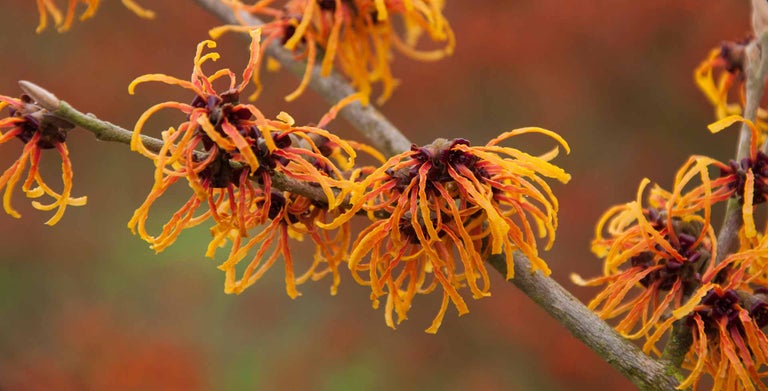
Fragrant, spider-like flowers
2
Good for autumn colour
3
Prefers acid to neutral soil
4
Best in sun or partial shade
5
Low maintenance; they don’t need regular pruning
6


Before you get started
Choosing a witch hazel
There is a range of species and cultivars of witch hazel so choose the colour, fragrance and ultimate size and spread most suitable for your garden. Look out for cultivars which performed well in RHS trials and have been awarded the RHS Award of Garden Merit (AGM).
Top tip
These flowering shrubs are best planted close to pathways or doors where you can enjoy their scented flowers on winter days.
Buying witch hazel
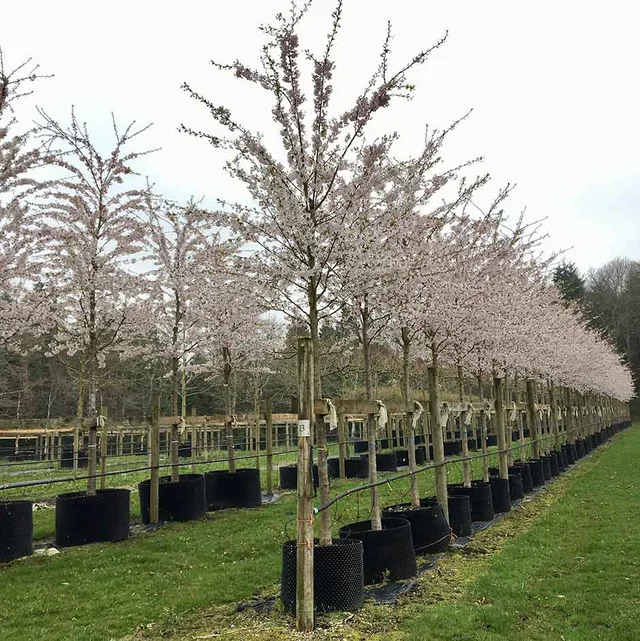
- Witch hazels are widely sold in garden centres as container-grown plants
- Look for plants with a number of well-placed branches, which are evenly distributed to form a vase shape
- Avoid any plants showing signs of stress, damage or disease
- You can use the RHS Find a Plant tool to find stockists

Planting
Where to plant witch hazels
Ideally choose an open, sunny position in the garden. Although witch hazels will tolerate partial shade, they become straggly in very shady sites.
Witch hazels need free-draining soil that doesn’t dry out in summer (water if needed). A light soil with plenty of organic matter is best.
They will grow on heavier clay soils that are also improved by mulching with organic matter, such as well-rotted garden or manure, and ensuring good drainage by planting on a slight mound, about 25-30cm (10in-1ft) high and 1m (3½ft) in diameter.
Acid to with a of between 4.5 and 6.5 is ideal. Witch hazels can tolerate deep soils over chalk where plenty of added organic matter has been used as a , but they won’t tolerate shallow chalky soil.
Top tip
Witch hazels grow slowly but eventually make large spreading shrubs, so make sure you allow your new plant enough space to develop naturally as pruning is best kept to a minimum.
How to plant witch hazels
Witch hazels are best planted between October and April, but avoid planting if the ground is frozen or . You can plant container grown witch hazels at any time, but if they are planted during spring and summer they will need regular, careful watering to keep the soil moist.
Most witch hazel cultivars are grafted onto Hamamelis virginiana rootstock. Sometimes the rootstock can produce suckers (shoots) – there is more information about what to do about suckers in the ‘dealing with suckers’ section below.
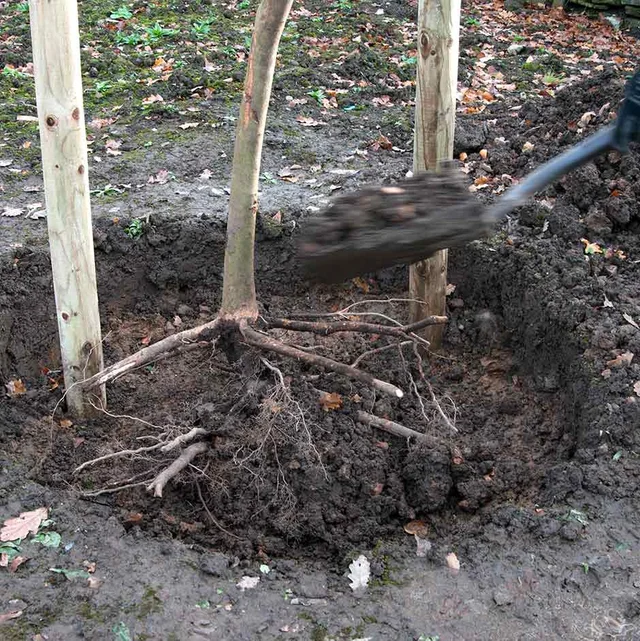
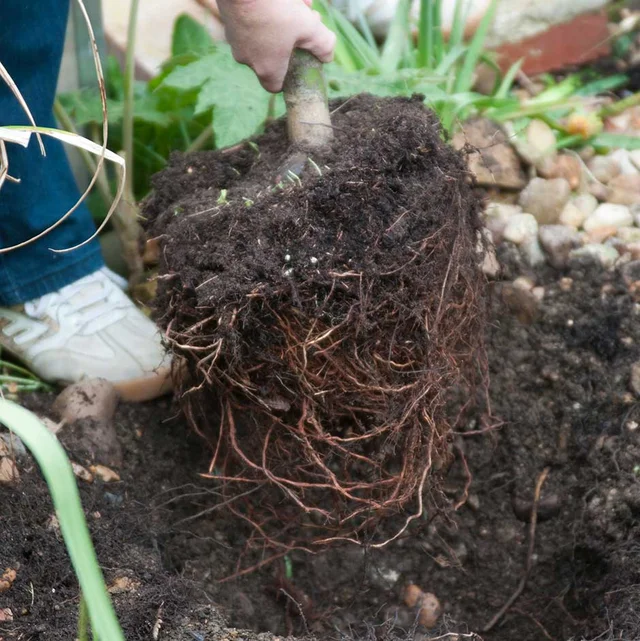
To minimise problems from suckering, do not bury the graft union (visible as a bulbous part of the stem near to ground level) and avoid planting too deeply by just burying the uppermost roots with soil.
Ongoing Care
Watering
Water your young witch hazels regularly until they are fully established (often this is two to three years) and continue to water mature plants during dry periods. Lack of moisture in winter can cause flowers to drop in autumn/winter.

Feeding
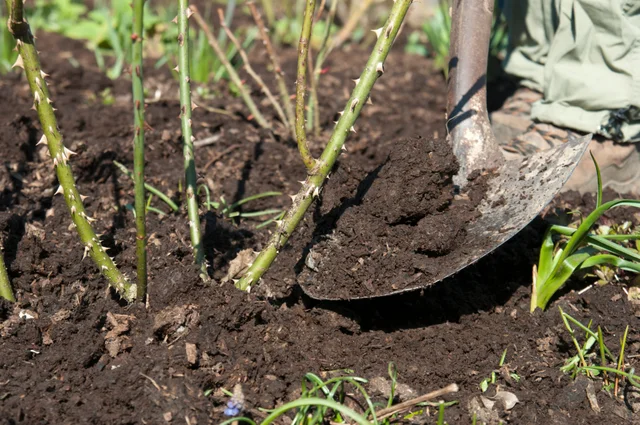
Witch hazels don’t need regular feeding, but it will boost growth of young plants if you apply a top dressing of a general balanced fertiliser, such as a handful per sq m/yd of Growmore or Fish, Blood and Bone, in late winter or early spring.
Deadheading
There is no need to deadhead witch hazels.
Pruning and Training
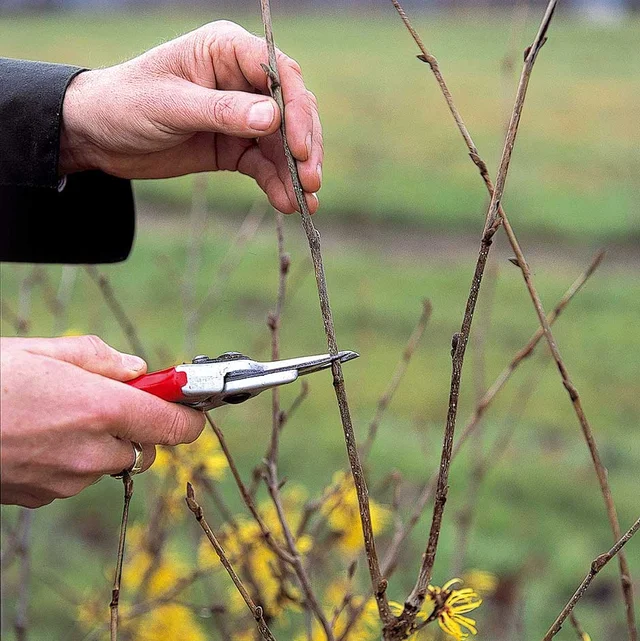
Witch hazel don’t need regular pruning – it’s best to let them grow freely. Simply remove any dead, damaged, congested, crossing or weak shoots.
Restricting size
If you need to restrict the size of your witch hazel, the following steps will help.
- After flowering, cut back the previous season’s growth to two leaf buds from the main stem
- Leaf buds are longer and narrower than the more rounded flower buds, so try not to remove the flower buds in the process
- This pruning will encourage new extension growth and also promote flower formation at the base of the new shoots
Reducing the size of a large shrub
If you have a mature plant that has outgrown its allotted space, you can remove some old branches by cutting back to a healthy new shoot. It’s best to stage this pruning over two or three years. Unfortunately the plant may recover slowly and the rootstock can produce lots of suckers (shoots).
Dealing with suckers
Witch hazels are usually grafted onto the Hamamelis virginiana rootstock, which may send up suckers (shoots) from, or below, ground level. Suckers can be recognised as they tend to hold on to their leaves longer in autumn. If you spot any suckers, trace them back to their point of origin and cut them off as cleanly and as close to the main stem as you can. Any stumps left behind usually shoot again, so cutting them off carefully in the first place can save time in the future.
Fan-training witch hazels
You can also fan-train a witch hazel. To do this:
- Attach horizontally-placed wires to a wall or fence, in layers roughly 30cm (1ft) apart
- You want to create a Y-shape with the stems to begin with – a central stem at the base with two good stems tied in, one on either side.
- To make this a neat Y-shape, neatly position two canes either side behind the branches to form the two arms of the Y. Now tie in a branch to each . Cut out the other stems, including the central stem, to make the Y-shape.
- As they grow, leave the best-placed shoots to extend the framework of branches upwards and sideways. However, cut very strong side-shoots and badly placed branches back to two leaf buds from the main branch after flowering each year. This will enhance and keep the shape well balanced.
Propagating
Grafting
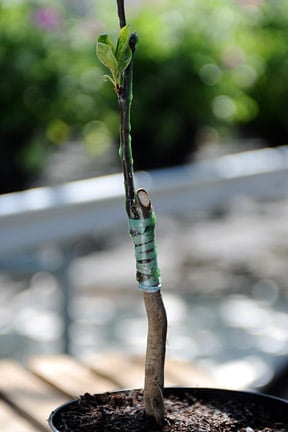
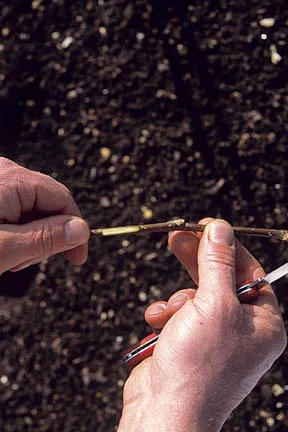
Commercially, most witch hazels are grafted or budded onto Hamamelis virginiana rootstocks, which is why they are quite pricey to buy. The rootstocks and species plants, such as Hamamelis mollis, are raised from seed (see below). When the seedling rootstocks are large enough, the is grafted on.
You can try at home. It’s tricky but, if successful, grafted plants could can flower in four to five years.
Seed
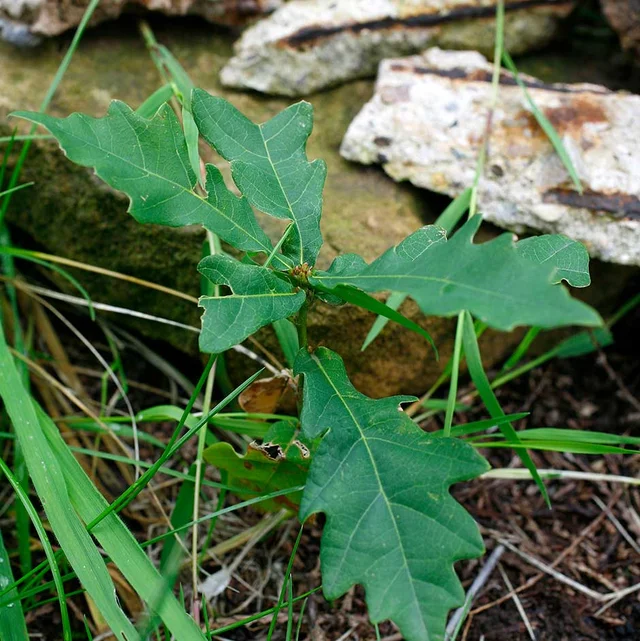
This works well for species, but not cultivars as they don’t come true from seed – you’ll get something new and different.
To raise plants from seed place ripe seed capsules in a covered tray, they will explode to release seeds. Sow the seeds fresh and overwinter them in a to germinate in the following spring.
Cuttings
of witch hazel are not easy to root or keep alive. Take in mid-spring using very free-draining cuttings , such as 40 percent peat-free multi-purpose compost, 30 percent grit and 30 percent composted .
- Cover with a clear polythene tent or provide mist-bench conditions to increase around the cuttings
- Provide bottom heat of 20°C (68°F), such as in a
- Rooting takes eight to ten weeks
- Keep them in the cuttings compost over their first winter and don’t pot up in potting compost until the following spring
Layering
Another way to increase your stock is to try layering your existing plants. It takes a couple of years, but is very easy to try.
Problems
Witch hazels are usually relatively trouble free but look out for:
- The root diseases phytophthora root rot and honey fungus
- Rabbits and deer may be a problem, especially in rural areas.
- Vine weevil larvae can be troublesome for witch hazels in containers
- Powdery mildew on leaves