RHS / Adam Duckworth
 Appearance
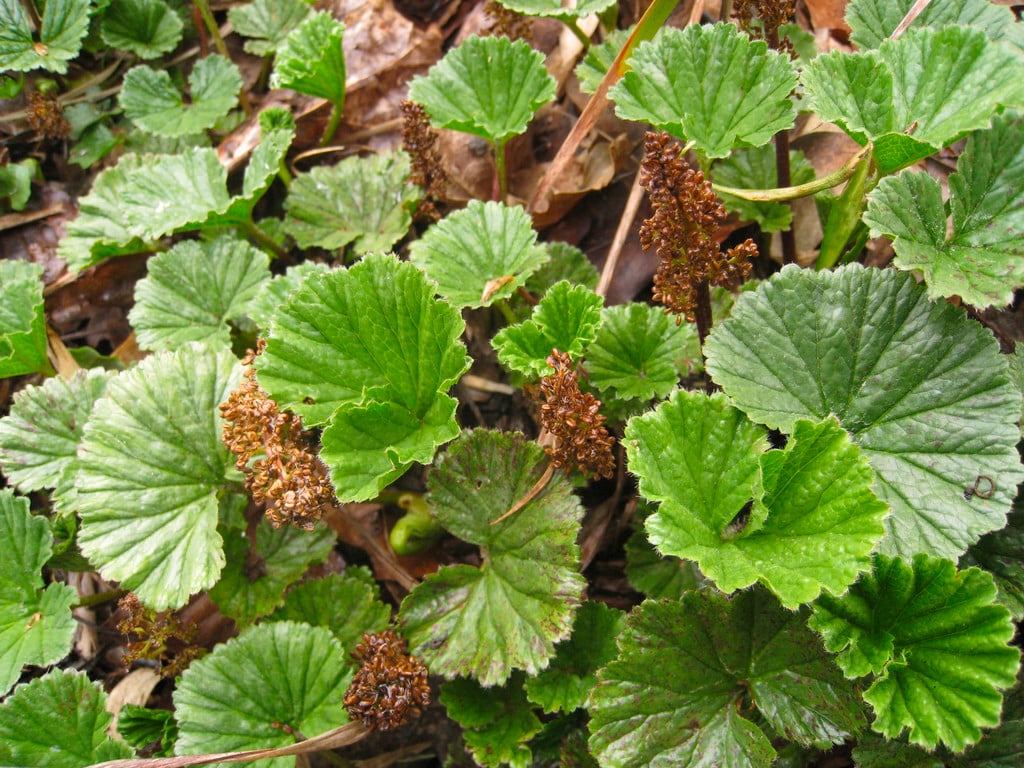
Large species: huge, deeply veined, jagged-edged leaves are held horizontally on robust, upright, prickly stems. Large, conical spikes of reddish-green flowers emerge around the base of the plant in late spring.Small species: mat-forming perennials with umbrella-like green leaves. In summer, short greenish or reddish flower spikes appear, followed by orange-red berries.
Preferences
Small species of gunnera revel in permanently damp soil. They need protection from extended freezing conditions. Gunnera prefer to grow in sun or light shade.
Dislikes
Growth is poor on dry soils or in deep shade. Frost can damage the crown of the plant.
Did you know?
Strict rules apply in the UK for Gunnera tinctoria and G. × cryptica – it is an offence to plant or cause these to grow in the wild. They are banned from sale and gardeners already growing these plants should undertake measures to prevent spread beyond their garden and ensure correct disposal of plants. Existing plants in gardens do not have to be removed, but any excess material should be disposed of either by burning on site or taking to a waste processing centre (find out more). These rules do not apply to G. insignis and G. killipiana, but these are not hardy in most gardens.
Gunnera – your questions answered

Introducing Gunnera
x of x
Showing
x to x
of x