






Iris
Growing irises is easy and provides some of the earliest blooms in the garden; later-flowering varieties compliment summer-flowering plants. Whether in containers or in the open garden, they are hardy and provide colour year after year.

RHS Garden Rosemoor in Devon is home to the Rowden collection of water irises, bred over many years by John and Galen Carter of Rowden Garden Nurseries, and gifted to RHS Rosemoor on their retirement
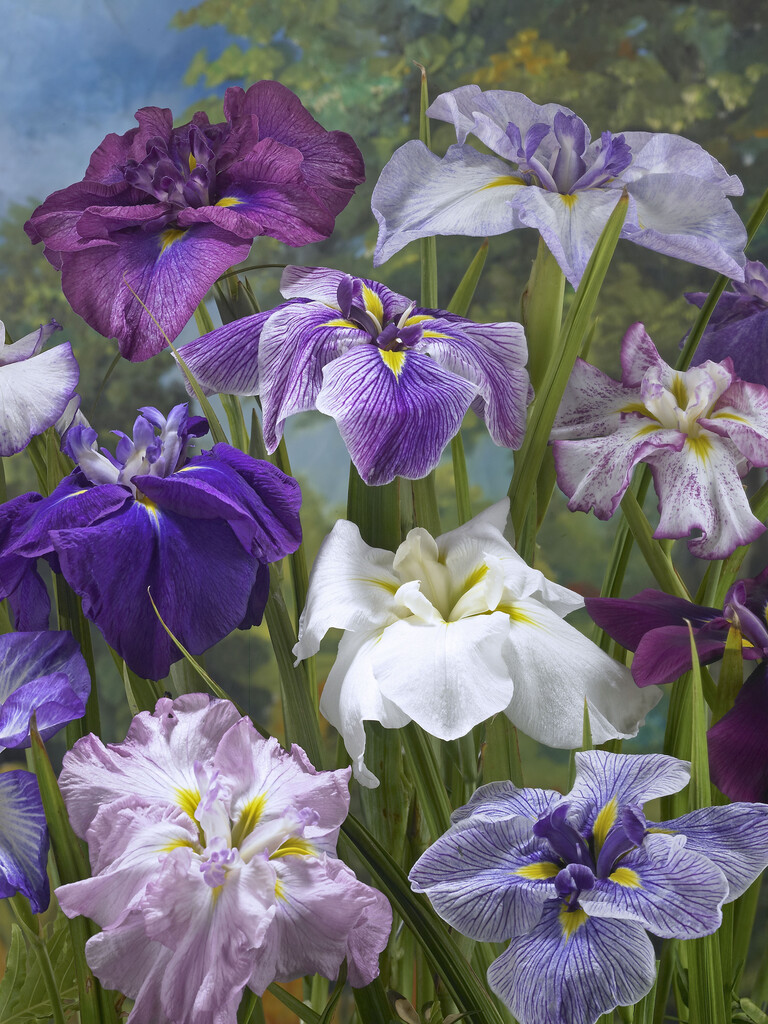
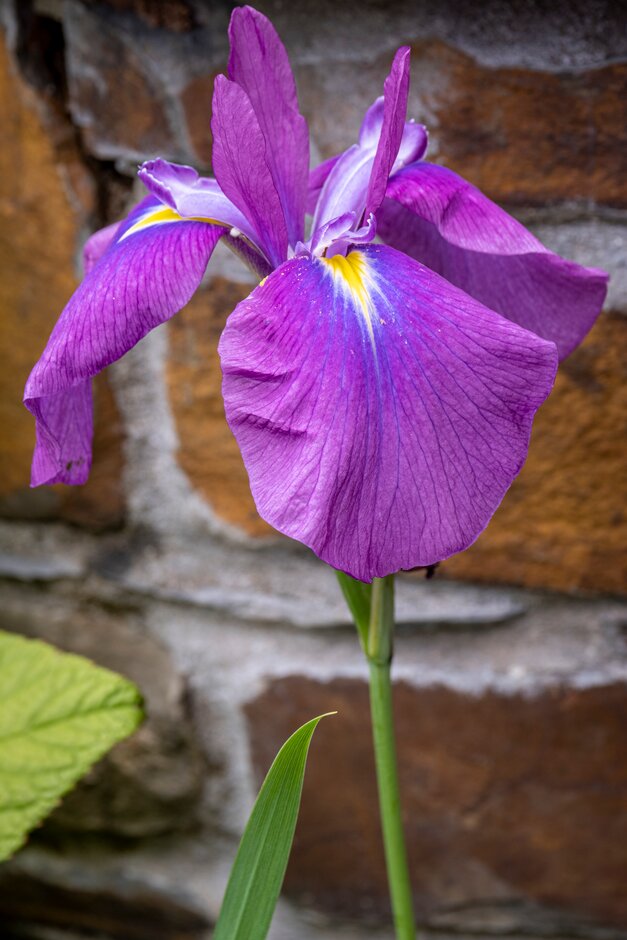
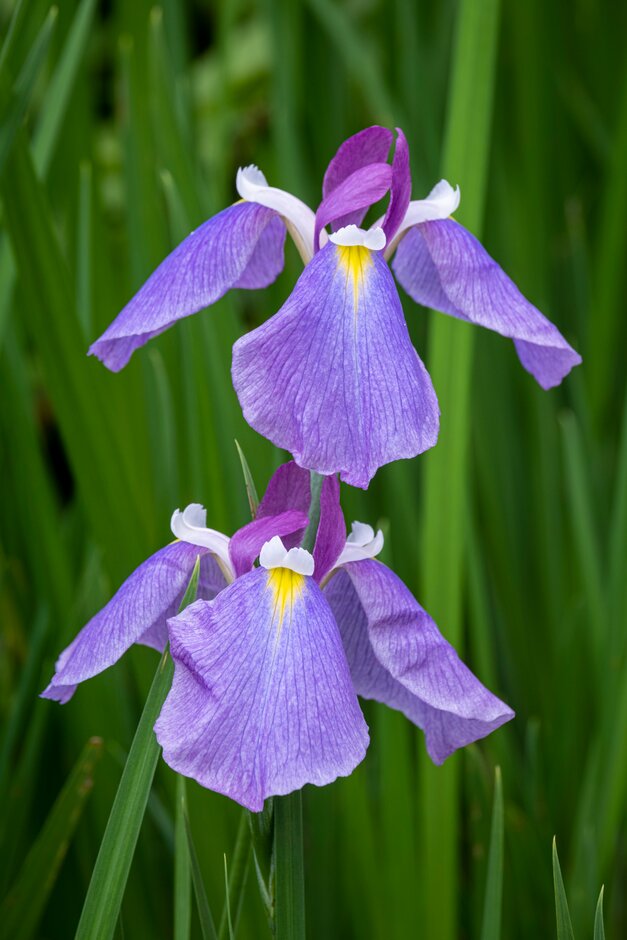
With flamboyant flowers in a range of colours and architectural foliage, water irises are an attractive addition to a pond or bog garden. RHS Garden Rosemoor is now home to the Plant Heritage National Plant Collection of these striking plants, made up predominantly of Japanese water irises (Iris ensata).
John and Galen Carter, former owners of pond and bog plant specialists Rowden Garden Nurseries on Dartmoor in Devon, had a passion for water irises. Their breeding programme over many years resulted in a superb collection of more than 80 cultivars. When planning their retirement, they approached RHS Garden Rosemoor Curator Jon Webster about taking on the collection to safeguard it for the future. “I was extremely pleased to accept as this was a very well documented collection containing all the named cultivars that they’d bred and was also registered as a Plant Heritage National Collection,” says Jon.
In 2012, the process of moving the collection to RHS Rosemoor began and was the catalyst for rejuvenating the Bog Garden in Lady Anne’s Garden. Beds and watercourses were cleared and the irises became the main focus of the display, alongside other moisture-loving plants such as Hosta and Rodgersia to extend the season of interest. A copper shelter was added where visitors can sit and look down over the Bog Garden plantings. Some of the iris collection can also be found in the Stone Garden and Cherry Garden .
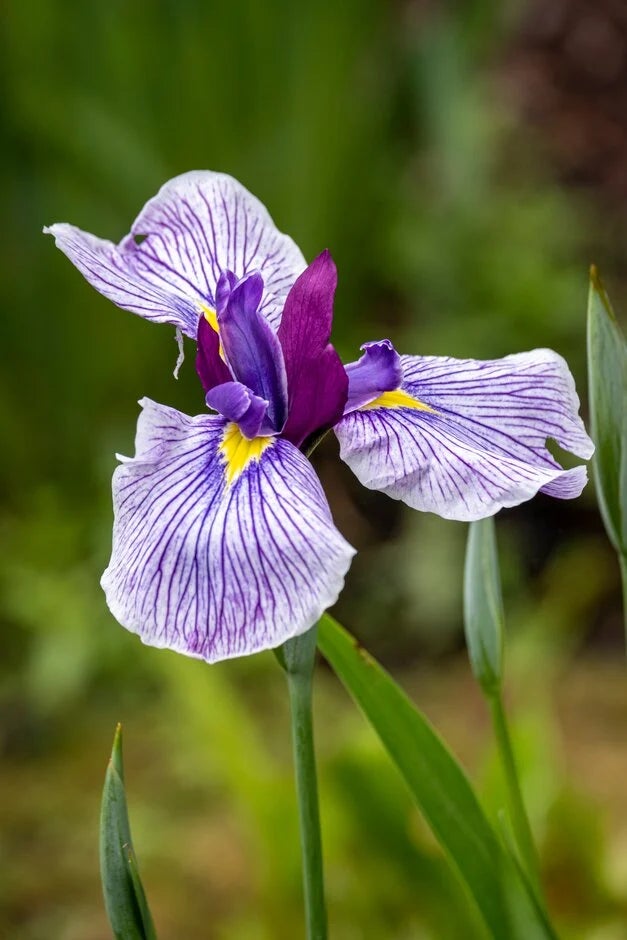
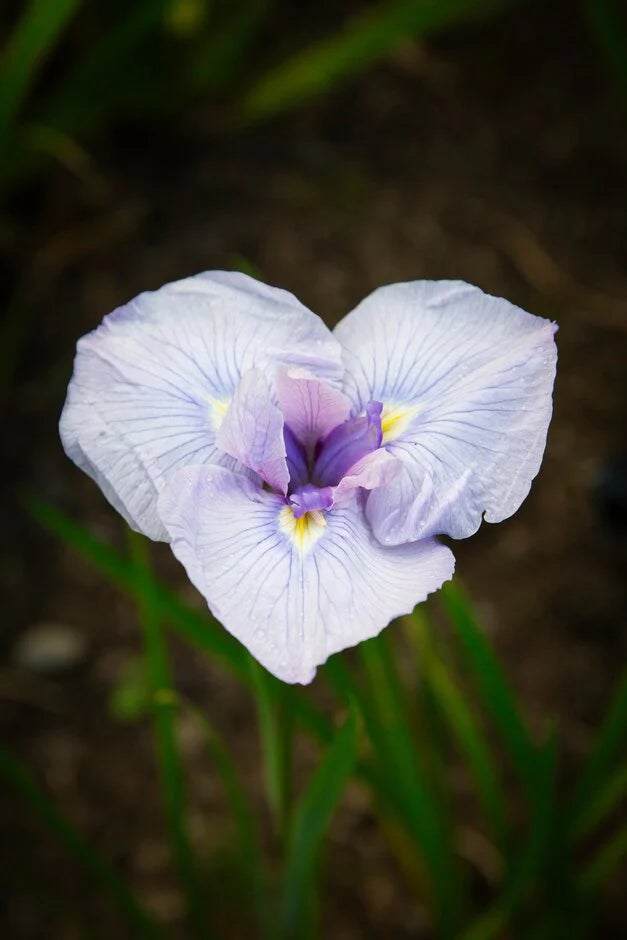
"The collection gives a wonderful display of form and colour in early summer, and though individual blooms last only a few days the flowers will continue to be produced for a number of weeks."
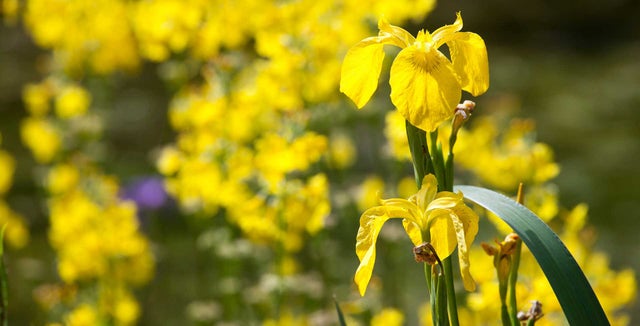
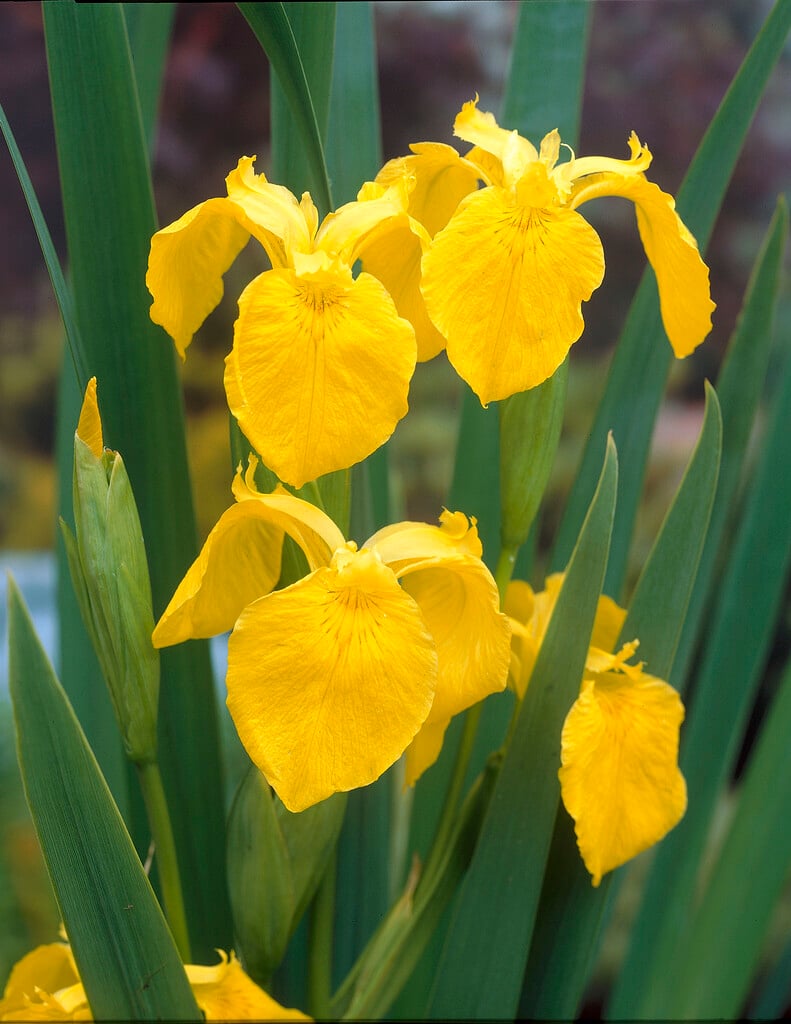
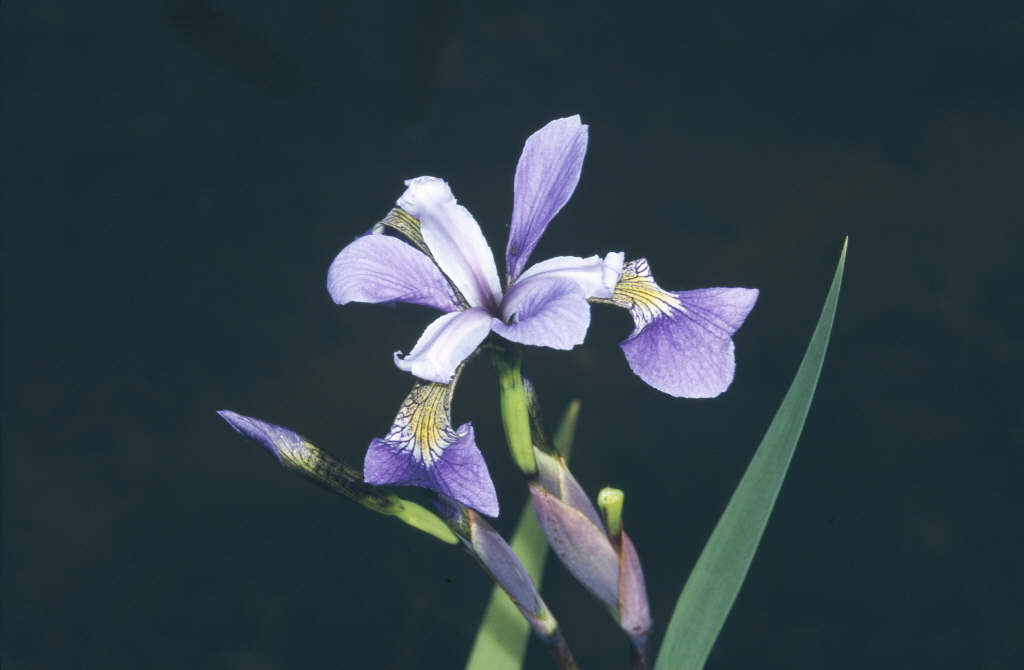
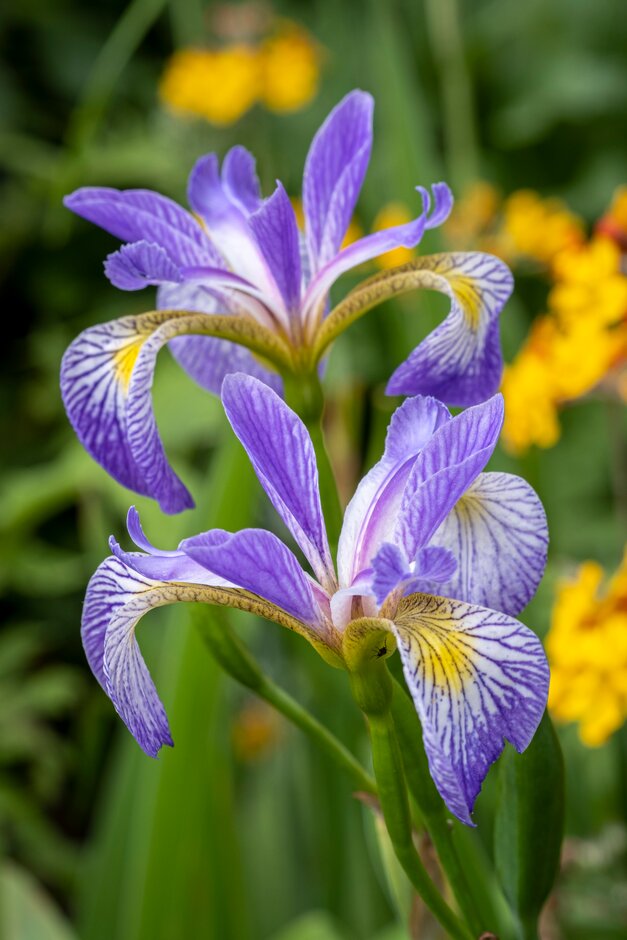
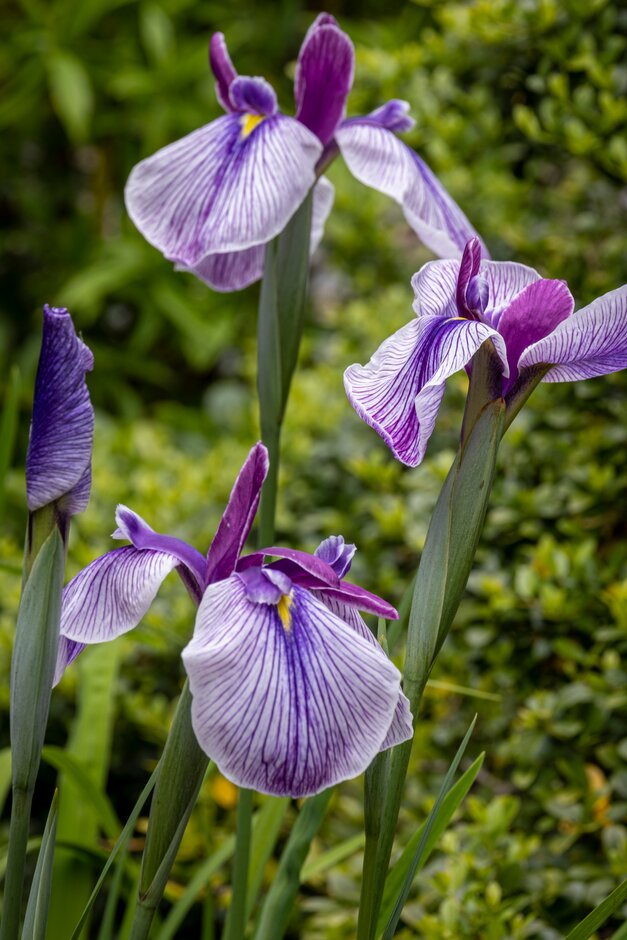
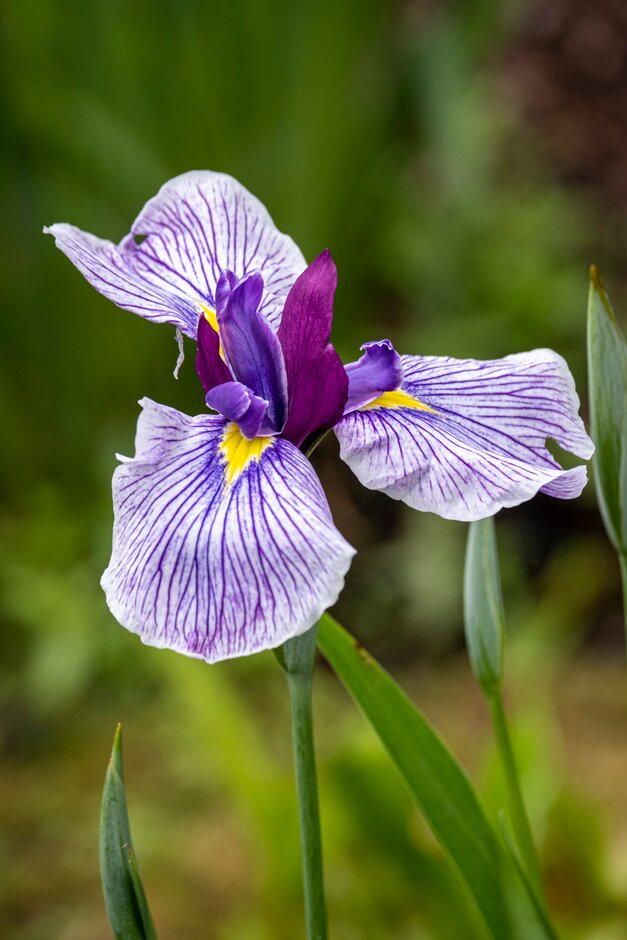
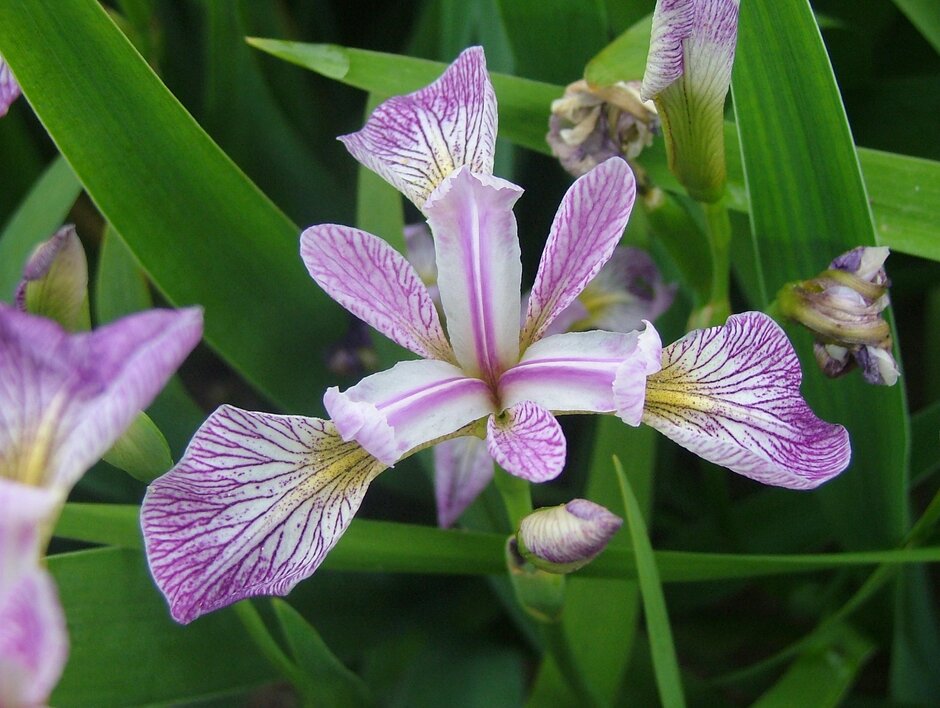
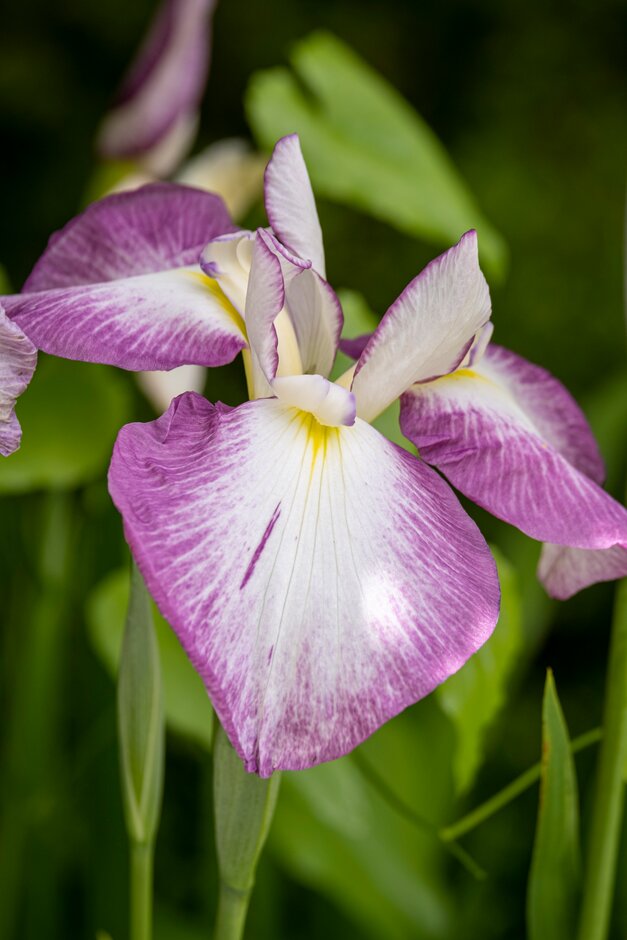
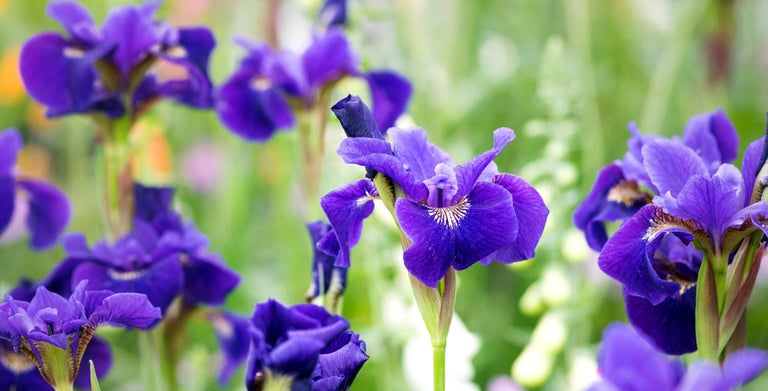
The collection is comprised of more than 80 Rowden hybrids across four species: from Japan, Iris ensata (Japanese water iris) and Iris laevigata (smooth iris), British Iris pseudacorus (yellow iris) and North American Iris versicolor (blue flag), of which the largest group in the collection is Japanese water irises. The colours range from white and yellow to pale blue and dark purple, many of them with beautiful patterning. “There are a number of rare cultivars in the collection, such as Iris ensata ‘Rowden Prince’ which we managed to get through exchange with another collection holder of water iris, Tor Garden Plants,” says Jonathan. “ Iris ensata ‘Rowden Knave’ initially proved difficult to maintain but since moving it to a drier area of the border, has developed well.”
Breeder John Carter used to work for the diplomatic service in the Middle East, which influenced some of the names chosen for his Iris ensata cultivars, such as ‘Rowden Sultan’ , ‘Rowden Shah’ and ‘Rowden Naib’ .
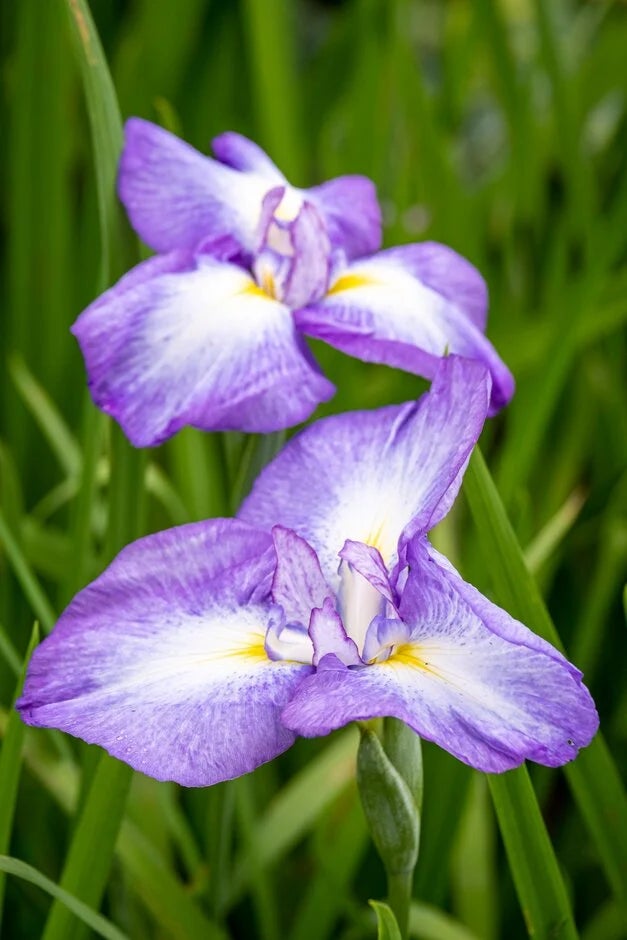
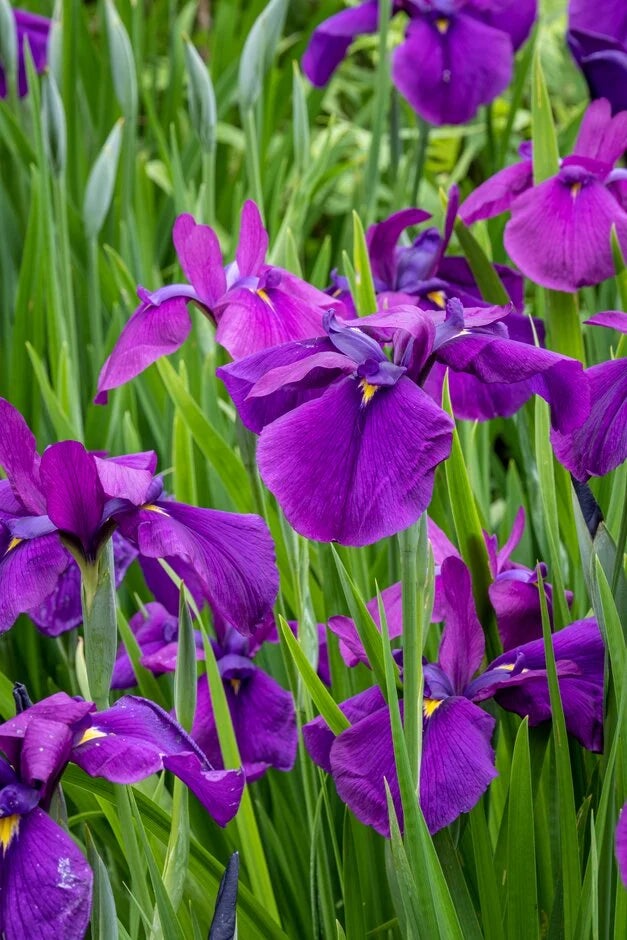
"My favourites are the Japanese water irises because they are one of the most dramatic species with large flowers and a great colour range."
“The collection does well at RHS Rosemoor on a site of acid clay. Iris ensata likes a heavy moist soil while I. versicolor, I. laevigata and I. pseudacorus like it on the wetter side – they thrive at the margins of large ponds or streams.” says Jonathan. “Some more vigorous forms can be made less so if planted in a slightly drier position.”
“Water irises don’t have the most robust of blooms so can be damaged equally by hot sunny days and heavy rain. Dappled shade can help them to bloom at their best and give a longer flower life. We use plants that like similar conditions, such as Hosta, Persicaria, Pulmonaria and Rheum to keep the different cultivars apart and prevent them getting mixed up.”
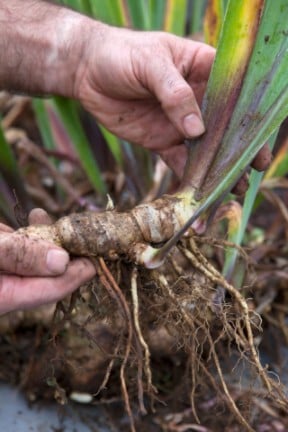
“When growing cultivars that produce seed, remember to cut off the seed pods to ensure that all the energy goes back into the plants. This also ensures that seed is not spread around the mother plant, producing that can look similar but will differ from the parent. Cultivars should only be propagated vegetatively with disinfected tools to ensure they stay true and free of virus.”
"The collection as a whole offers a wonderfully diverse range of colours and markings. I particularly like the dark purple veining on the flowers of Japanese water iris ‘Rowden Satrap’ – it’s really quite striking."
Tor Garden Plants , which took over Rowden Garden Nurseries, is starting to bulk up plant stock and sell the irises commercially again. There are further cultivars to add to the RHS Rosemoor collection, so plants are being exchanged when material becomes available to ensure this amazing horticultural legacy is preserved for the future.