
Discover a National Plant Collection of Liriodendron
Former Garden Manager Peter Jones tells us about the collection of Liriodendron that are held at RHS Garden Wisley
The tulip tree (Liriodendron tulipifera) is a striking species that has long fascinated gardeners in the UK. Its distinctive foliage, shaped like a duck’s foot, emerges in lush green and transforms into vibrant shades of yellow and coppery brown in autumn. In early summer, semi-mature specimens (typically 5–10 years old) produce elegant tulip-shaped flowers, yellow with an orange flare at the base. These blooms are followed by upright clusters of single-winged seeds, reminiscent of cones. As the tree matures, its light grey corky develops intricate vertical ridges, adding further character.
Tulip trees are remarkably tolerant of pollution, making them excellent candidates for urban planting where space allows. They thrive in moist, fertile soil, ideally slightly acidic, though they can tolerate chalk, and prefer full sun or partial shade. The genus comprises only two species: Liriodendron tulipifera, to eastern North America and Liriodendron chinense, native to China and Vietnam. Both species can achieve impressive heights, with the North American species reaching up to 58.5m (192 ft). While L. tulipifera is most commonly grown in the UK, interest in the Chinese species and its hybrids is steadily increasing.
RHS Wisley’s National Plant Collection
RHS Garden Wisley is home to one of the UK’s most diverse collections of tulip trees, proudly holding National Collection status since March 2020. Across its 185-acre site, RHS Wisley showcases 18 different types of Liriodendron, including rare and unusual cultivars.

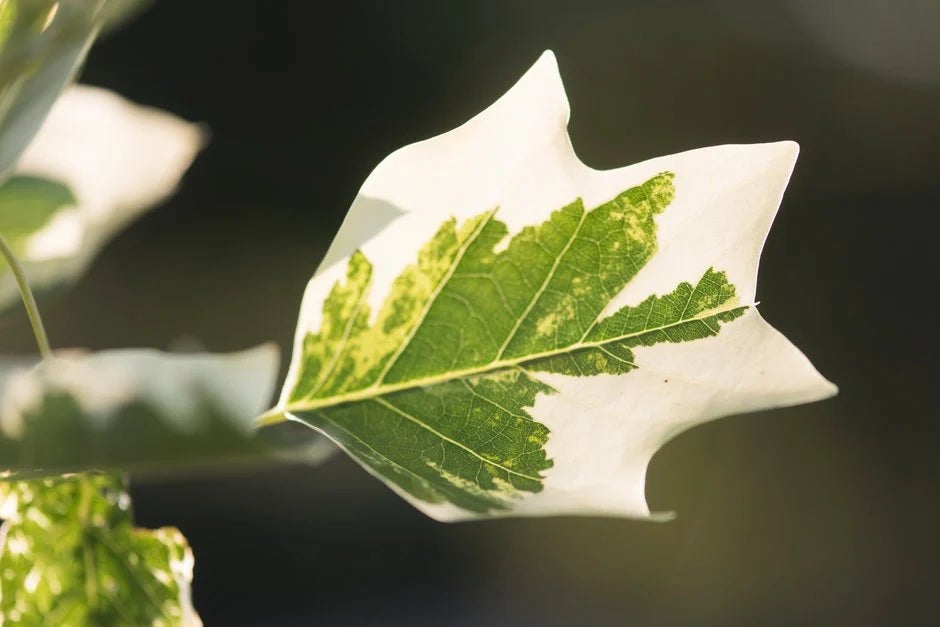
Highlights include the UK Champion ofL. tulipifera ‘Mediopictum’ in Oakwood, a rare with inverted , light yellow and cream at the leaf centre, framed by dark green edges. At the Bowes Lyon Rose Garden, two towering specimens of L. tulipifera ‘Fastigiatum’ flank the pavilion, their upright habit and buttery yellow autumn colour creating a dramatic display.
RHS Wisley continually expands its collection, sourcing rare cultivars from European arboretums. Recent additions include:
- L. × sinoamericanum ‘Chapel Hill’ – a between chinense and tulipifera, noted for coppery-pink emerging foliage
- L. ‘Snowbird’ – a striking cultivar with pale white variegation that contrasts beautifully against green backgrounds
- L. ‘Glen Gold’ – raised in Australia, this tree boasts large yellow leaves fading to lime green, offering a bold garden statement

Pruning for smaller spaces
While tulip trees are renowned for their grandeur, their size can deter gardeners with limited space. At RHS Wisley, innovative pruning techniques have made these trees accessible to smaller gardens. Over the past three years, the team has successfully experimented with coppicing, cutting young trees back to 45 cm above the graft union after establishment. This bold approach encourages vigorous regrowth with oversized foliage, creating a lush shrub-like effect.
Although coppiced trees will not flower, the dramatic foliage more than compensates. Annual pruning maintains the form and after several years a network of branch unions develops, producing even more extension growth. For best results, ensure good growing conditions and apply a balanced fertiliser post-pruning. This technique works particularly well on L. chinense where new leaves emerge in coppery-bronze tones, and can also be applied to species such as Catalpa and Paulownia.

Why grow tulip trees?
Tulip trees offer year-round interest, from their curious leaf shape and vibrant flowers to rich autumn colour. With thoughtful pruning, these qualities need not be confined to large gardens and parks. Whether adding bold greenery to a courtyard or creating a tropical-inspired scheme, Liriodendron is a genus that rewards adventurous gardeners.

For more details about the collection at RHS Garden Wisley, please email Horticulturist Jack Aldridge