Quick Facts
Low-maintenance succulent houseplants that can cope with some neglect
1
Small plump leaves of various curious shapes in different species
2
Choices include: string of beads, string of tears and string of bananas
3
Ideal for hanging planters and shelves, to show off their trailing stems
4
They prefer bright indirect light, but will tolerate some sun
5
Easy to propagate
6


Before you get started
String of beads and its relatives – what are they?
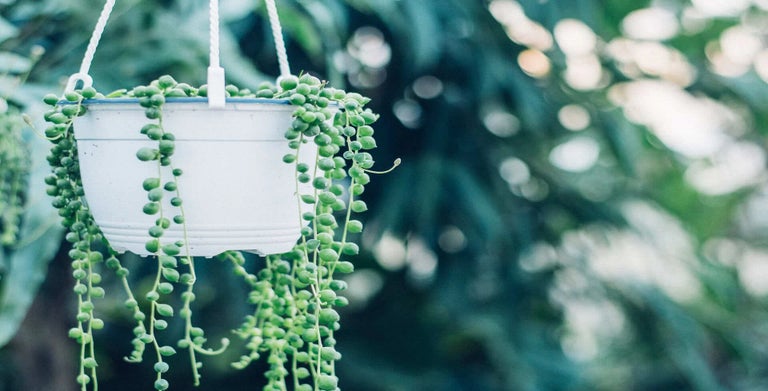
These trailing succulent houseplants are known botanically as Curio – an ideal name for such charming yet curious-looking plants. There are several species suited to sharing our homes, offering a choice of leaf shapes that give them their various common names, including string of tears, string of bananas, string of watermelons, and so on. The most popular is Curio rowleyanus, the classic string of beads, with long trailing stems covered in small green pea-like leaves.
These succulent plants originally come from arid regions of South Africa, and their fleshy leaves are able to store water, to last them through dry spells. When grown as houseplants, they need similar conditions to most other , including free-draining, gritty , warmth, bright light and modest watering through the .
Take care when handling these plants, as the can cause severe skin irritation. They are also poisonous, so keep them out of reach of children and pets.
For more on growing succulent houseplants, see our guide:
Choosing ‘string of’ plants
As these characterful plants become more widely known, an ever-increasing range of species and cultivars are becoming available, with leaves of various fascinating shapes. These include:
- String of beads, Curio rowleyanus (or string of pearls/peas) – this is the original, and a houseplant classic, with bright green, spherical leaves on thin cascading stems up to 90cm (3ft) long
- String of wasabi peas, C. rowleyanus ‘Variegatus’ – a of the above, with pea-like green and cream leaves
- String of tears, C. citriformis – has pointed ovoid leaves on short stems, up to 10cm (4in) long
- String of watermelons, C. herreianus – striped, egg-shaped leaves on trailing stems up to 30cm (1ft) long
- String of bananas, C. radicans – long, curved green leaves, on stems up to 90cm (3ft) long
- String of dolphins, C. peregrinus – like the above but with branched leaves
Other (unrelated) trailing plants with similar quirky charm include string of hearts (Ceropegialinearis subsp. woodii AGM) and string of turtles (Peperomiaprostrata).
Buying ‘string of’ plants
String of beads is the most widely available of these plants, available from most garden centres and houseplant retailers. The other species and cultivars may be a little harder to track down – try specialist houseplant or succulent retailers. Although officially called Curio, they may still be sold under their previous name Senecio – or their more memorable and appealing common names.
When buying, choose plants that are bright green, with plenty of healthy-looking stems and leaves. Avoid any with brown stems, shrivelled foliage or large areas of missing leaves.
Planting
Newly purchased plants can usually stay in their existing container for at least a year until repotting is required. However, if the seems very dark and heavily saturated, you may wish to repot your plant right away.
When repotting, use a free-draining peat-free compost mix for and cacti. Alternatively, make your own by mixing two parts loam-based, peat-free compost with one part horticultural grit.
Choose a pot that is only slightly larger than the previous one, to avoid problems with overpotting. If there’s an excess of compost, it can stay damp for too long after watering, causing root rot. Also make sure the pot has plenty of drainage holes in the base to allow water to drain out easily. Terracotta pots are a good choice, as they draw excess water away from the roots.
See our video guide to repotting houseplants:
Ongoing Care
Location
These plants enjoy bright light, such as near an east- or west-facing window. In summer, keep them out of direct sunlight in the middle part of the day, as this can scorch the leaves. South-facing positions aren’t ideal for this reason. However, if they don’t get enough light, they may become weak and straggly, and the leaves may stay small.
To show off their trailing stems to the full, position them on a high shelf, or in a hanging basket or macramé hanger. They will also trail across a flat surface if you have space. Some species have longer stems than others – string of beads can easily trail 90cm (3ft) or more.
Do take care to position these plants out of reach of children and pets – despite their quirky and appealing appearance, they are toxic and their can be a skin irritant.
Temperature
These plants enjoy typical room temparatures, within the range of 10–25°C (50–75°F). Keep them out of chilly draughts and away from direct heat sources, such as radiators.
Watering
Be careful when watering, as these plants are easily damaged or killed by overwatering. They originally come from arid habitats and store water in their succulent leaves, so can survive periods of drought – or a forgetful waterer – without undue harm.
Water lightly throughout the (from April to September), allowing the to dry out between waterings. Avoiding splashing the foliage. If using a water dish or outer pot, tip away any excess water that collects in it, so the base of the pot is never left standing in water. Ideally use rainwater or filtered water, although they can tolerate tap water. In winter, water only sparingly, if at all. Just make sure the leaves don’t start to shrivel.
Humidity
These dislike , so never mist them or group them close together with other plants. They enjoy good air flow around them, but not chilly draughts.
Feeding
These plants aren’t particularly hungry, but if you want to boost their growth, you can feed them once a month or less, during the growing season (April to September). Use a half-strength, general-purpose liquid fertiliser.
Pruning and Training
If the stems get too long for their location, simply trim them back with scissors. They will soon regrow. Alternatively, move the plant to a higher position, where its stems can trail to their full extent.
Wear gloves when handling or pruning these plants, as the can cause skin irritation.
Propagating
These plants are very easy and fun to propagate, quickly giving you plenty of new plants to increase your houseplant collection or share with friends. There are two easy methods:
- Stem cuttings– these root easily, in about a month. Simply cut a 10cm (4in) length of healthy stem, insert the lower part into moist, peat-free , or peat-free multi-purpose compost with added horticultural grit to improve drainage
- Layering – lay a stem across the surface of a pot or tray filled with peat-free cuttings compost (or mix your own, as above). Peg it down gently with a bent wire staple. Alternatively, loop a long stem back into the existing pot and pin onto the compost surface (this can help to fill out a sparse pot). Once rooted, detach from the parent plant
For more on propagating , see our video guide:
Problems
These plants are generally healthy and easy-going, as long as they’re given the correct growing conditions (see above). Occasional problems to look out for include:
- Stem rot and shrivelling of leaves – from overwatering. Take care to let the dry out between waterings and water only sparingly in winter
- Scorched leaves – due to hot, bright sunlight. cultivars are particularly susceptible
- -sucking insects, such as aphids and mealybugs
For more problem-solving tips, see our guides: