Shutterstock
 Appearance
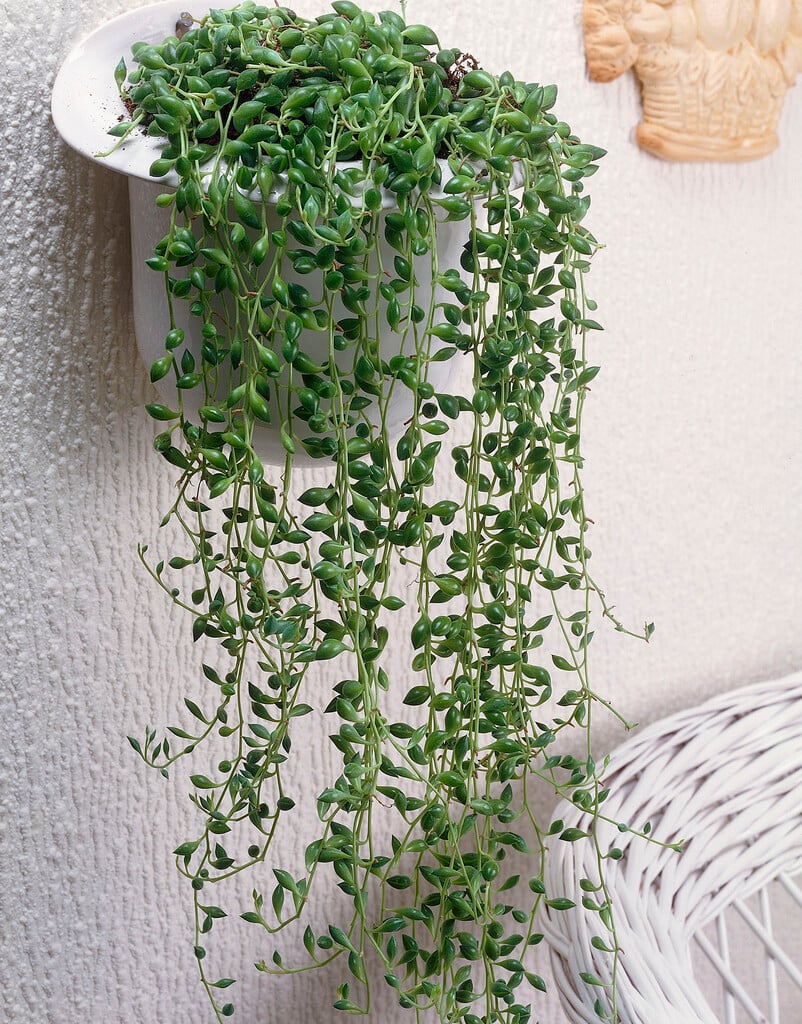
Long trailing stems with many small succulent green leaves, in a choice of weird and wonderful shapes. These range from tiny spheres to teardrops and even (with a bit of imagination) dolphins! These plants look great cascading from a shelf or hanging basket, with stems up to 90cm (3ft) long.
Preferences
Give them a warm, bright position indoors, in a pot of free-draining, peat-free cactus compost. Water lightly, allowing the compost to dry out between waterings. In winter, water sparingly, if at all, only watering if the leaves begin to shrivel. They like low humidity and temperatures of 10–25°C (50–75°F).
Dislikes
Overwatering and excessively damp compost can cause stem rotting. Too little light can lead to straggly stems and smaller, sparser leaves. They dislike cold draughts and temperatures below 10°C (50°F).
Did you know?
Many of these plants have translucent crescents or stripes on the leaves, known as epidermal windows. This adaptation allows light to penetrate inside the leaves, increasing the area available for photosynthesis.
RHS Growing Guide
FREE
Read our comprehensive free RHS Growing Guide:
How to grow string of beads

Introducing String of beads
x of x
Showing
x to x
of x