Aubrieta, Arabis and Aurinia trial 2024–2027
Objectives and purpose of the trial
Colourful blooms spring to life in the trial beds at RHS Hyde Hall
Striking pinks of Arabis blepharophylla ‘Rose Delight’ in April 2025
Plants and location
What was planted?
This trial features 72 distinct cultivar selections of Aubrieta, Arabis and Aurinia, all sourced, submitted, or donated by breeders and growers from across the UK.
The cultivars under evaluation display the following characteristics:
- Aubrieta – Renowned for forming vibrant carpets of colour in late spring and early summer. Most garden cultivars are believed to originate from Aubrieta deltoidea, a naturally variable species that includes both lilac and red-flowered forms
- Arabis – A versatile genus encompassing herbaceous, annual, and perennial plants. It produces long-lasting spring blooms in white, pink, or purple, and typically grows to around 15cm in height. Arabis is a popular choice for alpine and rockery gardens, as well as for container planting
- Aurinia – Formerly classified as Alyssum, this evergreen perennial reaches approximately 20cm tall. It forms a low mound of grey-green foliage, topped with abundant clusters of small, bright yellow flowers
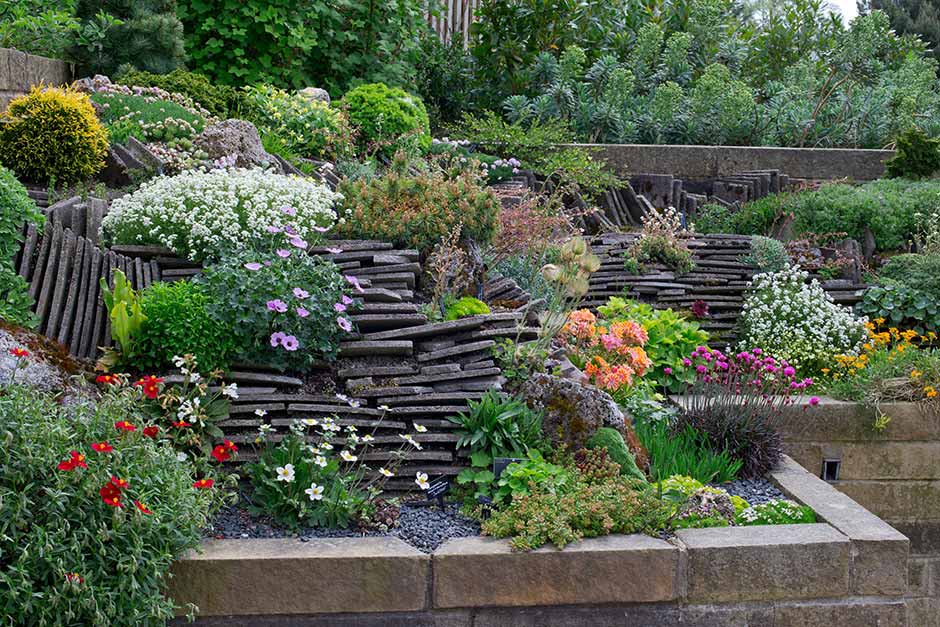
Botanically, alpine plants originate from regions above the tree line – either on mountain ranges around the world or in the lowlands of Arctic and Antarctic zones. In horticultural use, however, the term ‘alpine’ refers more broadly to hardy plants suited to container cultivation, rock gardens, or cascading from wall crevices, where they can replicate their natural habitats on mountain slopes.
Throughout the trial, records will be kept of key growth stages, including the emergence of the first leaves and the onset of flowering. Each entry will be photographed to document overall habit and detailed floral characteristics. Group photographs will also be taken to assess uniformity within each cultivar.
Where was it planted?
Fresh new Aubrieta, Arabis, and Aurinia were planted into the soil of the Dry Garden at RHS Hyde Hall. Before long, these little beauties will create cheerful swathes of spring colour, lighting up any sunny spot. Here are some considerations for planting out these cheerful alpines out in the garden:
Aubrieta
- Thrives best when planted in well-draining soil in full sun
- It is a tough plant and is rarely bothered by insects
- Once established, it has a good drought-tolerance
Arabis
- Easy to grow, preferring a light, well-drained soil
- Can tolerate hot, dry conditions and poor infertile soils
- Doesn’t like to sit in wet soil over winter
Aurinia
- Can be biennials or woody-based, evergreen perennials
- Grow in well-drained, moderately fertile soil
- Prefers to be in open ground in full sun
Judges and criteria
Judges of the trial
The 2024–2026 Aubrieta, Arabis and Aurinia forum includes: Christopher Grey-Wilson (Chair, horticultural author), Rod Leeds (RHS Judge, educator and horticultural author), Ray Drew (Alpine Garden Society member and RHS Alpine and Rock Garden Expert Group member), Andy Bunker (Director of Alton’s Garden Centre), Adele Dyer (Principal Researcher, Which Gardening), Alex Hankey (Garden Manager, RHS Wisley), Jim McGregor (Alpine Garden Society member), Kit Strange (Ranger, Lee Valley Park), Christine Woodhouse (RHS Horticulturist and Dry Garden Team Leader) and Douglas Joyce (Alpine plant photographer).
Judging criteria
The following factors are all taken into consideration as part of the judging of the trial:
- Consistency
- Flower quality
- Habit
- Pest and disease resistance
- Longevity of plant
- Length of flowering period
- Drought tolerance
- Vigour
Arabis alpina subsp. caucasica ‘Schneehaube’ in May 2025
Sunny Aurinia in late spring 2025 filling the beds with golden colour
Cultivation
Planting process
The Aubrieta, Arabis, and Aurinia trial entries arrived at RHS Hyde Hall from a selection of suppliers and were planted out between March 2024 and April 2025, with the bulk of the entries set into the open ground of the Dry Garden trial bed in May 2024. The last date for planting replacements and new entries was April 2025.
Spring 2024 to spring 2025 was treated as an establishment year. This reflected both the short seasonal window available for sourcing these types of plants, and the added complication that many of the plants are misnamed in the trade, making the hunt for entries especially challenging.
Each cultivar was planted in groups of three, set out in a triangular arrangement with 50–60 cm spacing to promote healthy growth and adequate airflow. Following planting, the trial bed was carefully top-dressed with a fine layer of grit – enhancing drainage while lending the display a clean, refined appearance.
Throughout the initial establishment period, the plants were regularly watered until their roots were well anchored. Inevitably, a small number of entries and individual plants failed during this phase and were replaced to maintain trial integrity. No additional entries or plantings have been introduced since April 2025.
How we’re managing plant health
Before the trial began, a soil analysis confirmed that the allocated trial bed was in ideal condition and well-suited to support plant growth. To further enhance the planting environment, a fine layer of grit was applied around each trial entry, shielding the crowns, encouraging robust health, and helping to deter slug activity over the course of the trial.
Potential challenges
Three key alpine and rockery species are being observed during this trial, each with specific challenges that will be closely monitored:
- Aubrieta: May be affected by aphids and flea beetles and is susceptible to white blister
- Arabis: Vulnerable to Arabis midge and flea beetles. May be impacted by downy mildew, white blister, and virus infections
- Aurinia: May attract aphids, however is generally considered disease-free
All plants will be observed regularly for signs of stress or infestation, with any issues addressed promptly to ensure the integrity and success of the trial.
How to grow alpines
Explore all the information you need to know to grow and care for alpines in your garden
Discoveries
Dry summer prompts regular watering | July–August 2026
Due to the prolonged hot, dry weather this summer, the trial is now being watered regularly, despite the original plan to grow plants without additional watering. Judges recommend watering Aubrieta, Arabis and Aurinia during dry spells to help keep plants healthy and performing well, ideally using rainwater collected in a water butt.
Tested by the weather | July 2026
Several Aubrieta, Arabis and Aurinia entries struggled during the trial, likely due to a combination of heavy Essex clay soil, periods of winter wet and challenging summer conditions. Repeated heatwaves and prolonged drought caused some Aubrieta plants to become scorched by mid-July. Although the trial was initially left unirrigated to assess drought tolerance, watering was introduced after the second heatwave to reduce stress and preserve plants for the judges’ collection. Despite these conditions, Aubrieta glabrescens and Aubrieta aureamarginata stood out for their resilience and strong performance.
Flea beetle | August 2025 and August 2024
August is the time when flea beetles are active (pictured damage) and netting could be put up to avoid attacks, but in this case the judges did not feel netting was necessary. Flea beetles are a common problem at RHS Hyde Hall due to its close proximity to agricultural farmland.
The caretaker | April 2025
The trial has drawn the attention of many curious visitors – both human and feathered. Among them is a charming little robin, affectionately nicknamed ‘The Caretaker’ by the team, who can often be seen flitting between the planting beds, keeping a watchful eye on the progress.
Ant mounds | July 2024
Early in the trial, one Arabis was replaced after an ant mound built up over the young plant, ensuring the planting remained complete in the establishment year. Another Arabis demonstrated resilience by continuing to grow despite an ant mound forming around it. Although its shape became flatter and more open in the middle (pictured), the plant adapted and continued in the trial.
Suppliers to the trial
List of plants in the trial

Handy tools and information
- Full article - Filter RHS Recommended: AGM plants by colour, height and season
Find a plant online
Filter RHS Recommended: AGM plants by colour, height and season - Full article - Explore advice and helpful tips from our resident experts
Gardening advice
Explore advice and helpful tips from our resident experts - Full article - Check how hardy plants are using the RHS hardiness ratings system
Hardiness ratings
Check how hardy plants are using the RHS hardiness ratings system - Full article - A trusted gardening app packed with expert know‑how
RHS Grow app
A trusted gardening app packed with expert know‑how
Get in touch
For more information on our RHS Plant Trials or to access older trial reports, please get in touch with our team via email at [email protected].
Get involved
The RHS is the UK’s gardening charity, helping people and plants to grow - nurturing a healthier, happier world, one person and one plant at a time.