

_9662.JPG?w=1280&fit=clip&fm=jpg&auto=format)

![montbretia [Bright Eyes]](https://apps.rhs.org.uk/plantselectorimages/detail/RHSWisleyPlantTrialCrocosmia2021_97.jpg?w=1280&fit=clip&fm=jpg&auto=format)
10 award-winning bulbs with blue flowers
Blue is one of the rarest flower colours in nature, making it all the more special in the garden. These easy, reliable bulbs bring uplifting colour to beds, borders and containers when it’s needed most

Bulb expert Christine Skelmersdale shares 10 award-winning bulbs to brighten up and add interest to your summer border
We think of as being synonymous with spring but there are some, especially those that originate in South Africa, that flower during the summer months and add a touch of exotic sparkle to our borders. The summer borders are dominated by the colourful herbaceous perennials which tend to form rather lumpy shapes. Bulbs can add a more upright shape and useful height. The bulbs mentioned have been awarded the RHS Recommended: Award of Garden Merit.
Each year, RHS Plant Trials are undertaken across different plant groups to identify the best plants for homes and gardens, with exceptional performers receiving the RHS Recommended: Award of Garden Merit.
The trials are assessed by a judging panel made up of experts in that group of plants, who use the trial results to inform their decision to grant plants the RHS Recommended: Award of Garden Merit status. Each assessment is then ratified by the relevant RHS Expert Group.

Fill the annoying gap between the tulips fading and the herbaceous perennials starting with Allium ‘Universe’ (ornamental onion). The heads really are enormous (20 cm in diameter) and are held on significantly tall stems. They can be planted in the middle of a sunny border where the emerging herbaceous plants will help to hide the allium’s fading leaves. The rich purple flowerheads flower in June. Height: up to 70cm. RHS hardiness rating: H5.
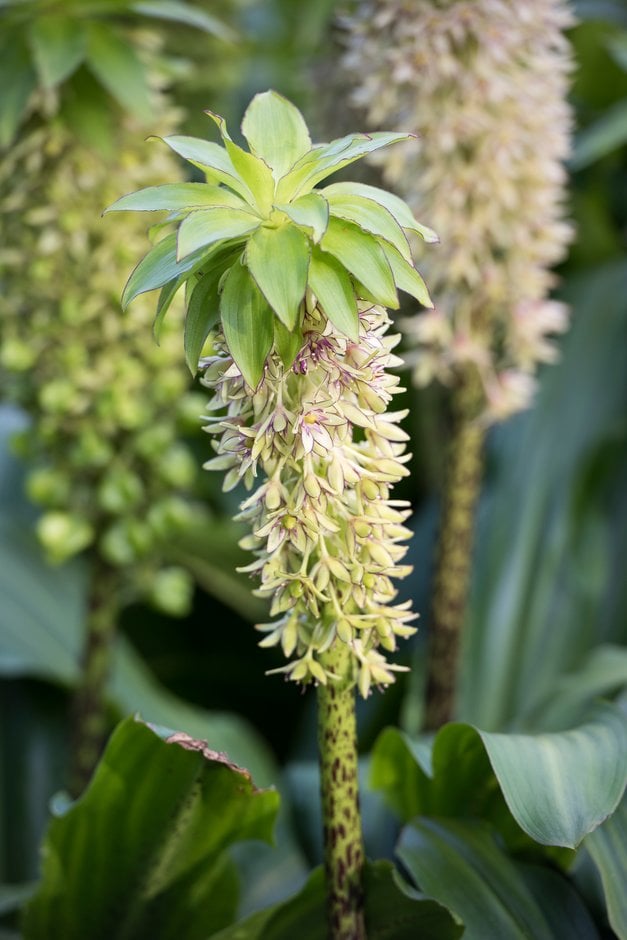
These exotic and underrated South African bulbs certainly add interest to a sunny border and will excite admiring comments. Commonly known as pineapple flowers, Eucomis have a curious leafy topknot to the flowers. They are fully hardy when planted deeply in a sunny, well-drained position in rich garden soil. They require plenty of water when in full growth. Height: stems of up to 75cm tall, and racemes to 30cm long.

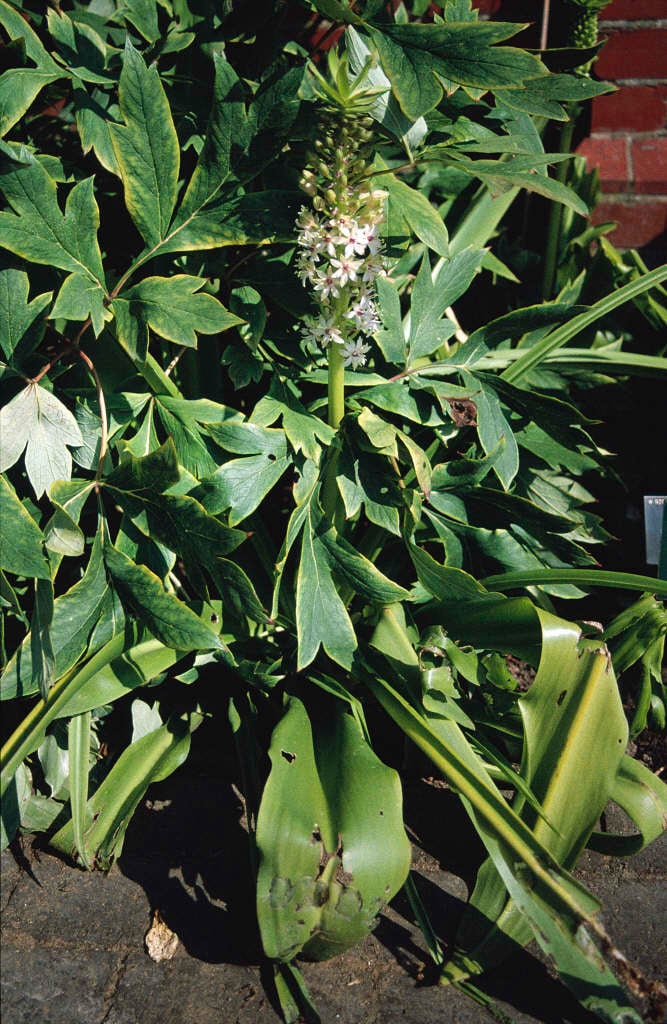
Add some drama to your summer garden with these unusual bulbs. Eucomis bicolour make an interesting addition to the front of a sunny border. The broad shiny leaves give rise to compact heads of cream flowers with attractive red markings. These are followed by expanded seed capsules which stay on the plant until the first frost. They can self seed and can be grown as a long lasting pot plant. If grown in a pot move into a shed and keep dry during the winter and repot in the spring. Height: 40 cm. RHS hardiness rating: H4.

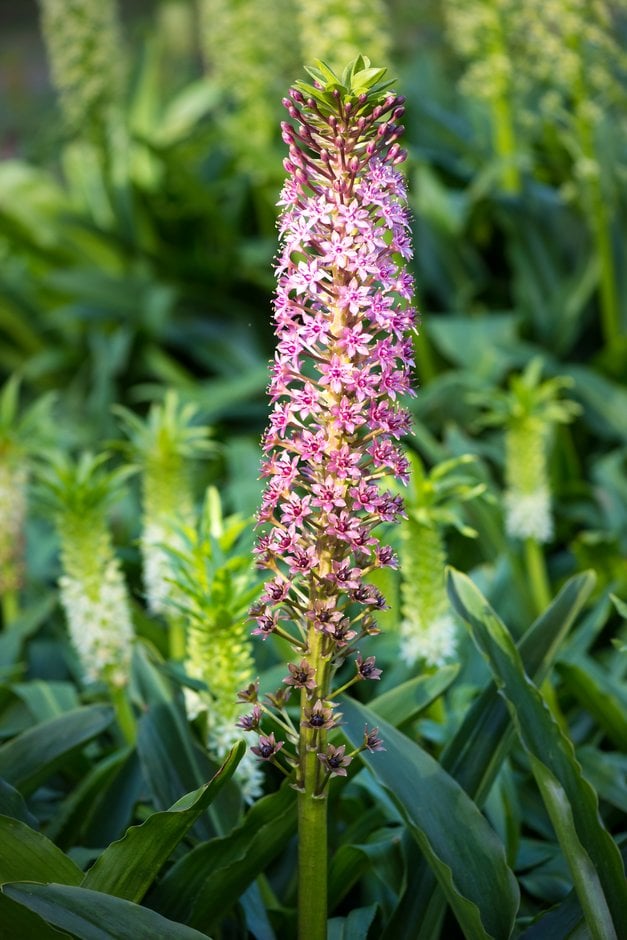
We all like a star in our gardens and ‘Pink Gin’ was the outstanding in the RHS Eucomis trial. In the summer, bold, long lasting spikes of rich pink flowers sit on top of sturdy stems. Height: 90cm. RHS hardiness rating: H4.
Note:Eucomis ‘Pink Gin’ was awarded the RHS Recommended: Award of Garden Merit subject to availability at the time of the trial. At the moment, this plant may be difficult to source, but if you are lucky enough to get it, it would make a great addition to any garden.

Eucomis pallidiflora with its huge heads of green flowers looks as though it should be tender but is a reliable . Despite its 1.5m stature, this bulb that really looks you in the eye, is best planted at the front of a border where it can receive full sun. Provided it receives plenty of water the display gets better each year. Height: 2m. RHS hardiness rating: H5.
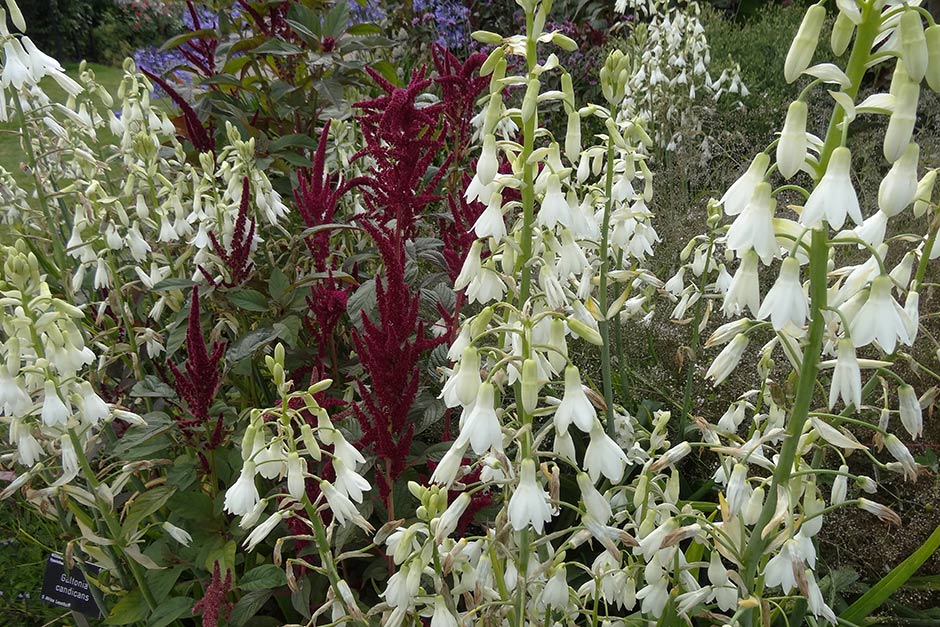
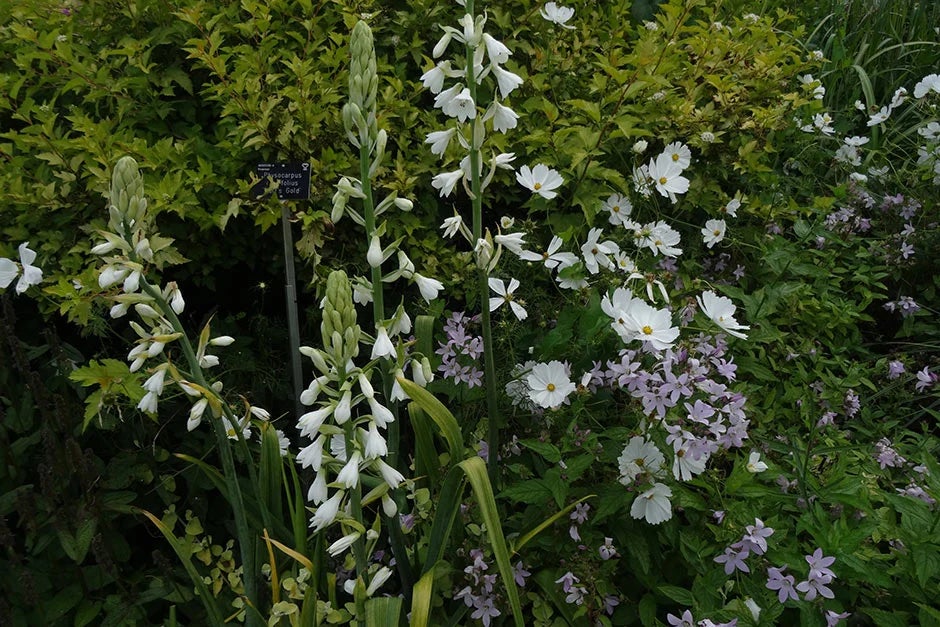
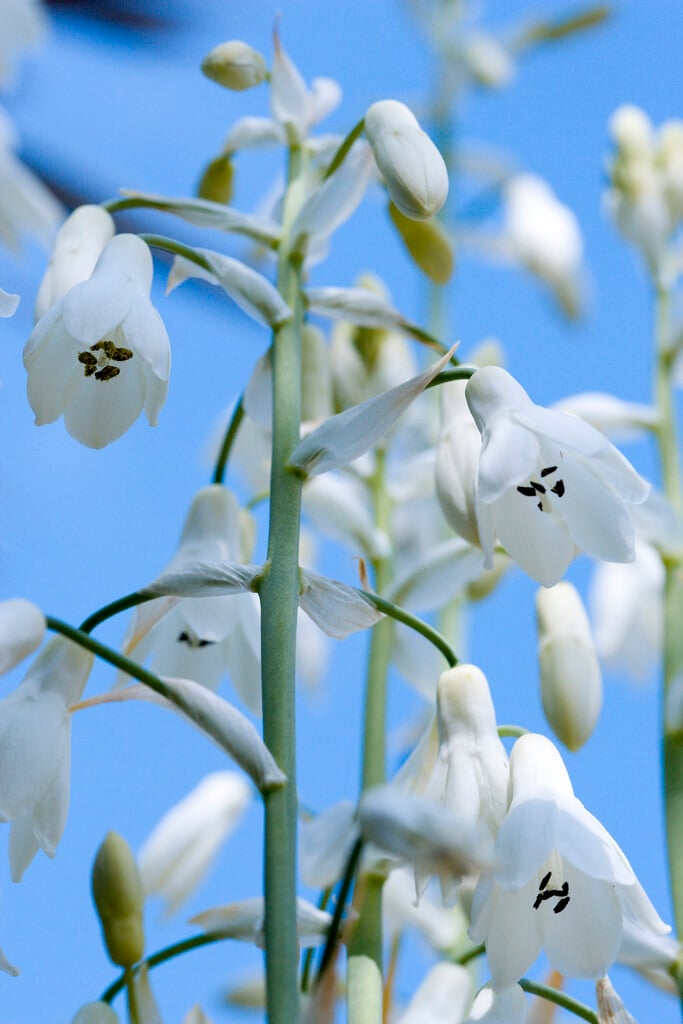
Also known as summer hyacinth, Galtonia candicanshas little in common with short spring flowered hyacinths. The spikes carry up to 30 nodding waxy white bells which bloom in August. They are trouble free and make a dramatic statement at the edge of a border increasing gently every year. It is best to plant the bulbs in late spring in fertile, well-drained soil in full sun, although they will tolerate a little shade. They mix well with white cosmos and blue campanula. Height: 1.5m. RHS hardiness rating: H4.

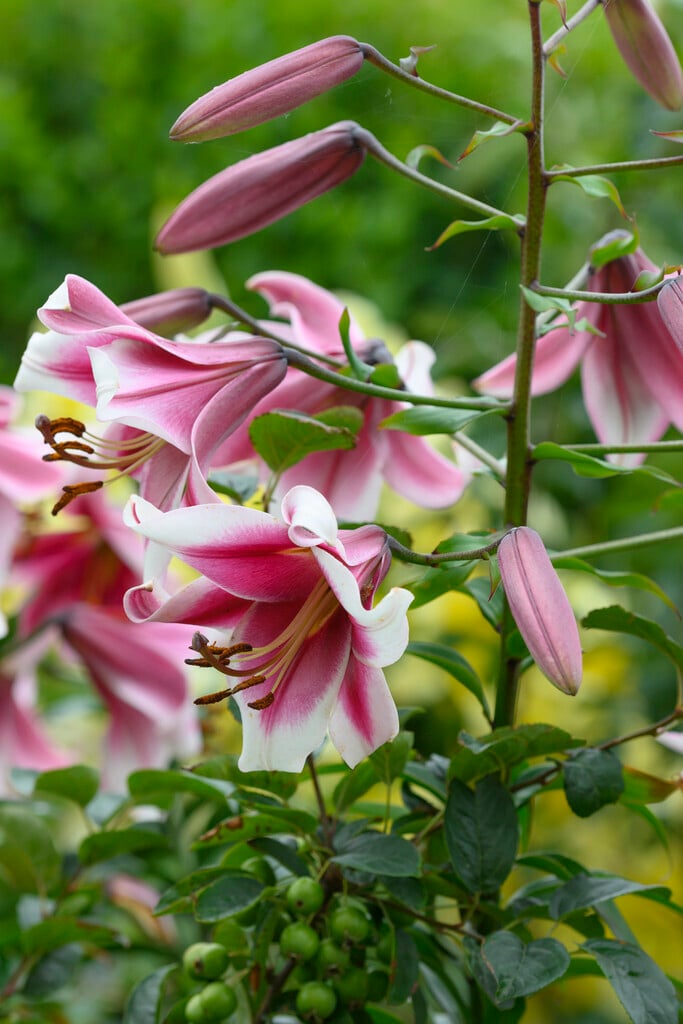
Lilium ‘Friso’is one of the spectacular tree lilies. It has up to 10 or more large open white trumpet flowers with an intense maroon centre. It lives up to its name and eventually reaches a staggering 2.5m. It should be planted deeply in a rich soil in full sun and be left undisturbed to bloom in July/August. Excellent rising above penstemons or among roses. Height: up to 2.5m. RHS hardiness rating: H6.
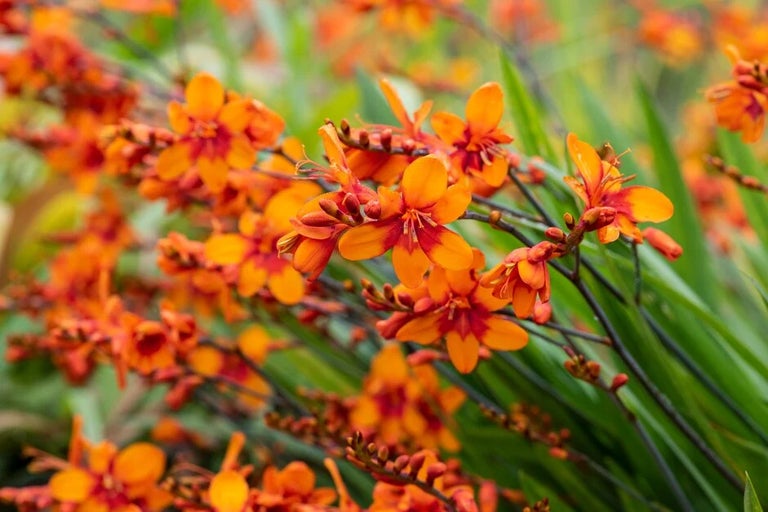
Mention the word crocosmia and everyone throws up their hands in horror. However, the magnificent new cultivars are far removed from the pesky montbretia, with outward facing flowers on well branched stems which flower for six weeks or more. These are the standout plants in the recent trial. Lift and divide every three to four years to maintain vigour. They prefer full sun and a soil that is not too dry.

This vigorous new cultivar has well branched stems and a succession of open clear orange flowers with a dramatic scarlet eye. Crocosmia ‘BRIGHT EYES’ ‘Wallbreyes’ is very different and startling. The clumps flower for nearly six weeks from August to September. Height: 1.2m. RHS hardiness rating: H5.

Why not give the popular C. ‘Lucifer’ a run for its money? Living up to its name, Crocosmia ‘Hellfire’ is a true scarlet without any hint of orange, making this a vibrant stand-out in the garden in August. Height: 1m. RHS hardiness rating: H5.

Crocosmia ‘Limpopo’ have widely flaring orange flowers that have an extraordinary hint of pink suffusing them. Perfect to make a real splash in the front of a sunny border. They are in bloom from mid to late summer. Height: up to 75cm when in flower. RHS hardiness rating: H5.

This dramatic cultivar starts the season with its large arching sprays of upward facing flowers. Crocosmia ‘Pauls’s Best Yellow’ are shades of clear lemon yellow and truly make a splash when in bloom in late summer. Height: 60cm. RHS hardiness rating: H4.
RHS hardiness rating
The system of hardiness ratings enables gardeners to understand the hardiness of plants and gives a guide to the best growing conditions.
Find out more >
Christine Skelmersdale is a keen plant photographer, lecturer on gardening topics, and a member of the RHS Bulb Expert Group. Until retiring in 2025 after 50 years, she owned Broadleigh Gardens – a nursery specialising in small and South African bulbs.