
![rose [Flower Carpet White]](https://apps.rhs.org.uk/plantselectorimages/detail/RHSWisley22ndJune2022-3.jpg?w=1280&fit=clip&fm=jpg&auto=format)
10 award-winning low-maintenance evergreen plants
Every garden needs a structure that looks good year-round and acts as a foil for other, more ephemeral beauties. This is where tough evergreen plants come in

Our gardens need a backbone of plants we can rely on to give colour without masses of work. This gives us more time to concentrate on other things – whether it’s growing veg, taking cuttings or simply remembering to sit back and enjoy the results
All the plants chosen here need minimal pruning (just leave enough room for them to grow to their full potential when you plant) and will bloom over a long period. This selection is made up entirely of RHS Recommended: Award of Garden Merit holders, so you also know they will thrive in average garden conditions, including a wide range of soil types.

A neat mound of lavender covered in blooms and bees is hard to resist. Lavandulaangustifolia ‘Hidcote’ must be one of the most widely available cultivars, but rightly so. The dark blooms keep their colour for a good couple of months, and the plant doesn’t become straggly. Curiously, the origins of the ‘Hidcote’ name are obscure. It’s thought to be a seedling raised at Hidcote Manor Gardens in Gloucestershire, home of the early 20th-century gardener Major Lawrence Johnson. However, it could also hail from France, where he had a Mediterranean garden, Serre de la Madone, near Menton – lavenders still grow wild all around it to this day. Height and spread 50cm. Hardiness rating H5.

Roses have a reputation for being high maintenance. It’s not true and tars all roses with the same brush of complicated pruning, pest and disease. Take the Rosa Flower Carpet White (‘Noaschnee’) as an example. These roses are vigorous but short-growing, flowering for months at a time throughout the summer. helps, but isn’t essential. Pruning is useful, but a light cut with a hedge trimmer once a year in winter would be enough. Sadly, they have little fragrance – but otherwise they’re a winner. Height and spread 60-80cm. Hardiness rating H6.

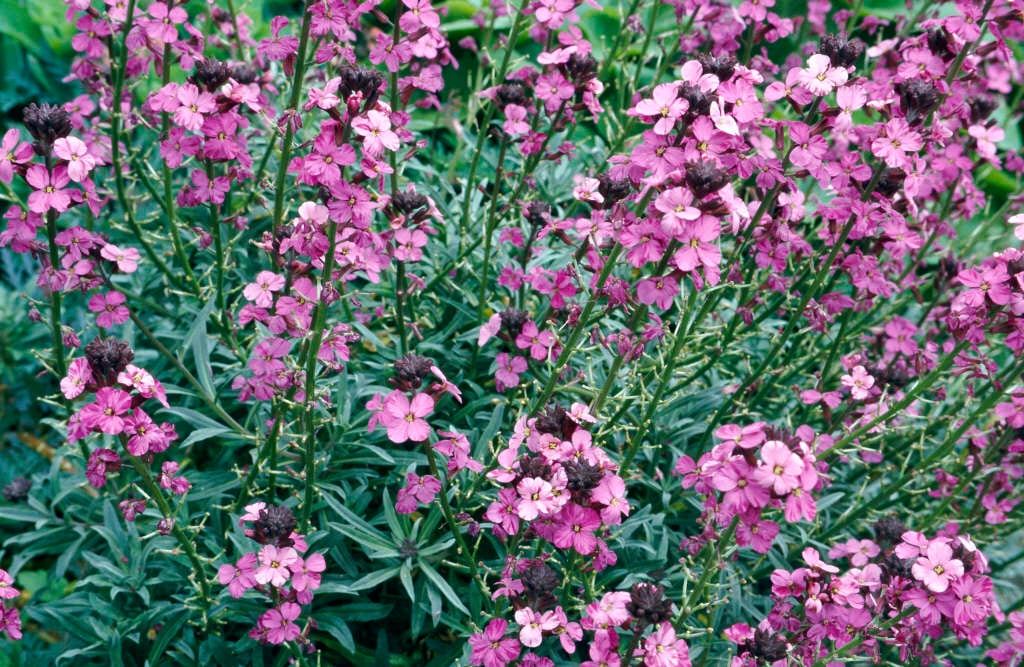
Okay, so the wallflower Erysimum ‘Bowles’s Mauve’ only lasts about five years before it’s time to dig it up and replace it, but what a few years they are! Smothered in purple flowers from February to Christmas, and forming a fine blue-grey dome of leaves, this is one of those plants that keeps on giving. Worthwhile maintenance includes some deadheading in early summer – which also helps prolong the plant’s life – and taking a few to keep it long term (though you can just buy a new one). Height and spread 75cm. Hardiness rating H4.

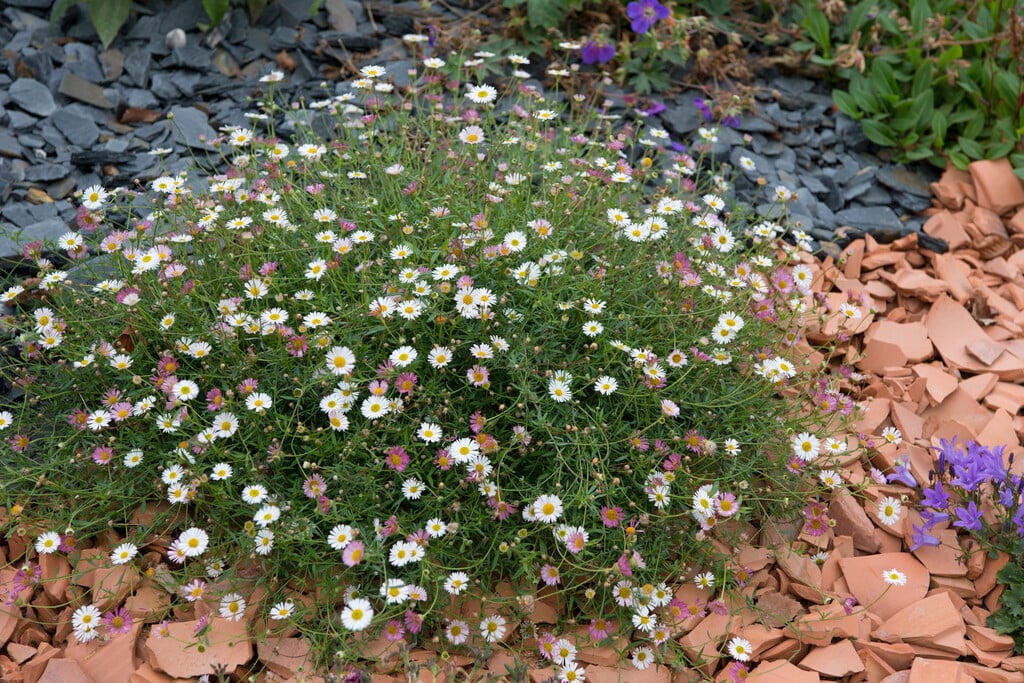
I first came across Erigeron karvinskianuson a garden visit to Powis Castle in Welshpool. The name stuck in my family and we’ve always known it as the Powis daisy rather than American fleabane. At the garden, the daisy flowers tumbled down the craggy rockfaces. Being inaccessible, they showed promise as a low-maintenance plant. Indeed, in my own garden, it politely self-seeds and usually puts itself in more interesting places than I would think of. From trailing over the edges of containers to decorating the cracked concrete in my path, I love its willingness to grow. Any extra are simple to pull out. Height and spread 15-30cm. Hardiness rating H5.

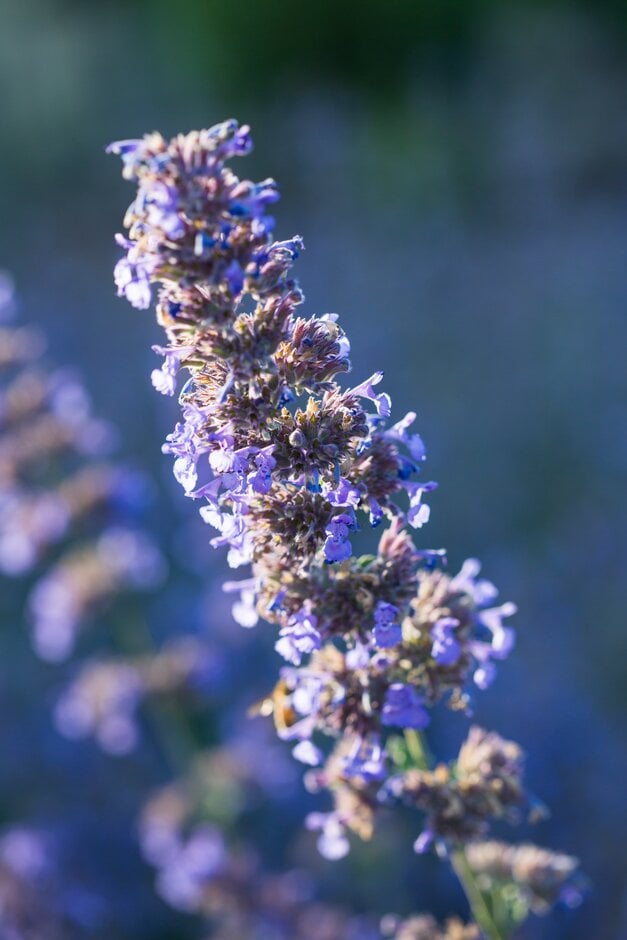
Over the years, I’ve grown many perennial plants that started off well but didn’t keep up the display in long term. Nepeta ‘Six Hills Giant’ is an exception, flowering reliably for much of the summer, year after year. While ‘Walker’s Low’ has become de rigueur, I find that stalwart ‘Six Hills Giant’ performs better for me. The blooms appear in June and continue until the first frost. You’ll often read that it’s best to cut it back after flowering, but I have another method: wait until late July and cut out, at the base, the lower stems being squashed by the ones on top – these top stems are the ones that carry on blooming for the rest of the summer. Even if you leave this plant unpruned, it will still bloom. Height and spread 1m. Hardiness rating H7.

The common name of delightful African daisy about sums up Osteospermum jucundum. The mauve-pink daisies appear in early summer and keep coming in flushes for the rest of the season. It loves sunshine and is ideal for the edge of a border or planting in a rockery. It’s pretty hardy, having survived all the winters down to -9°C in my garden. In spring, I just break off stems and push them into the ground where I’d like more clumps to grow. Height and spread 40cm x 50cm. Hardiness rating H3.
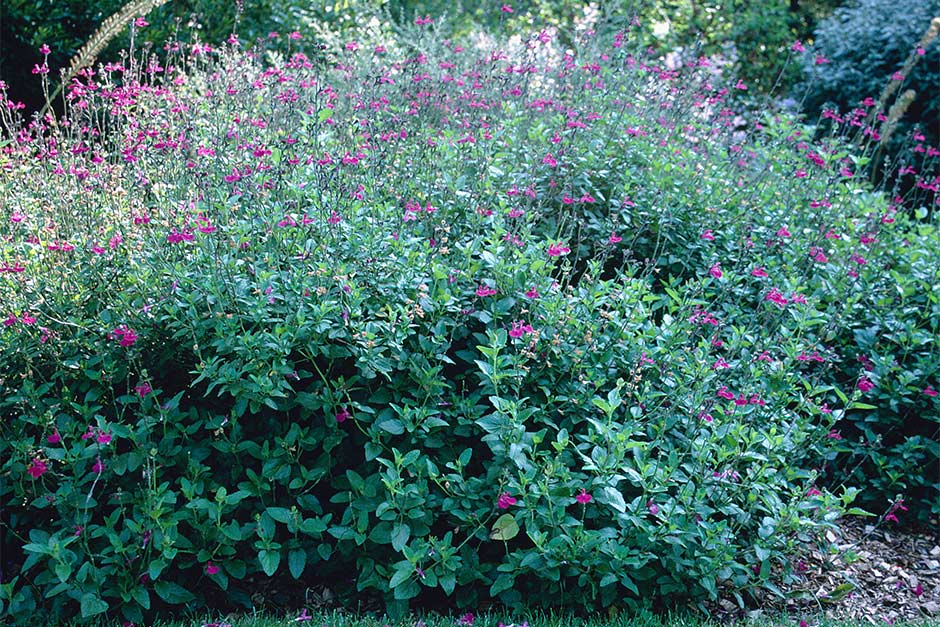
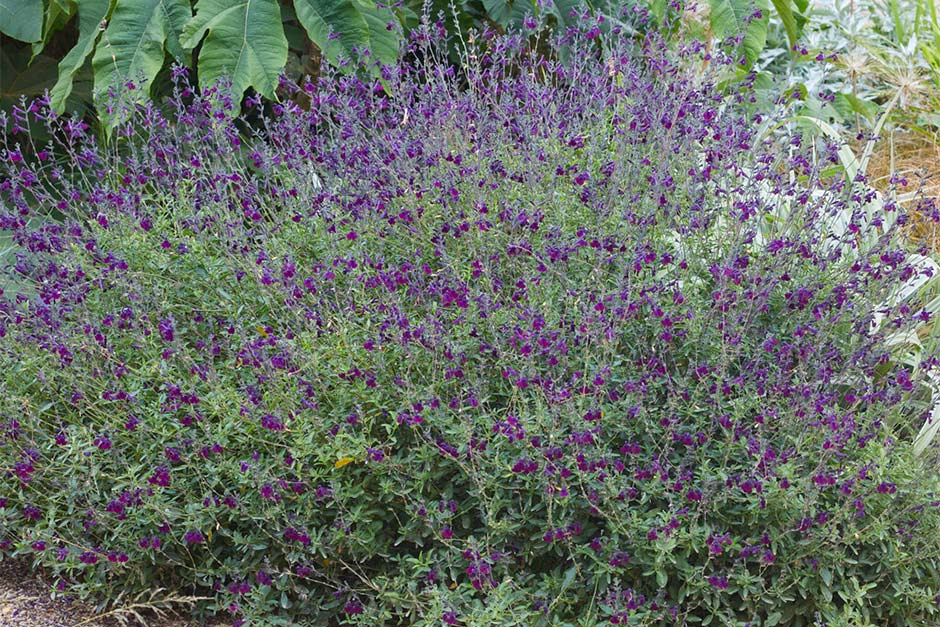
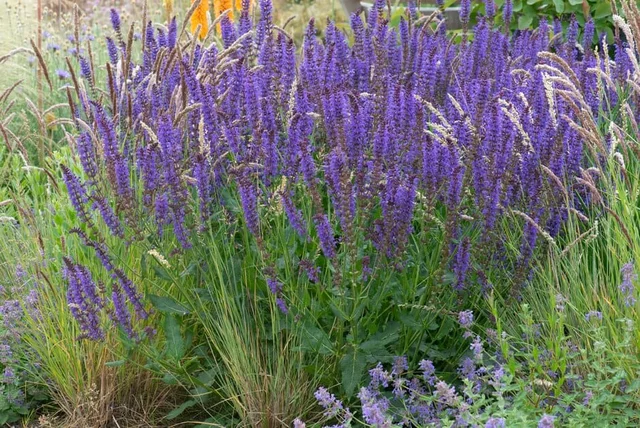
At this point, you might be expecting me to be an advocate for the sun-loving Salvia ‘Hot Lips’. It is a firm favourite of mine, but I’ve found Salvia microphylla ‘Cerro Potosí’ to be hardier and less in need of pruning. The magenta-pink flowers start appearing in May and continue until the autumn frosts. When it does become sprawling – after about five years – cut all the stems back to ground level in late March and it will regrow completely. If pink isn’t your colour, also look out for the prolific purple Salvia ‘Nachtvlinder’. Height and spread 60cm x 1m. Hardiness rating H4.

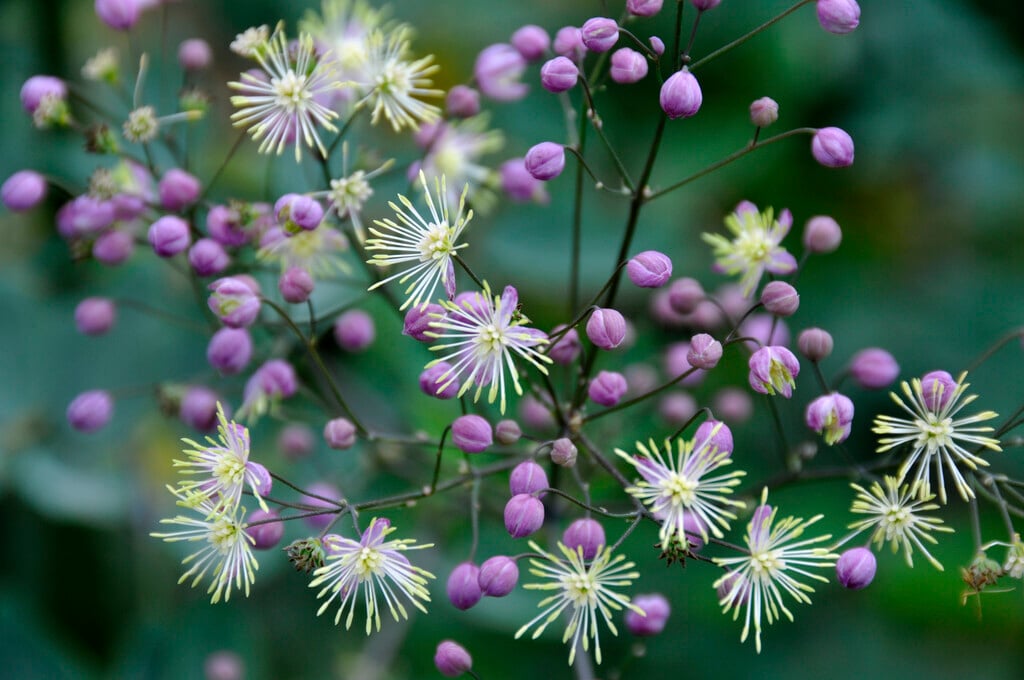
We all do it – we make borders that are far too narrow and are left wondering what to grow that can provide a bit of colour and impact. This is where Thalictrum ‘Elin’ excels. It grows bolt upright, starting with a frothy mass of blue-grey foliage and purple stems and shoots. And up it goes, growing until July when it produces clouds of soft purple blooms at a height of 1.8-2.4m. Being light and airy, this height brings the flowers into easy view. After the petals fall, the stems are still beautiful and will stand there until they are cut down in midwinter – the only maintenance you’ll need to do. Hardiness rating H7.

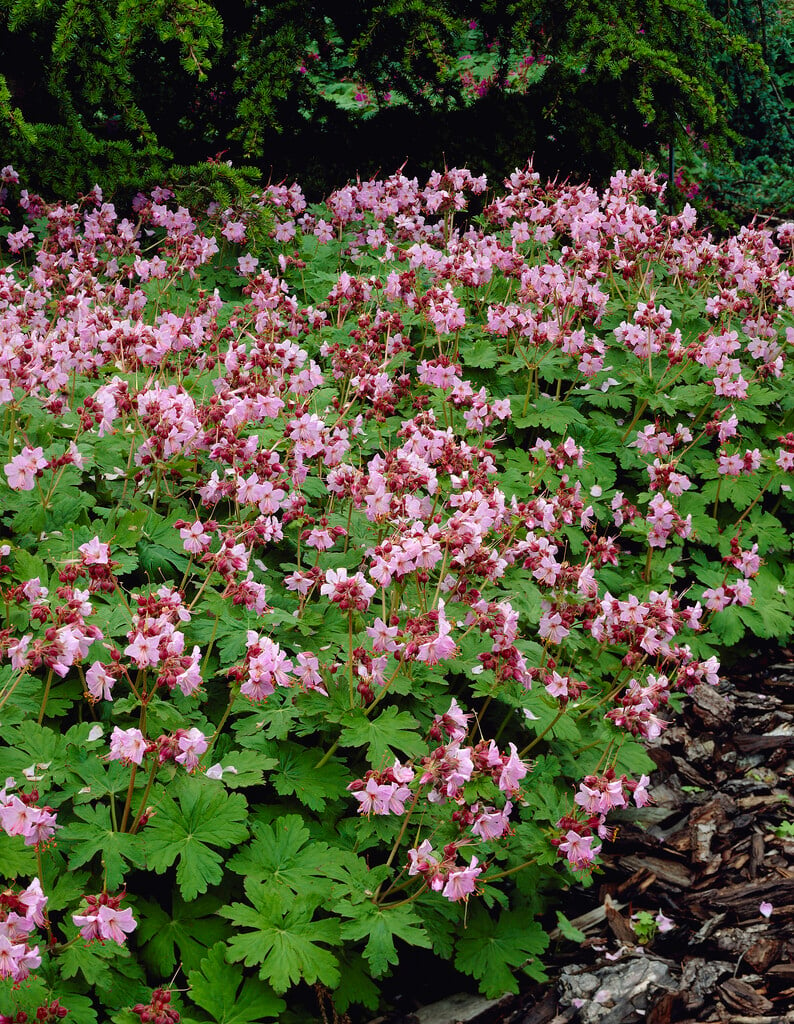
Great options for ground cover in shade are always top finds. To be honest, all Geranium macrorrhizumvarieties fit the bill, and this give us options to vary the flower colour. However, I think ‘Ingwersen’s Variety’ is about the showiest, brightening dark corners of the garden and making a useful underplanting for taller shrubs such as hydrangeas and shrub roses. This perennial flowers in June and July. It dies down by itself, not really requiring cutting back. A little scattering of straight over the top is also tolerated. Eventually, it will make a wide mat but is easy to fork out around the edges to reduce its size. Height and spread 40cm x 1m. Hardiness rating H7.

Few flowers bloom for months on end at a time of year when there is little colour in the garden. Helleborus × hybridus ‘Walberton Rosemary’ is one of those exceptions. It begins to bloom around Christmas and the flowers look pretty good up until late May, although they gradually fade from rich pinks to green hues. Planted in light shade, the only maintenance needed is to trim off the old foliage in autumn to allow the flowers to come through, then remove the flowers in early summer. It you forget to do this, though, the plant would still grow well – the pruning just makes it more impressive. Height and spread 40cm x 50cm. Hardiness rating H7.
RHS hardiness rating
The system of hardiness ratings enables gardeners to understand the hardiness of plants and gives a guide to the best growing conditions.
Find out more >