10 award-winning wisteria
Discover the best award-winning wisteria varieties to plant and how to care for them
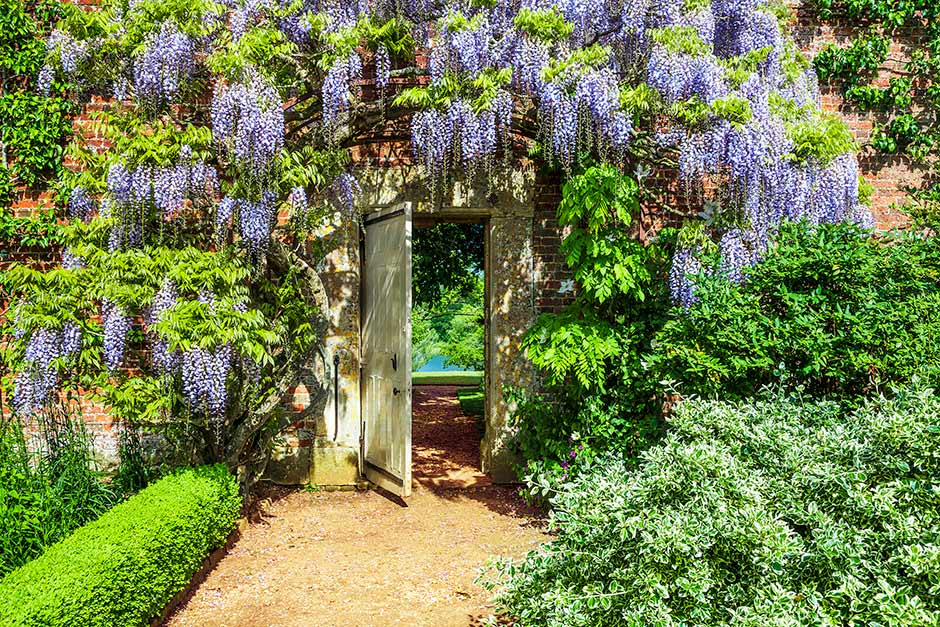
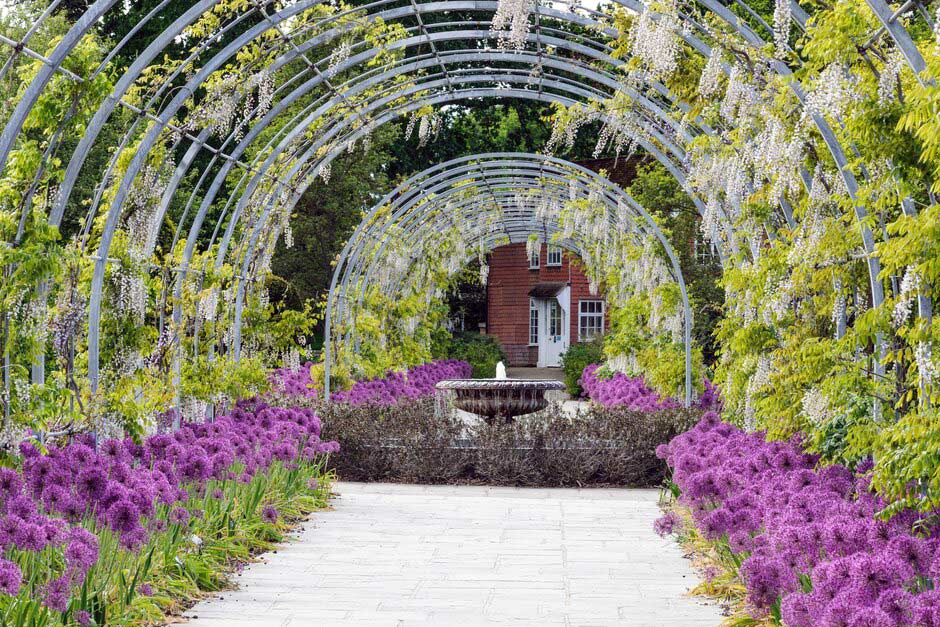
Not much can beat the display created by a wisteria in full flower. Their long, fragrant cascades of flowers are truly show-stopping, and almost everyone who sees one in its prime would like one for the garden.
Although these vigorous climbers need space to grow, they’re very receptive to pruning to keep them in check. Some are slower-growing than others, making them ideal choices for smaller spaces. All are easy to grow in most soils in full sun or part shade.
Here’s a selection of hardy wisterias, all holding an RHS Recommended: Award of Garden Merit, that will liven up any garden.
Chinese wisterias (Wisteria sinensis)
Densely packed blue-violet flowers
Features flowers in a striking shade of purple that blend into white
A popular
A classic purple wisteria with flower power
Purple flowers that emerge in spring and summer
A classic and wonderfully floriferous wisteria, Wisteria sinensis ‘Amethyst’ flowers well before the leaves emerge for a stunning show on bare stems. Held in magnificent clusters, the strongly scented blooms are a rosy-flushed blue-mauve, with a yellow eye. The young foliage emerges bronze, adding to the beautiful display. Grow it along a sunny wall and allow the powerful fragrance to drift in through open windows and doors. Hardiness rating H6.
A strongly scented white bloomer
A strongly scented wisteria for any garden
Like other Chinese wisterias, Wisteria sinensis var. sinensis f. alba ‘Jako’ flowers with long, pendent tresses in late spring or early summer before the leaves open. However, ‘Jako’ is set apart by its pure white blooms, which are highly fragrant. This classic white wisteria looks wonderful trained as a small weeping tree, or as a fast-growing climber for covering a sunny wall or robust pergola. Hardiness rating H6.
Japanese wisterias (Wisteria floribunda)
Extra-long rosy pink tresses for a smaller space
This pink Japanese wisteria is known for its fragrant flowers
Growing more slowly and less vigorously than other wisterias, and less commonly grown but no less stunning, Wisteria floribunda f. rosea ‘Honi-beni’ boasts pendulous flower tresses growing up to a staggering 60cm long. These are crowded with fragrant, pale rose-pink blooms that are tipped with deep purple or cerise. The flowers appear in spring and summer alongside the emerging leaf shoots, and then protrude from among the attractive young feathery foliage. ‘Honi-beni’ is ideal for growing against a wall in a smaller space, or standing alone with a support. Hardiness rating H6.
White wisteria for a smaller space
White Japanese wisteria has cascading flowers full of fragrance
Wisteria floribunda f. alba ‘Shiro-noda’ is a large, vigorous, twining climber with drooping racemes that grow to 60cm long, composed of fragrant white flowers, tinged lilac. Hardiness rating: H6.
This elegant white Japanese wisteria produces extravagant clusters up to 60cm (24in) long of fragrant, pea-like, white flowers in June and light green leaflets, turning yellow in autumn. Less vigorous than many other varieties it's ideal for training against a sunny house wall.
'Shiro-noda' is a large, twining, vigorous climber with pinnate leaves divided into narrowly lance-shaped, mid- to bright green leaflets and, in spring and early summer, racemes of fragrant, pea-like, purple-flushed, white flowers blooming as the new leaves emerge. Hardiness rating H6.
Long tresses of deep purple blooms
Shades of lilac-purple and white flowers are common in wisteria
Wisteria floribunda ‘Kokuryū’, also known as ‘Royal Purple’, creates an amazing early summer display with fragrant, violet-purple flowers that hang in racemes up to 50cm long. In fact, these are the darkest flowers of any single-flowered Wisteria floribunda. The perfume is relatively light, so plant it close to a seating area or entrance to enjoy it to the full, but this cultivar will often flower from quite a young age. Foliage emerges with an attractive bronze tint and turns a beautiful yellow in autumn. Not to be confused with ‘Yae-Kokuryu’, which has double flowers. Hardiness rating H6.
Exquisite long white tresses
The perfect wisteria to fill up large garden spaces
Wisteria floribunda ‘Kimono’ is an exquisite, floriferous wisteria hung with long racemes of fragrant, violet-blue-tinged white flowers from late spring into early summer. It’s moderately vigorous yet delicate, and also enjoys yellow autumn leaf colour. Hardiness rating H6.
Silky wisterias (Wisteria brachybotrys)
Stubby sprays of large, early flowers
Light pink wisteria with faint yellow detail
A cultivar of silky wisteria – so-called for its silky leaves – Wisteria brachybotrys ‘Showa-beni’ stands out for its particularly short, stubby sprays of fragrant, soft lilac-pink flowers with a yellow eye. Though the flower tresses are short, each individual pea-like bloom is almost twice the size of those on some other wisterias. It’s one of the earliest wisterias to flower in spring, with the blooms later developing into long, velvety seedpods. Hardiness rating H6.
Scented sprays of large white flowers
A classic white wisteria, perfect to lighten up a garden
If you like the idea of stouter sprays of large blooms but fancy them in white, look for Wisteria brachybotrys f. albiflora ‘Shiro-kapitan’, another cultivar of silky wisteria that was also previously known as Wisteria venusta. Hanging in clusters 10-15cm long, the highly scented flowers are creamy white with a central soft yellow eye. As with ‘Showa-beni’, you can expect velvety bean-like seedpods up to 20cm long. Hardiness rating H6.
Hybrid wisteria (Wisteria × valderi)
Purple wisteria with touches of white
Wisteria × valderi ‘Burford’ is a vigorous, handsome
Whichever wisteria you choose, prune it twice a year for best flowering and to keep it to its allotted space. Find out everything you need to know in our wisteria pruning guide.