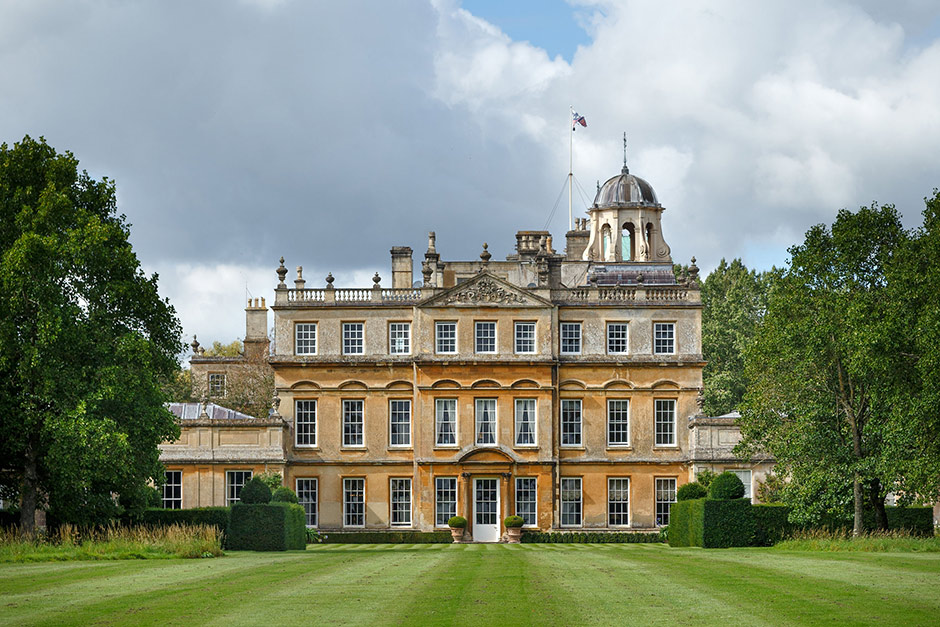
The Duchess of Beaufort on gardening, Mary Somerset and RHS Badminton Flower Show
As RHS Badminton Flower Show prepares to open its gates, Georgia the Duchess of Beaufort reflects on her passion for gardening, the remarkable botanical legacy of Mary Somerset and her vision for the historic gardens at Badminton House
How are you feeling about an RHS show at your home?
I’m very excited, and a little nervous, of course. I’m thrilled to be sharing our horticultural heritage – the first Duchess of Beaufort, Mary Somerset (1630–1715)‚ was a very well-respected botanist and gardener – and we’ll have the gardens‚ plant pavilions, talks and workshops you’d expect from an RHS Flower Show, too. The show fits so naturally with how I want to engage with the wider community. Other events, such as a heavy metal concert, may not be quite right for us!
© Britt Willoughby![]()
The swimming pond and fountain in front of the Orangery are among the most distinctive features of the Badminton Estate gardens, with the fountains most recently redeveloped in the 1980s
What’s your connection to gardening?
The swimming pond and fountain in front of the Orangery are among the most distinctive features of the Badminton Estate gardens, with the fountains most recently redeveloped in the 1980s
Tell us more about Mary Somerset‚ Harry’s eighth great grandmother, the first Duchess of Beaufort.
Mary used to run things at Badminton while the Duke was away pursuing his political career. In her 40s she suffered a bout of depression, but she found a recipe for a floral tincture with damask rose leaves, wallflowers, rosemary, violas and various spices that helped ease her mind. And so an obsession with medicinal plants, and later ornamentals‚ began. She used Badminton to trial plants from all over the world and introduced Britain to many new flowers, such as zonal pelargoniums and the blue passion flower Passiflora caerulea.
© Christopher Whitehouse![]()
Passiflora caerulea (blue passion flower) was among the many plants grown by Mary Somerset at Badminton House, helping to introduce this striking climber to British gardens
So she brought groundbreaking botany to Badminton?
Passiflora caerulea (blue passion flower) was among the many plants grown by Mary Somerset at Badminton House, helping to introduce this striking climber to British gardens
© Britt Willoughby![]()
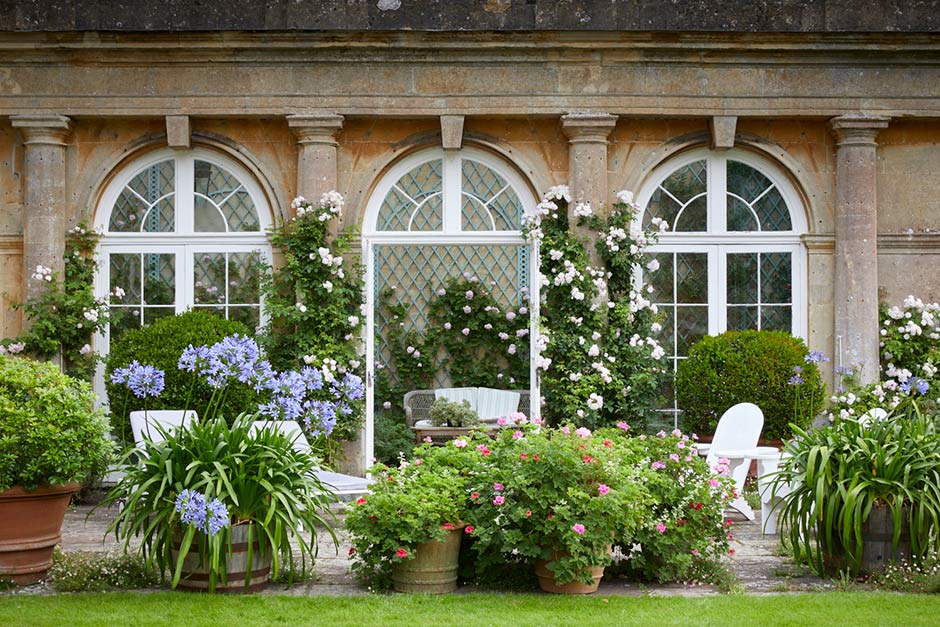
Pelargoniums flourish in the light-filled Orangery at Badminton House, continuing a horticultural tradition that spans centuries
What did the gardens look like during Mary’s time and how have they changed?
Pelargoniums flourish in the light-filled Orangery at Badminton House, continuing a horticultural tradition that spans centuries
Mary grew trees in 12 avenues that radiated out from the house like a mini Versailles, although she was a botanist more than a designer. The gardens were later landscaped by Lancelot ‘Capability’ Brown and have evolved further over the centuries. More recent changes were made when my husband Harry’s parents brought in renowned designers Russell Page and his associate François Goffinet to update the gardens. Page planned the formal beds in the East Garden, while Goffinet designed the water squares, hedge, beds and borders in the South Garden. Harry’s stepmother Miranda, a garden designer and skilled plantswoman, also designed the Shell Garden using 18th-century shell sculptures found elsewhere on the estate to make a water feature.
© Britt Willoughby![]()
Designed by François Goffinet, the South Garden combines formal structure with abundant planting, framed by sweeping views across the Badminton estate
Following in Mary’s footsteps, are you looking to make your own mark?
Designed by François Goffinet, the South Garden combines formal structure with abundant planting, framed by sweeping views across the Badminton estate
© Britt Willoughby![]()
Roses fill the East Garden at Badminton House, where larger planting beds have reduced reliance on box hedging while creating a more resilient display
In such a historic place, do you fear making mistakes?
Roses fill the East Garden at Badminton House, where larger planting beds have reduced reliance on box hedging while creating a more resilient display
I decided to make brick raised beds near the greenhouse, but they just didn’t look right. I thought about limewashing them or covering them with trailing plants, but then woke up one night and admitted to myself that they were a mistake. Instead, we now have a beautiful wrought iron bandstand covered with a glorious blush pink rambling rose, Rosa ‘Paul’s Himalayan Musk’.
Can visitors to the show find out more about Badminton’s botanical history?
Yes – the gardeners and I will be giving talks about our history and the gardens that you see today. We’ll also be selling our famous pelargoniums. But there’s also so much more to see at the show. I always find the small gardens and children’s and community displays inspirational. What I love most is the fact that there’s something for everyone.