8 star plants of RHS Chelsea 2026
Meet some of the floral stars of the show and discover inspiring plant ideas to take home from this year’s RHS Chelsea Flower Show


RHS Chelsea
Flower Show
The weeds, the wacky and the weird from this year’s RHS Chelsea Flower Show
A weed is a social construct – or so I always say.
Not everyone yet shares this opinion (I’m working on it), so it’s great to see strong support for the cause at the 2026 RHS Chelsea Flower Show.
Here, British wildflowers, née “weeds”, mingle with vegetables masquerading as ornamentals, and provide a counterpoint of reassuring familiarity beside the downright wacky.
Here’s a run-down of the plants raising eyebrows at this year’s show.

Edimentals are all the rage. In fact, I have a single, gargantuan, ludicrously bright rainbow chard plant occupying a planter on the pavement outside my front door. With a hot-pink ‘trunk’ now nearly two inches wide, clashing shamelessly with orange brick as it bolts skywards, it’s the talk of the village. I don’t harvest it; I just look at it and allow it to bring me joy.
But everyone knows rainbow chard is pretty – it was bred to be pretty. Not everyone knows that a parsnip can be rather gorgeous too.
Admire these stunning, acid-green flowerheads waving elegantly above the planting in The Lady Garden Foundation ‘Silent No More’ Garden, then look down and notice the top of a parsnip poking out of the ground.

A dead giveaway – but then with parsnips so cheap to grow from seed, and biennials like these flowering at such a useful time of year, why wouldn’t you?
Buy the seeds

The parsnip is in good company.
Over on The RHS and The King’s Foundation Curious Garden, whorls of deep crimson blooms have been attracting attention among the roses and catmint.
“Everyone’s been asking, what is that flower?!,” says Frances Tophill, who designed the garden. “Well, it’s a broad bean.”
We see you, broad bean ‘Crimson-Flowered’ – and we salute you. Also, you’d look great with the parsnip.
Buy the seeds

As if shy to poke its head above the parapet to be met with the glares of visitors, a lone stinging nettle nestles beneath a black elder in The Campaign to Protect Rural England Garden: ‘On the Edge’.
Stinging nettles have a PR crisis in the gardening world. And it’s true that some have ambitions for world takeover, and need to be kept in check from time to time. But if you have space for a small patch – in a wildlife area, under an established tree or hedge, between you and a nosy neighbour – it’s one of the best plants you can grow to support butterfly and moth caterpillars.
No caterpillars means no butterflies and moths – which means no bird buffet, no snacks for bats, and no for all those tubular-flowered or night-blooming plants. So next time you make to rip out those nettles, ask yourself – are they actually doing any harm there? Or can we leave them to do some good?
After all, if anyone asks, they are now “as seen at RHS Chelsea”. In the Gold medal-winningRHS Chelsea Garden of the Year, no less.

We’re still in The Campaign to Protect Rural England Garden: ‘On the Edge’, and is that a beautiful rambling rose, poised to burst into bloom, scrambling over the sleeping Gaia statue’s willowy hip?
Nay, ’tis a bramble of course! And a one-stop shop for bees, hoverflies, birds, mice, hedgehogs, toads and all the other wildlife that wants nothing more than to live and/or dine in a blackberry hedge at the end of your garden. Think the Brambly Hedge books you probably read when you were little, or read to the kids. These books even inspired this year’s floral installation at the showground’s Bullring Gate. At what age do we become disenchanted with brambles?
I kid you not – a bramble is a wildlife superplant. For me, that’s reason enough to go easy on them. That, and blackberry and apple crumble.
Buy a blackberry

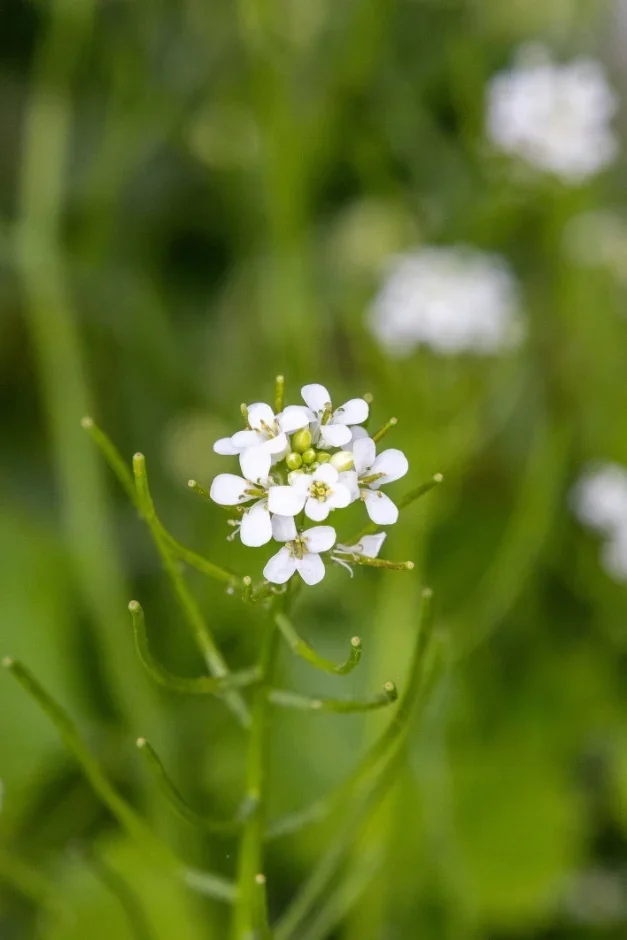
What is that dainty white flower mingling so prettily among the woodland planting in The Killik & Co ‘A Seed in Time’ Garden, I hear you ask?
Probably the same flower you’ve been weeding out of your garden for years – garlic mustard. Turns out it’s actually a charming addition to a moist, shady border. It’s also a key food source for orange-tip and green-veined white butterflies. You can even eat the leaves yourself – try them in salads or homemade pesto.
With all these benefits, and now featuring in a Gold medal-winning show garden, why would you ever want to weed out garlic mustard? Try growing it with white foxgloves, cow parsley, Dryopteris ferns and Briza or Melica grasses to emanate this designer woodland look at home.
Find out more

Just some ‘Maris Widgeon’ wheat, personally requested by the King, standing proud at the front of The RHS and The King’s Foundation Curious Garden.
A reference to the dwindling country crafts that His Majesty loves to champion, this special long-stemmed wheat is traditionally used for thatching and hat-making.

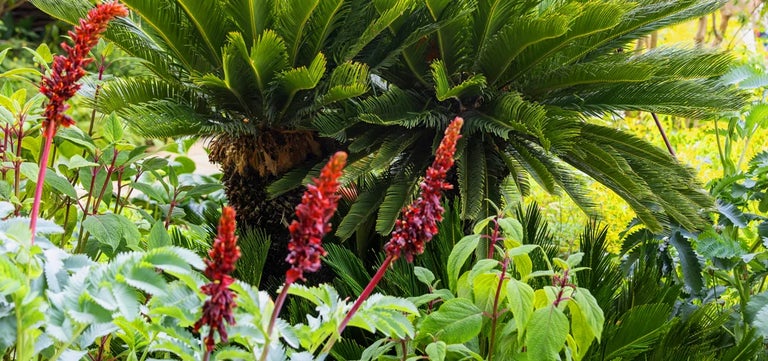
“This is something I’ve never seen before at RHS Chelsea,” says Tim Upson, RHS Director of Gardens and Horticulture. “But where else would you see an Australian grass tree, in full flower, against the Baroque backdrop of the Royal Hospital?”
To check out this towering Xanthorrhoea glauca for yourself, head to Journey Beyond the Tracks: From Adelaide to Perth.


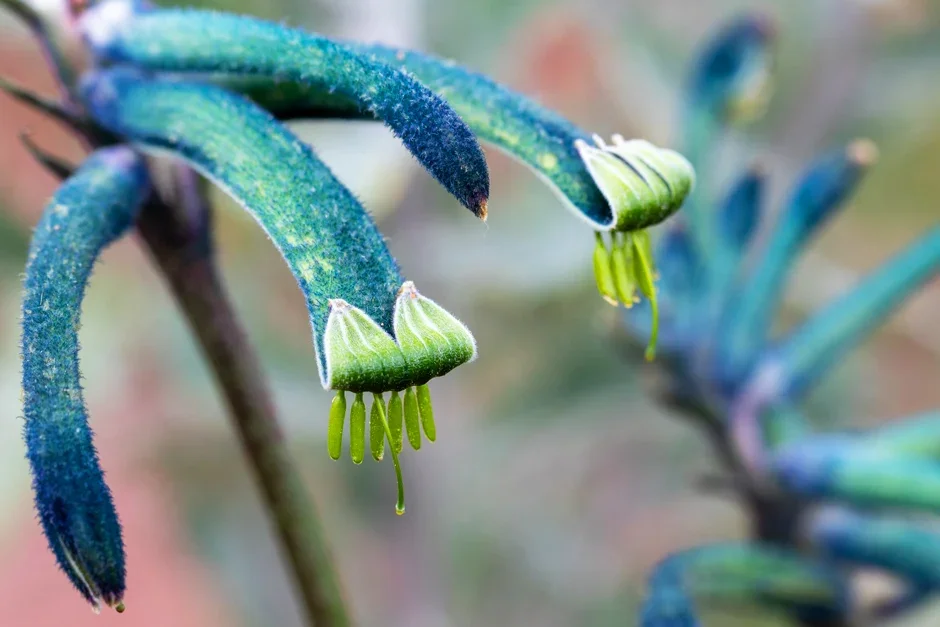
Along with “that must be dyed...”, this question – or variations thereof – seems to be the universal reaction to spotting this snazzy number in Journey Beyond the Tracks: From Adelaide to Perth.
Naturally, it isn’t dyed. Meet Anigozanthos MASQUERADE – a striking of an Australian native . It’s one of very, very few genuinely turquoise flowers in existence – and a practical choice if you don’t have a large, humid conservatory to devote to a jade vine.
About the author – Olivia Drake
With a background in biology, Olivia is passionate about sustainable horticulture, biodiversity and the role gardening can play in conservation. She is trained as a botanical horticulturist and previously worked in public gardens around the UK and abroad.