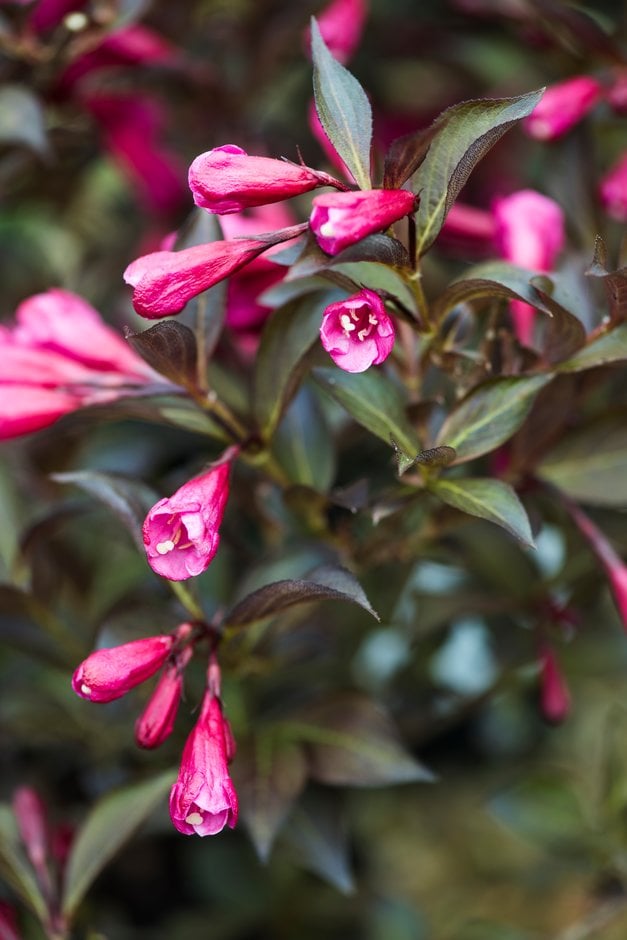
Weigela florida 'Alexandra'

RHS Plant Profile
weigela 'Alexandra'
weigela 'Alexandra' RHS / Joanna Kossak

Other common names

weigela [Wine and Roses]

Synonyms

Weigela florida Wine and Roses

Award of Garden MeritPlants for pollinators
Shrubs

A dense, deciduous rounded shrub to 1.8m tall with dark bronze to purple-tinted leaves, the foliage colour deepening with age. In late spring and early summer, clusters of reddish-pink, narrow tubular flowers are borne

Position

Full sun, Partial shade

Soil Types

Chalk, Clay, Loam, Sand

Max Height

1.5-2.5 metres

Max Spread

1.5-2.5 metres

Size

Time to Maturity
5–10 years
Max Spread
1.5-2.5 metres
Max Height
1.5-2.5 metres

Growing Conditions

Chalk Clay Loam Sand
Moisture
Moist but well–drained or Well–drained
pH
Acid or Alkaline or Neutral

Position

Full sun Partial shade
Aspect
South–facing or East–facing or North–facing or West–facing
Exposure
Exposed or Sheltered
Hardiness
H6

Colour & Scent

Season Stem Flower Foliage Fruit
Spring
Summer
Autumn
Winter

Botanical Details

Family
Caprifoliaceae
Native to GB/Ireland
No
Foliage
Deciduous
Habit
Bushy
Genus
Weigela are bushy deciduous shrubs with simple, ovate leaves and small clusters of funnel-shaped white, yellow, pink or red flowers on short side shoots in late spring and summer
Name Status
Accepted

How to Grow

Cultivation

Easy to grow in most moist but well-drained fertile soils in sun or partial shade

Propagation

Propagate by softwood cuttings in early summer, semi-hardwood cuttings in summer or hardwood cuttings in late autumn and winter

Suggested planting locations and garden types

  • Cottage and informal garden
  • City and courtyard gardens
  • Wildlife gardens
  • Low Maintenance
  • Hedging and screens

Pruning

Pruning group 2. Responds well to hard renovative pruning

Pests

May be susceptible to leaf and bud eelworms, capsid bug and brown scale

Diseases

May be susceptible to honey fungus