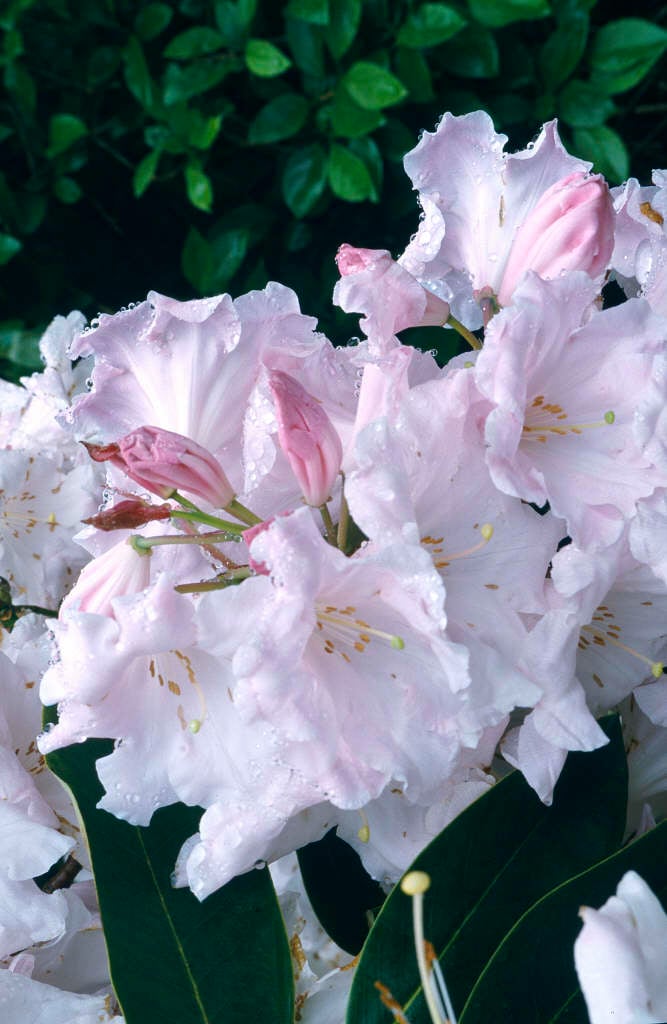
Rhododendron (Loderi Group) 'Loderi King George'

RHS Plant Profile
rhododendron 'Loderi King George'
rhododendron 'Loderi King George' RHS 1999

Synonyms

Rhododendron 'King George' Loder

Award of Garden Merit
Shrubs

'Loderi King George' is a large evergreen shrub to 4m tall, with long, rather pale leaves, and richly-scented, white, lily-like flowers to 15cm wide, opening in tall trusses from bright pink buds in late spring and early summer

Position

Partial shade

Soil Types

Clay, Loam, Sand

Max Height

2.5-4 metres

Max Spread

2.5-4 metres

Size

Time to Maturity
10–20 years
Max Spread
2.5-4 metres
Max Height
2.5-4 metres

Growing Conditions

Clay Loam Sand
Moisture
Moist but well–drained
pH
Acid

Position

Partial shade
Aspect
South–facing or North–facing or West–facing or East–facing
Exposure
Sheltered
Hardiness
H5

Colour & Scent

Fragrance Flower
Season Stem Flower Foliage Fruit
Spring
Summer
Autumn
Winter

Botanical Details

Family
Ericaceae
Native to GB/Ireland
No
Foliage
Evergreen
Habit
Bushy
Potentially harmful
Harmful if eaten. Wear gloves and other protective equipment when handling. Pets (dogs, cats, rabbits, tortoises) Harmful if eaten - for further information and contact numbers regarding pets, see the HTA guide to potentially harmful plants
Genus
Rhododendron can be evergreen or deciduous shrubs or trees, with simple leaves, sometimes with a dense colourful indumentum of hairs on the lower side, and funnel-shaped, bell-shaped or tubular flowers that may be solitary or in short racemes
Name Status
Accepted

How to Grow

Cultivation

Grow in moist but well-drained, leafy, humus-rich acid soil in part shade with shelter; see rhododendron cultivation

Propagation

Propagate by semi-ripe cuttings in late summer, layering in autumn or grafting in late summer or late winter

Suggested planting locations and garden types

  • Architectural
  • Cottage and informal garden
  • City and courtyard gardens
  • Low Maintenance

Pruning

Pruning group 8

Pests

May be susceptible to vine weevil, rhododendron and azalea whitefly, rhododendron leafhopper, pieris lacebug, scale insects, caterpillars and aphids