Getting Started
The great advantage of growing your own sweetcorn is that you can enjoy it freshly harvested, at its peak of flavour and sweetness. Best sown indoors or bought as young plants, sweetcorn needs a warm, sunny site to ensure the cobs ripen over the summer. You can also grow baby corn and popcorn in a similar way, for added variety.
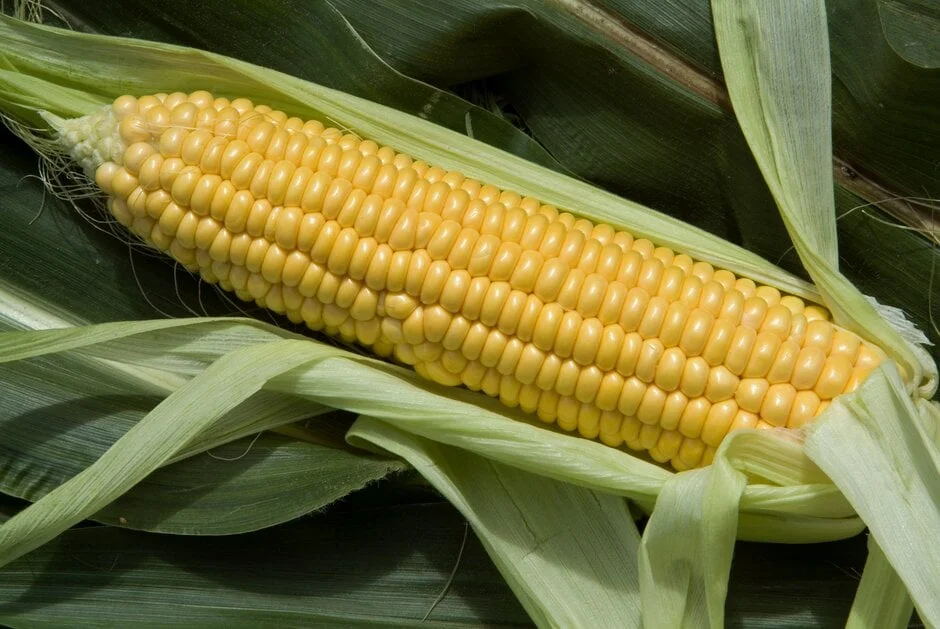
Sweetcorn (Zea mays) is most successful in long, hot summers, although many modern varieties can crop well in our cooler climate. Sweetcorn plants are tender, so are best sown indoors, then planted out after the last frost. They grow rapidly in warm conditions to form tall plants, each usually bearing two cobs that ripen from August onwards. Expect to harvest six to nine cobs from one square metre/yard of ground.
Jobs to do now
Harvest
Month by Month
Sow
Plant Out
Harvest


Choosing What To Grow
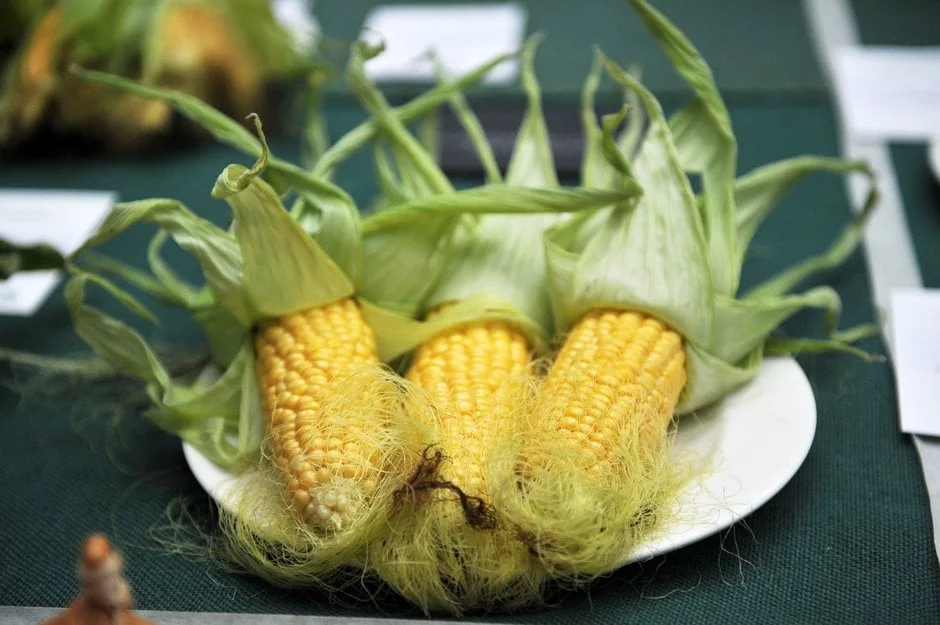
There are lots of sweetcorn varieties to choose from, offering different levels of sweetness. The size and quantity of cobs can differ between varieties, as can the height and vigour of plants. There are early, mid-season and late-ripening varieties, allowing you to harvest over a long season if you grow several types. In cold locations, choose an early-ripening variety.
produce reliably uniform plants with good vigour. Most modern varieties are ‘supersweet’ types – the flavour is much sweeter than older varieties and cobs retain their sugar content for longer after picking, but plants are less vigorous and kernels may be chewier. Take care not to grow supersweet varieties close to other varieties, as cross- can mean you may not get the super sweetness you expect. You can also buy ‘tendersweet’ varieties, which are almost as sweet and less chewy. More unusual options include baby corn varieties, such as ‘Minipop’, for harvesting finger-sized immature cobs for eating whole, and varieties for using as popcorn.
Sweetcorn varieties with an RHS Recommended: Award of Garden Merit (AGM) make a good choice, as they performed particularly well in trials – see our list of AGM fruit and veg (135kB pdf) and our Recommended Varieties below. For more veg-growing inspiration, visit the RHS gardens, where you’ll see a wide range of crops that you could try in your own garden.
What and where to buy
Sweetcorn seeds are widely sold by most gardening retailers. Young plants may also be available in spring and early summer, both online and in garden centres, although the choice of varieties may be limited.
Recommended Varieties


Preparing The Ground
Choose a warm, sunny growing site, protected from strong winds, and with fertile soil. Cobs are unlikely to ripen if they’re not in full sun. Prepare the site by removing any weeds, then add two bucketfuls of well-rotted organic matter, such as homemade garden compost, per square metre/yard. Alternatively, if you're practicing no-dig, the soil with organic matter ahead of sowing or planting directly into the mulch.
Sowing
Sweetcorn needs warmth to germinate, so seeds are best sown indoors in spring. This gives them a head start and a longer , which is particularly useful in colder regions. In milder regions, you can sow outdoors in late spring and early summer.
Sowing indoors
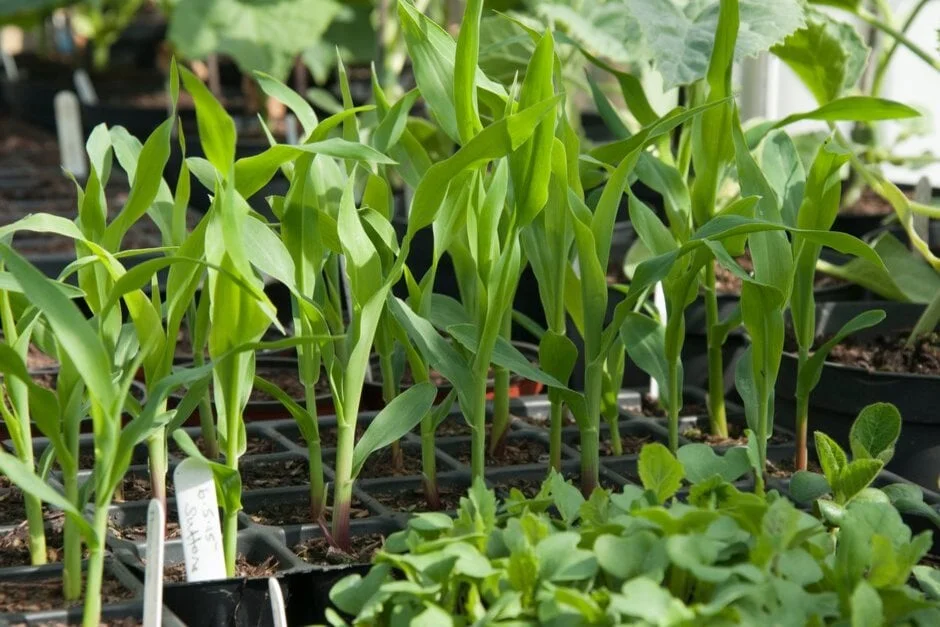
From mid- to late spring, sow sweetcorn seeds 2.5cm (1in) deep, singly in deep pots or modular trays of peat-free . They germinate well at 18–21°C (65–70°F), so put them on a warm windowsill or in a . To extend your cropping season, you could sow early, mid-season and late varieties at the same time, or sow one early variety in several batches a few weeks apart. should occur within two weeks. Position the in bright light and keep the slightly moist. In late spring or early summer, once they’re at least 8cm (3in) tall, transplant them to their final growing position outside – see Planting, below.
Sowing outdoors
Sowing sweetcorn seeds outdoors can be unreliable and is only really worth trying in southern areas and in warm, light soil, if you don’t have space indoors. is likely to be poor in cold, wet ground. Seeds and are at risk from mice, slugs and snails. The delayed start also means that cropping will be later and cobs may not have time to ripen in a cool summer.
Seeds need a soil temperature above 10°C (50°F) to germinate, so wait until late spring or early summer. Warm the soil with cloches or a plastic-free crop cover before sowing, and keep in place for as long as possible to protect the young plants. Sow seeds 2.5cm (1in) deep, in a grid not a row, spacing them 34–45cm (13–18in) apart in each direction. Sow two or three seeds at each point, to allow for losses or failures, then thin out any extra seedlings to leave just the strongest one at each point. With baby corn varieties, sow 20cm (8in) apart in rows not grids.
Planting
By late May or early June, after all risk of frost has passed, plant indoor-sown and newly bought plants into their final position outdoors. Plants should be 8–15cm (3–6in) tall at this point. It’s important to harden off these tender plants first, to gradually acclimatise them to outdoor conditions.
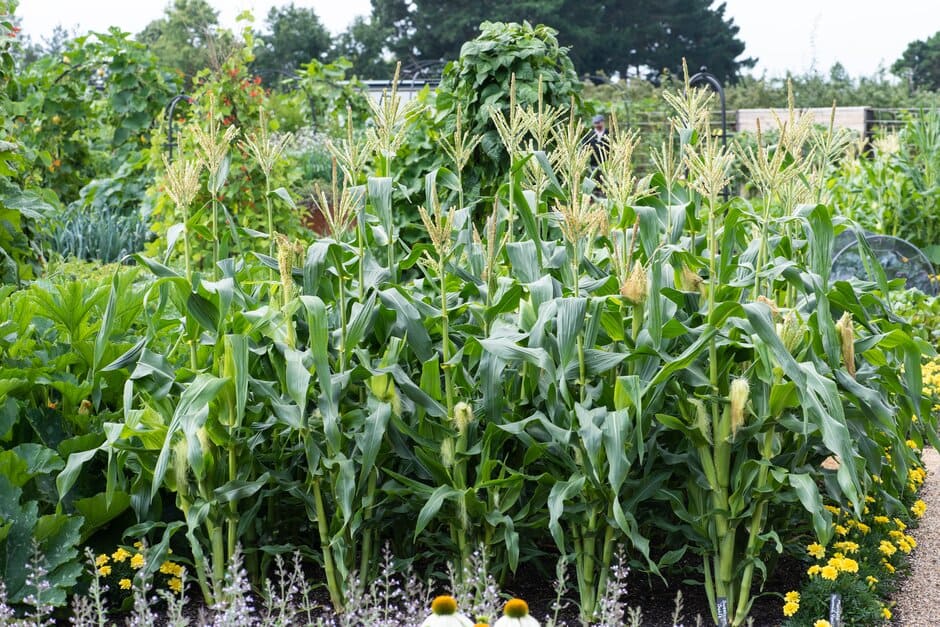
Sweetcorn is a type of grass, so is wind . To maximise , plant in a block or group rather than a long row. That way, each plant is surrounded by several near neighbours, so the chances of successful pollination (resulting in a cob packed with kernels) is much greater, whichever direction the wind blows. Poor pollination leads to sparsely filled cobs with missing kernels. The exception is when growing baby corn varieties – with these, the female flowers shouldn’t be pollinated, otherwise the kernels will start to swell, so plant these in rows.
Space plants 34–45cm (13–18in) apart, depending on the variety, but with baby corn, plant 20cm (8in) apart. With ‘supersweet’ varieties, avoid planting standard sweetcorn varieties nearby, as cross-pollination can reduce their sweetness.
Planting in containers
Sweetcorn is best grown in the ground, but it's possible to produce a crop from plants grown in pots. Compact varieties are likely to give the best results. Containers should be placed in a sunny and very sheltered position, and the bigger the container the better, as plants will need similar spacing to those grown in the ground (see Planting above). Use a peat-free multi-purpose and be prepared to water regularly during dry weather.
Plant Care
Watering
Water young plants during dry spells, until they are established and growing strongly. Sweetcorn may also benefit from watering during prolonged dry spells, especially when flowering starts and when the cobs are starting to swell.
Mulching
Mulch the soil surface with a thick layer of well-rotted organic matter, such as homemade garden compost, to hold in moisture and suppress weeds.
Weeding
Weed regularly, especially when the plants are young. But if , be careful not to damage the shallow roots.
Supporting
Sweetcorn plants can grow up to 2m (6½ft) tall, depending on the variety, so are vulnerable to being rocked by wind – this can loosen the roots and hinder growth. Strong winds can potentially cause stems to break or topple over. So if plants are being buffeted around, either support each one with a bamboo or insert tall supports (bamboo canes, hazel or other woody stems) around the outside of the block of plants and use garden or string to contain and support the growth. You can also earth up the plants by mounding soil around the base of the stem to provide extra stability. Additional roots should grow in this extra soil, to help anchor plants more securely in place.
Flowering
As sweetcorn is wind- , it’s important to plant closely in a block rather than a long row, so the plants are surrounded by others. You can also give an extra helping hand once the male flowerheads (tassels) open at the top of the plant – simply tap the stems to loosen the pollen so it’s more likely to reach the female flowers lower down the plant. Poor results in sparsely filled cobs. The only exception is when growing baby corn, whose female flowers must not be pollinated, to keep the cobs small and prevent the kernels swelling. Plant these in rows, not blocks, or position them individually around the veg plot.
Harvesting
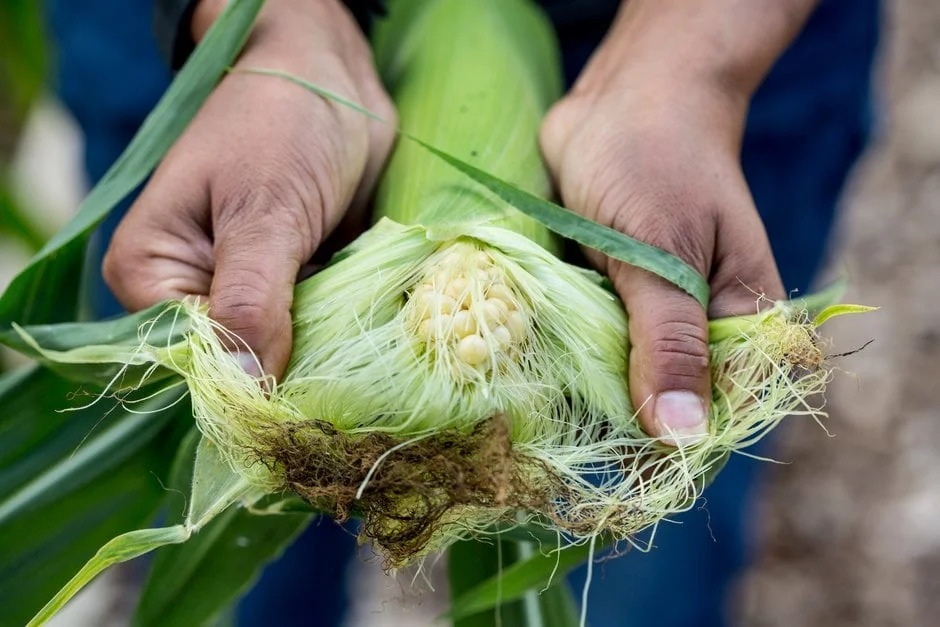
Sweetcorn cobs usually start to ripen in late summer, depending on the variety. Once the silks (strands at the end of a cob) have started to turn brown, test for ripeness before picking – peel back a little of the leafy husk and pierce a kernel with your fingernail. If a watery liquid comes out, it’s not yet ripe, if the liquid is creamy, the cob is ready, but if it’s paste-like then it’s over-mature. Over-ripe cobs can be dried for use as popcorn (see below). Baby corn is harvested when the cobs are still immature and only about finger-sized.
To pick sweetcorn, twist the ripe cob and pull sharply from the stem. Once picked, sweetcorn declines in sweetness, as the sugars turn to starch. This is one of the big advantages of growing your own – you can eat it within minutes of harvesting, at maximum sweetness.
When growing sweetcorn for making popcorn, leave the cobs on the plants until over-ripe and starting to dry. Bring them indoors and hang up somewhere cool and well ventilated to dry fully. Kernels must be completely dry to pop successfully.
Problem Solving
Birds, mice, squirrels, rats and badgers enjoy sweetcorn as much as we do. So it’s best to sow seeds indoors, and either net the plants once the cobs start to form or cover individual cobs with bags or old plastic bottles with the ends cut off. Young plants are also vulnerable to slugs and snails. See Common problems, below.
Cross- between ‘supersweet’ varieties and standard varieties can result in starchy kernels with poor flavour, so avoid growing both nearby. A similar problem can happen when growing sweetcorn near maize crops or ornamental maize varieties.
Common Problems

Grey squirrels
The grey squirrel is a common mammal that in gardens can both delight by its acrobatic movements and annoy by damaging trees, feeding on flower buds,...


Mice and voles
Mice and voles are small rodents that sometimes damage plants in gardens and greenhouses.

