Getting Started
Delicious and nutritious, spinach provides plentiful and repeated harvests. These compact, fast-growing plants are ideal for small spaces and containers, and you can enjoy pickings for most of the year if you sow seeds little and often.
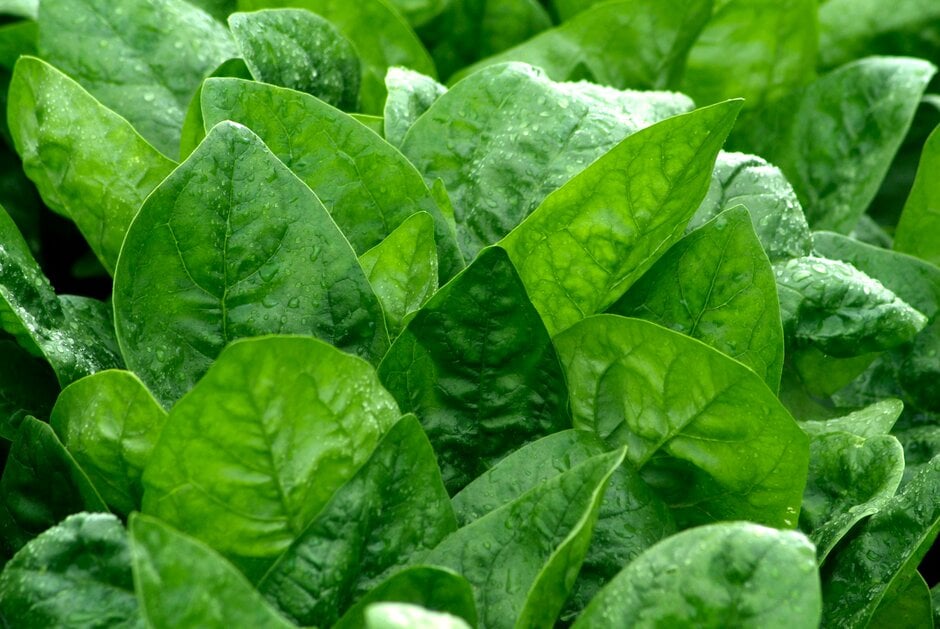
Spinach produces large crops of tender, tasty leaves to enjoy in salads when young or cooked lightly when larger. The leaves are packed with antioxidants, vitamins and minerals, including iron, so are best eaten as fresh as possible for maximum goodness. Baby spinach leaves are particularly delicious raw, with a soft, succulent texture and mild flavour. Sow small batches regularly and harvest as a cut-and-come-again crop – you should get several pickings from each sowing.
Spinach is quick to grow, but needs fertile soil that doesn’t dry out. It does best in milder temperatures (ideally 15–20°C/60–70°F), as cold or hot and dry conditions can cause it to start flowering prematurely (or bolt), putting an end to harvests. Sow in light shade in warmer weather to keep it cooler, and water regularly.
Jobs to do now
Thin seedlings
Sow hardy varieties outdoors
Water in dry spells
Harvest
Month by Month
Sow
Harvest


Choosing What To Grow
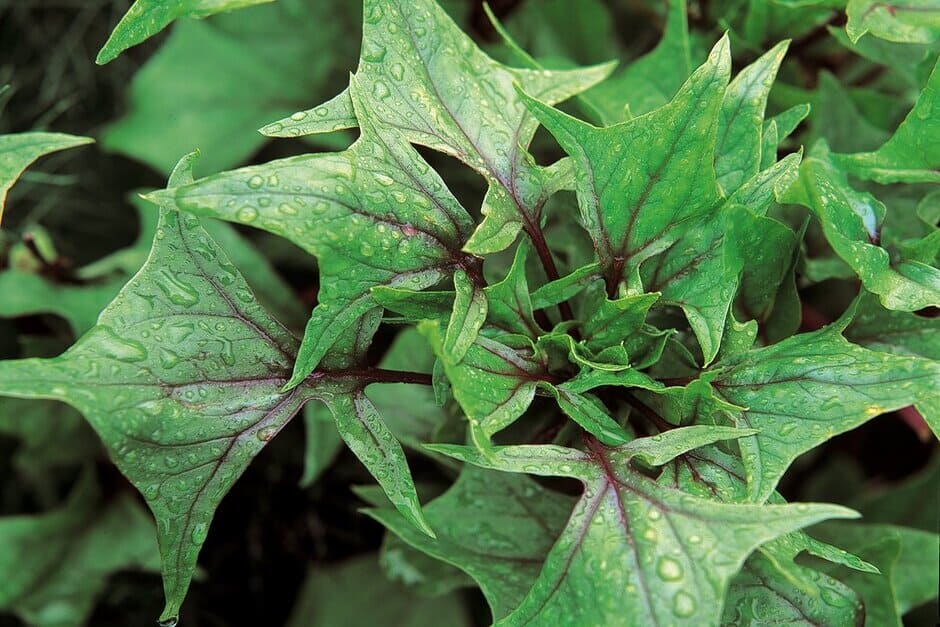
There are many delicious varieties of annual spinach (Spinacia oleracea), for fast-growing, productive, short-term crops, to sow repeatedly. Savoy types have large puckered leaves, while smooth-leaved types have flat, more upright leaves and are generally more robust. Some varieties produce particularly large leaves or have attractive red stems. Some are resistant to bolting or downy mildew. For overwintering, take care to choose a hardy variety – check seed packets for sowing times. Several varieties of spinach have an RHS Recommended: Award of Garden Merit (AGM), as they performed well in trials – see our list of AGM fruit and veg (135kB pdf) and our Recommended Varieties below.
Another option is perpetual spinach, for harvests for up to a whole year – this is useful if space is limited, as plants crop for many months. It’s a type of leaf beet or chard and is grown in a similar way to spinach – see our guide to growing chard for more details. Various other crops have spinach in their common name, as they’re used in a similar way, but are often unrelated to annual spinach. Some cope better with summer heat than traditional spinach. Examples include:
- New Zealand spinach (Tetragonia tetragonoides) – a that grows well in hot weather and full sun
- Tree spinach (Chenopodium giganteum) – a tall plant with pink young leaves
- Red mountain spinach or red orach (Atriplex hortensis var. rubra) – with attractive deep red foliage
- Malabar or Indian spinach (Basella alba) – a succulent-leaved, tender climber that needs warm temperatures
For more veg-growing inspiration, visit any of the RHS gardens, as they all grow a wide range of quick and easy leafy crops.
What and where to buy
Spinach seeds are widely available from most gardening retailers all year round. Packets usually contain plenty of seeds for repeated sowings. Some retailers also sell young spinach plants in modular trays in spring, ready for planting outside.
Recommended Varieties


Preparing The Ground
Spinach grows best in a fertile, moisture-retentive soil. Prepare the ground ahead of sowing or planting by forking in plenty of garden compost or well-rotted manure. If your soil is poor, you could also rake in an organic, general-purpose fertiliser. Alternatively, if you're practising no-dig, the soil ahead of sowing or planting directly into the mulch.
Sowing
Spinach can be sown in the ground or in containers, and is usually best sown direct outdoors. Avoid sowing in particularly hot or cold temperatures, as may be poor, and choose hardy varieties for overwintering. Flat-leaved varieties tend to cope better with warm weather than Savoy types. For continuous harvests, sow seeds repeatedly every few weeks in spring and late summer/autumn. If you’re growing spinach to cook, sow plenty, as the leaves reduce greatly in volume during cooking so you may need more than you expect.
Spinach is fast growing, so is useful for sowing in any short-term gaps in your veg plot, borders or patio containers. To make maximum use of space, you can also sow spinach among taller crops such as sweetcorn, which help to provide cooling shade in warm weather.
Sowing indoors
Spinach is usually best sown direct outdoors (see below), as the disruption of transplanting can make it more prone to (flowering prematurely). However, sowing seeds individually in minimises root disturbance, so can be useful if you want an early crop. You can start spinach seeds off indoors from early spring. See our sowing guides below.
Sowing outdoors
Spinach seeds germinate best in cool weather, so sow at the following times:
- mid- to late spring – for harvesting in late spring and summer. Avoid sowing too early in cold conditions, or sow under cloches or plastic-free fleece, as early plants tend to flower prematurely (bolt)
- late summer to early autumn – sow hardy varieties for harvesting in autumn or early spring. Delay sowing if temperatures are still hot in late summer, to improve rates, but don’t leave it too late as plants need to be well established before winter sets in
Choose a sowing site in sun or partial shade and prepare the ground in advance (see above). Scatter the seeds thinly along a 2.5cm (1in) deep. Space additional rows 20cm (8in) apart. Alternatively, sow in a large container of peat-free multi-purpose at least 30cm (1ft) wide and deep, so the compost doesn’t dry out too rapidly. Spinach can also be sown in growing bags.
Thinning out
Thin out spinach to 7.5cm (3in) apart when large enough to handle, removing the smaller, weaker ones. A few weeks later, harvest every alternate plant for use in salads, giving the rest more room to grow. If growing just for baby salad leaves, rather than mature plants, isn’t usually necessary.
Planting
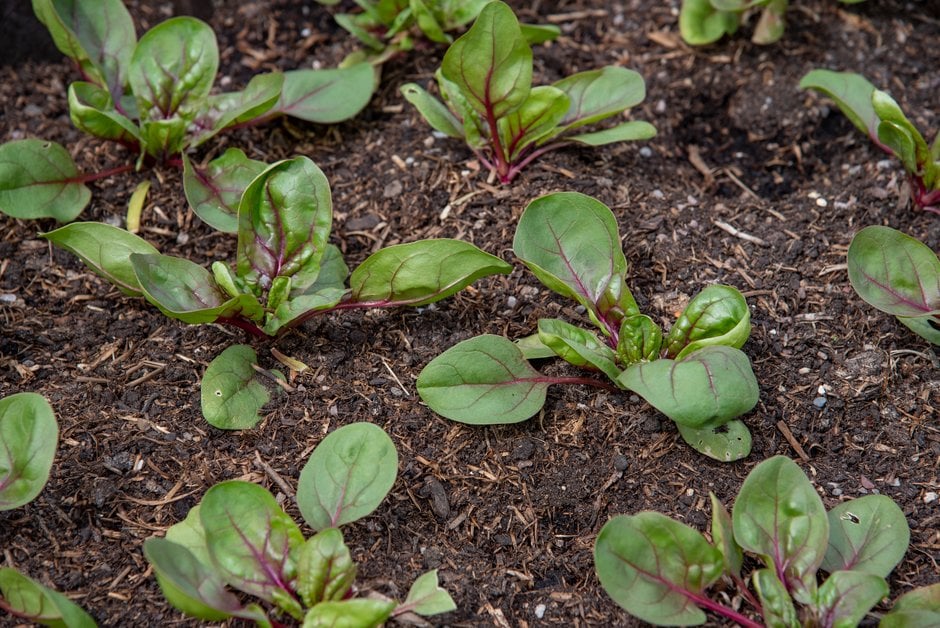
Young spinach plants grown from seed indoors or bought as can be outside when they’re about 10cm (4in) tall, from mid-spring onwards. Prepare the plants for outdoor conditions by hardening off, so they don’t suffer a check in growth.
Choose a sunny or lightly shaded planting site and prepare the ground as above. Alternatively, fill a large container, at least 30cm (1ft) wide and deep, with peat-free multi-purpose , and position in a sunny or lightly shaded spot. Space young spinach plants 15cm (6in) apart. Take care not to disturb the roots when removing plants from their and during planting. Firm in gently and water well.
Autumn-sown spinach plants can be planted in a greenhouse border to crop over winter, or in mild regions hardy varieties can be planted under cloches or in large pots in a coldframe.
Plant Care
Keep spinach plants growing and cropping well by weeding regularly, watering in warm, dry weather, especially when in containers, and by protecting them from slugs and snails.
Watering
Spinach is a thirsty crop and needs watering in dry weather. Lack of water interrupts growth and leads to premature flowering (bolting). and young plants can quickly wilt and die, and plants in containers are particularly vulnerable, so check them regularly and don’t let them dry out.
The best time to water is early in the morning, so plants start the day well hydrated and can grow steadily. Avoid watering in the evening if possible, as damp conditions overnight can attract slugs and snails and fungal diseases such as downy mildew.
To avoid or reduce the need for watering, grow spinach during the cooler, wetter weather of spring and autumn and grow it in the ground rather than in a container.
Weeding
Keep spinach free of weeds, especially when young, so the plants don’t have to compete for water or light. Dense weeds can also provide hiding places for slugs and snails, and reduce air circulation, which can encourage fungal diseases such as downy mildew.
Bolting
Sooner or later, spinach will send up a tall flower stem and the leaves will become bitter and unpalatable. You’ll usually get longer harvests from plants in spring or autumn, as hot, dry summer weather tends to trigger earlier flowering. Keeping the soil moist provides the best conditions for consistent, steady growth and prolonged leaf production. If you grow spinach in a container, position it out of hot midday sun and water frequently, as potting dries out rapidly. Some spinach varieties are less prone to , so are a good choice in warm, dry locations.
Once spinach has started to produce a flower stalk, remove and compost the plant, as the leaves become bitter.
Winter protection
Choose hardy spinach varieties for overwintering and cover plants with cloches or biodegradable fleece from October onwards, unless your local climate is particularly mild. Alternatively, plant autumn-sown spinach in a greenhouse border or grow in containers and move them into a greenhouse or coldframe before cold weather sets in. Give early spring sowings similar protection.
Harvesting
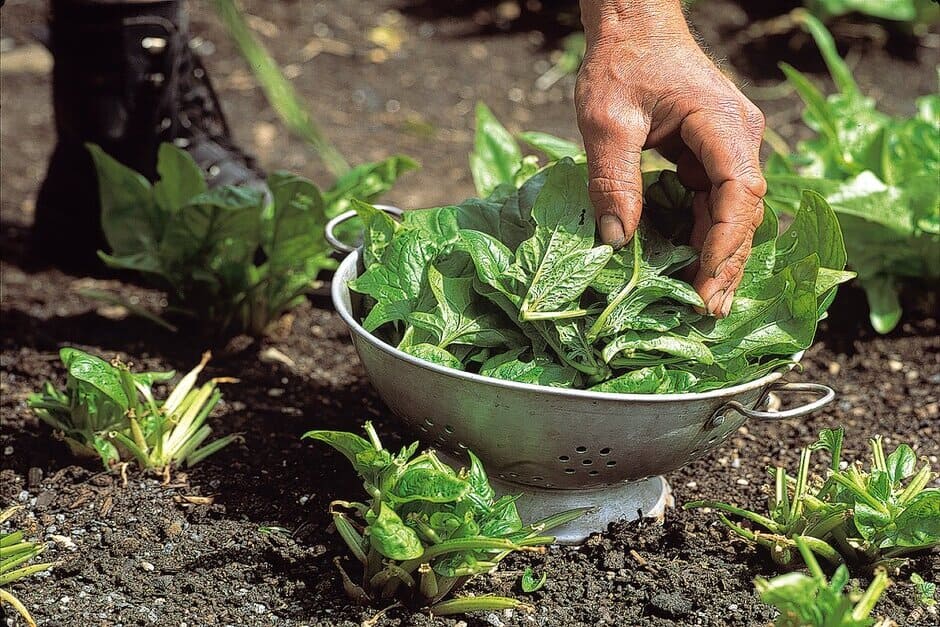
You can pick delicious baby spinach leaves in as little as a month after sowing, and mature leaves in just two months. Harvest as a cut-and-come-again crop, in either of two ways:
- Take a few leaves from each plant along the row, making repeat pickings every few weeks until the plants eventually start to flower
- Wait until spinach plants are well established, after a couple of months, then harvest the whole crop of leaves at once, cutting just above the base. If the plants have good roots, they should regrow at least one more harvest
Young spinach leaves are tender and tasty and are used raw in salads, while larger leaves are best cooked very lightly – briefly steamed, sautéed or simply wilted into pasta sauces, soups, risotto and more. When using in slow-cooked dishes such as stews and curries, add near the end for maximum flavour and nutrition. Raw spinach can also be whizzed into fruit smoothies. When harvesting spinach, remember that the leaves greatly reduce in volume during cooking, so pick generous quantities.
Problem Solving
Spinach is generally easy and quick to grow, but plants are prone to (premature flowering) in hot, dry weather, which puts an end to harvests. Slugs and snails like to eat soft young spinach leaves, while birds may eat the . Downy mildew can take hold in humid weather, especially if plants are overcrowded. For full details on how to combat these issues, see Common problems, below.
Common Problems

Bolting in vegetables
Bolting is the term applied to vegetable crops when they prematurely run to seed, usually making them unusable. A cold spell or changes in day length...

Downy mildews
Downy mildews can spoil the appearance of ornamental plants and affect the yield and quality of edible crops. Control depends on cultural techniques a...


