How to save money in the garden with recycled materials
By sourcing stone from her neighbours and salvaging plants from old borders, Lisa created a restorative space using limited resources
- Type of garden: back garden
- Location: Greater Manchester
- Budget: about £1,000, plus £500 for maintenance per year
- Dimension: 400 square metres
- Implementation phase: started in April 2023, ongoing
- Key features: wildlife features, pergola, sensory plants, flower beds, slope
How the Wellbeing Garden began
Lisa Weston’s experience shows how a wellbeing garden can be created on a limited budget
Budget and process
The garden was shaped in phases, allowing time to reflect and respond to the space
Raised beds were created using reclaimed timber and wildlife-friendly features
“We didn’t have a budget when we started, but we’ve always tried to spend as little as possible by using recycled materials,” she said. “The stone we used to retain the large central flower bed, for example, came in part from an old chimney taken down by a builder who was working nearby and in part from old stone walling that my neighbours were getting rid of during their garden renovation. They were happy for me to take it, so that stone only cost me the price of a couple of boxes of chocolate that I bought for them as a thank you.”
Many of plants are also abundant self-seeders, like aguilegia, foxgloves, lady’s mantle and astilbes; and friends often take them specimens that have grown too large for their own gardens, knowing Lisa and her husband have space to fill.
This costs about £300 a year. Another £200 a year is spent on keeping the beds and pathways topped up with bark, whose initial cost was about £800.
Learnings: what challenges did you encounter?
Managing water in your garden Plants for places How to choose plants for wet and dry soilPaths and beds were barked to keep the soil moist and easy to maintain
“There are certain plants I can’t grow, like red hot pokers. I’ve been trying to grow a couple of climbing roses up the old trees on the perimeter, but they don’t stand a chance. Who would have thought we’d have deer invading the garden in the Manchester suburbs!”
Initially, Lisa also had to deal with uneven terrain. “We were very lucky to be able to use a digger on site to get the land cleared and made into a uniform slope. However, the slope wasn’t practical. We carved it up by clipping some pallet collars together to create stepped, raised beds and by placing the stone edging in line with the natural contours. Then, through trial and error, we positioned sleepers to create a series of layers. We knew we wanted a flatter area at the bottom for a table and chairs and some rustic steps, and we eventually managed to transform that steep, muddy slope into a usable space.”
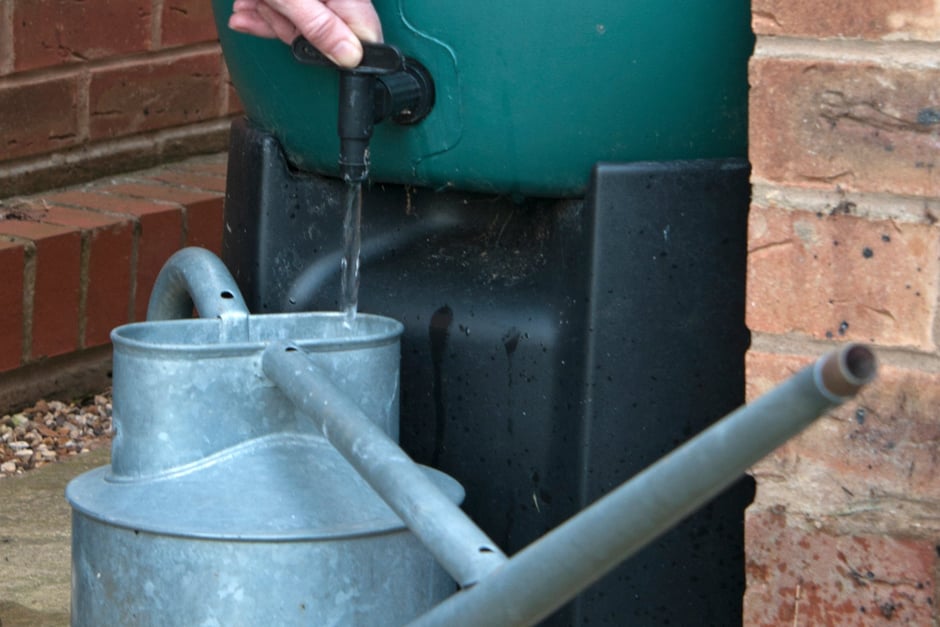
Even managing the garden during unpredictable weather proved challenging. “The first year was very wet, so we had to put in an extra drain to take surplus water down the hill. By contrast, the following year was very dry, so we rescued two water butts from a neighbour and placed them under the gutters with the other three large water butts we already had, using them as containers to store rainwater.” The
Learnings: what went well?
Lisa’s husband, once indifferent to gardening, now takes pride in tending the plants
Although the process wasn’t particularly difficult, it was lengthy and required in-depth research. “We made the wise decision to get pre-planning advice from the local council first and to choose a local architect with good knowledge of the area to handle our application. We did consider employing a planning specialist, but the fees were expensive and we felt we had the same, if not better, awareness of the site and the planning requirements due to the research we’d done ourselves.”
Impact of the wellbeing garden so far
For Lisa, the garden has become a grounding ritual and most mornings begin with ten minutes under the veranda
Each element was chosen with intention, such as seating areas for both sun and shade and edible plants for seasonal engagement. A rich variety of textures, shapes and scents also adds to the experience, such as the perfume of roses, the texture of clover underfoot and the visual contrast between old and new areas of planting.
Bird feeders and hedging were added gradually to encourage natural visitors and now the garden bursts with wildlife. Even the distant hum of the road, 100 metres away, fades into the background, and visitors often describe the space as calming.