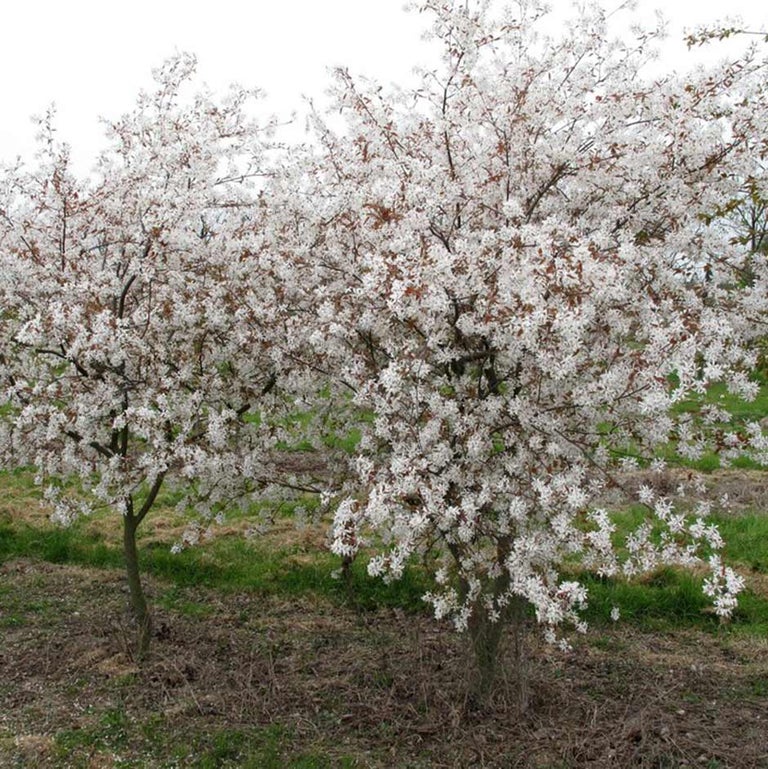
Fruit: unproductive trees
If crops from your fruit trees diminish, stop, are only produced every other year, or consist of small and poor-quality fruits, one or more factors in the growing practices or climate may be to blame.
Common name - Poor autumn colour
Plants affected - Deciduous trees, shrubs and climbers
Main causes - Weather and genetics
Timing - October to November

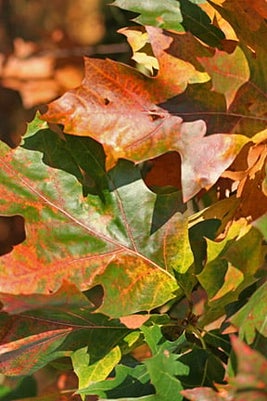
While the leaves of many trees and shrubs turn red, orange or yellow in autumn, sometimes the colour can be poor even on plants noted for their autumn interest.
For most of the year, the leaf pigments that give the fiery autumn colours are masked by the green . As the chlorophyll starts to break down just before the leaves fall, the other pigments are revealed: carotenoids and anthocyanins.
Chlorophyll is responsible for the predominantly green colour of leaves, the colour arising from the absorption of blue and red light in the process of (makes energy for the plant in the form of sugars).
Carotenoids are mainly yellow or orange pigments, such as found in carrots, which play a secondary role in photosynthesis. Their colour is usually masked by the green of chlorophyll.
Anthocyanins are red or purple pigments produced as by-products of photosynthesis. In some plants, such as copper beech, anthocyanins dominate, producing purplish-coloured leaves.
Different concentrations of these pigments causes the variation in colour – but the intensity can also be due to weather conditions and differences between species and between individuals plants of the same species (see causes below).
The characteristics of individual trees influence the intensity of autumn colour. If an individual tree or shrub planted in good light fails to produce good autumn colour year after year, it is almost certainly a poor selection. For example, seed-raised stock will show considerable genetic variation. For this reason, selected clones that display good autumn colour, such as Nyssa sylvatica ‘Wisley Bonfire’, are propagated from cuttings or by grafting so that the colourful characteristics are retained.
The answer is that environmental conditions, as well as genetic factors, are responsible for autumn colour. In particular, the intensity of reds and purples is determined by the concentration of anthocyanins. Anthocyanin production is favoured by:
The brilliant fall foliage colours of New England are the result of bright, dry, sunny autumn days combined with cool nights, acting on species capable of producing spectacular autumn colours, such as maples, dogwoods and American oaks. The relatively muted autumn colours in Britain are due to the generally cooler, damper, more overcast conditions. Although climate change is expected to bring warmer, drier summers to Britain, potentially leading to higher sugar levels and better autumn colours, it is not yet clear to what extent this hypothetical advantage might be cancelled out by a transition to warmer, wetter winters.
While it may not be physically possible to improve autumn colour, there are many suitable plants which will colour-up well every year. If you prefer to search for plants with specific characteristics of autumn interest, use our RHS Plant Selector.