Nature’s role in the recovery process
Carol Klein on breast cancer, the climbing rose that got her through recovery, her new memoir – and bath time with John Lennon

Wildlife gardening experts John Little and Benny Hawksbee have launched a free training course to pass their principles on
Designer John Little uses waste materials to create a space teeming with life at Hilldrop garden in Essex. In January 2025, John and his collaborator Benny Hawksbee have launched their Care Not Capital training scheme, designed to pass their principles on.
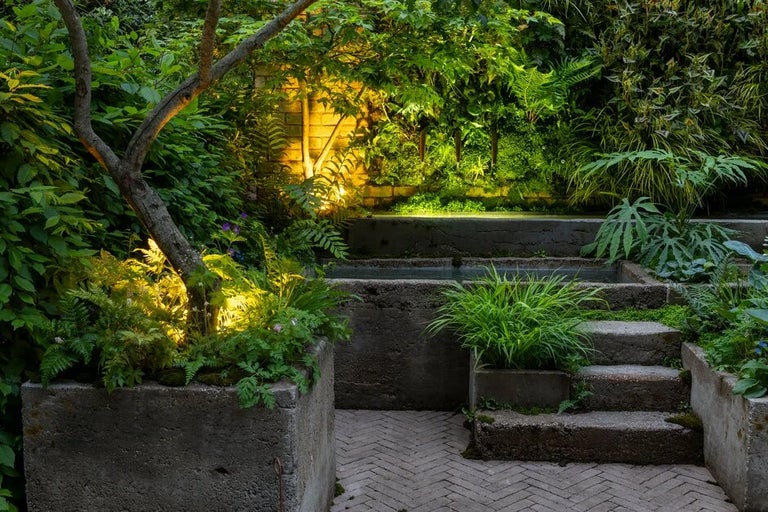
John Little: It’s our emphasis on and aesthetics, and how the two can be combined. We encourage people to create complicated places. If everything’s flat and growing out of the same soil, the biodiversity – and I would suggest the interest and joy of a space – is less. As soon as you start to mess around with those elements, all sorts of wonderful things happen. For example, mounds of soil, sand or rubble that create level changes in the garden aren’t just pleasing to the eye; they increase the number and types of plants you can grow, and create nesting opportunities for a variety of wildlife. The more complex and diverse the habitats on offer, the more varied and diverse the species you’ll see. Obviously, all of us gardeners are interested in plants, but there are so many more exciting things you can do with structures and topography and soils. Complexity in our gardens and landscapes means complexity in the life that lives there.

John: One of the nicest things that we did at Hilldrop was to reuse waste material from the widening of a local road, the A13. We approached the hauliers and they kindly dropped off 80 tonnes of A13 sand. We’re on heavy clay here, but bringing in that local waste material helped us move from 60 to 120 bee species within four years. A greater variety of substrates means attracting a greater variety of insects, each of which has its own unique set of demands when it comes to preferred nesting and breeding sites. Again, it goes back to making our gardens more complex.
"We want to change the job description of what it is to be a modern gardener"
Benny Hawksbee: Mounds of leftover sand are good for ground-nesting invertebrates, as are gabions full of rubble and the like – they create opportunities and niches for insects, small mammals and amphibians, which will utilise protective spaces within. In 2024, one of our gabions was utilised by a chimney-making mason wasp species (Odynerus spinipes), which was an exciting new record for us. But don’t just dig up a garden full of perfect soil and ship rubble in from the other side of the country. If there’s a project either at home or locally where these waste materials are being generated, think about creative solutions for what you can do with them. Experiment. Not everything works, but we’re always pondering new ideas and then, crucially, keeping track of what impact they’ve had.
John: When you consider the challenges facing society today – such as climate change, the biodiversity crisis, health and wellbeing concerns, and more – green space has the potential to deliver everything we need. It’s gardeners who look after this space and yet a huge amount of gardened green space in this country is made up of badly maintained public and communal gardens. If we could inject just one creative, enthusiastic and well-trained gardener into each of these places, then everything would change. Put a gardener like Benny in charge of every housing estate garden, and you’d get much better value.

Benny: The courses are free and, in the first instance, are for council parks teams and people already working as gardeners – these are the people who can have the biggest possible impact on the greatest number of spaces. They’ll be able to bring these new skills and ideas into their work. We want to change the way we think about garden maintenance and spread those ideas from the ground up.
Benny: We want to give gardeners the skills to use the resources they have on site. We’ll be looking at things such as green roofs and dry-stone rubble wall building – which reuse waste materials and create habitat. We also want to debunk the idea that plants need to be happy all the time. Mildly unhappy, even dead and dying plants, are fine. The ecology around hollow plant stems and dead wood cavities for beetles, solitary bees, wasps and more, is under-appreciated; these are some of our most exciting garden pollinators and regulators and they’re crucial. Others, such as millipedes and woodlice, rely on unhappy plant material – by obsessively removing it we keep those species out of the garden too. Finally, we want to give gardeners the knowledge to record the ecology of their sites and understand the wildlife around them. It sounds grand, but we want to change the job description of what it is to be a modern gardener.
John: Not at all. When visitors come to Hilldrop, they never just take pictures of flowers – it’s always a structure next to the plant, such as a submerged shopping trolley poking out of the pond, which supports a subaquatic ecosystem, or the dry stone rubble wall, the cracks of which are home to insects. As any designer will tell you, there’s beauty in contrast. Standing dead trees and stumps are rare in our very manicured world, but really are incredibly important for supporting all manner of life. Log piles are great, but arguably better still is to bury a dead trunk upright and shape it however you want. This creates different ecosystems both above and below ground. One of the things that has brought so much outside interest is that we’ve taken ecology and garden design principles and overlapped them. Wildlife doesn’t care if a place is beautiful, but people really do, and none of this works long term if people don’t appreciate and care for these spaces.

John: We use seed mixes and broadcast sow everything, which uses fewer plastic pots and means the plants that thrive are the ones best suited to the environment. Of course, what you then need are good gardeners to hand-weed the design in. That’s the labour, but it’s also the joy: you start from the seed packet and the design comes from the gardener.
Benny: The garden contains a wonderful mixture of , and near native plants. We put a big emphasis on wild plants – field scabious, fennel, white bryony and others – and of combining wild species with their garden-classic relatives. Our native field scabious (Knautia arvensis) and the more popular Macedonian scabious (Knautia macedonica) look great planted together, as do wild meadow cranesbill geraniums growing alongside garden plant Geranium Rozanne (‘Gerwat’). One of the highlights at Hilldrop is our white bryony (Bryonia dioica). Instead of scrambling over a hedgerow it grows up a support outside the house in full sun, and it looks beautiful. You can create pot displays of native plants and do all the things you’d do to a garden plant. It allows you to realise the beauty of these plants, but also to better understand them and the wildlife they support.

John: Simply buying a labelled as good for pollinators is not, in and of itself, going to fix much. You need habitat nearby too, or those pollinators won’t turn up. Take the white bryony: it has a specialist , the bryony mining bee. The females only collect pollen from that one plant. But they need sand or very free-draining soils in which to nest and breed, and they may not travel far between feeding and breeding points, so you need to provide both things in close proximity.
Benny: This is the kind of thing we want to share with the people who attend our course. And things like double-flowered roses, which aren’t known to be great for pollinators, can be brilliant because leafcutting bees use them for their nest cells. And a bit of strategic bad pruning on that rose? That’s going to be beneficial for solitary aphid-hunting wasps who nest in the thicker dead stems. The wasps will then eat aphids, keeping all your roses happier, so don’t cut out all dead material. Once you begin to attune to a slightly different magnification, you start to see the tiny things eating your plants, and you can then become fascinated by them. We want to give this insight to people. It’s exciting, it’s enjoyable, and it’s key for pushing gardening to a different ecological level.
This page is an adaptation of an article published in the October 2024 edition of The Gardenmagazine, free to RHS members every month when you join the RHS.