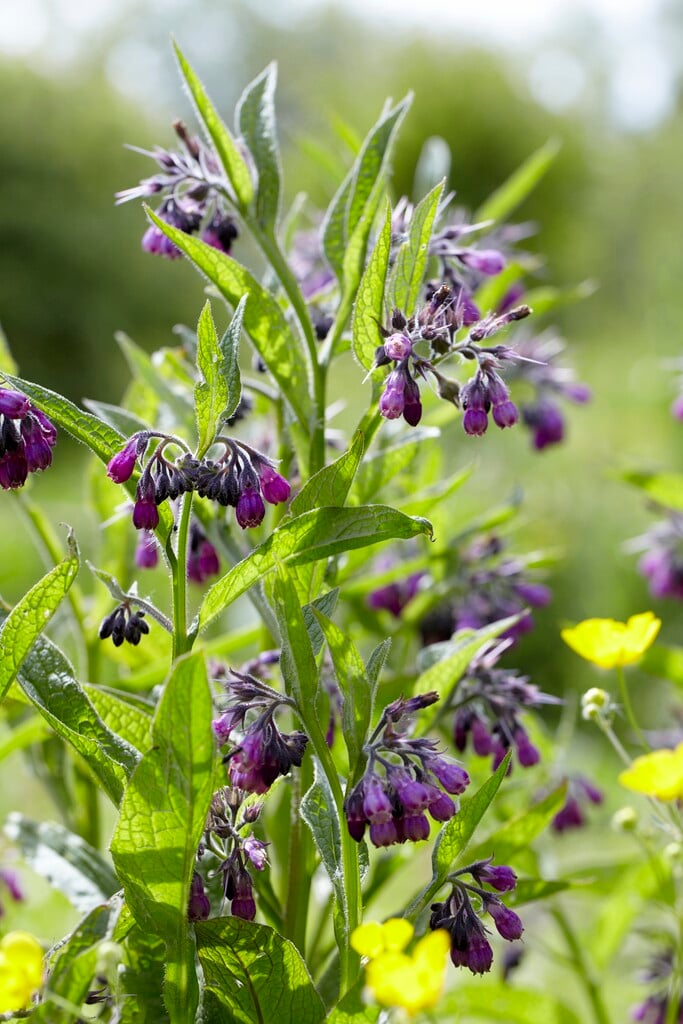
With spring in full swing, look out for one of our most striking and versatile British wildflowers – comfrey. You may already know you can turn the leaves into a free liquid feed, but did you know comfrey is also amazing for wildlife?
Providing an early spring wildlife boost with -rich flowers, comfrey (Symphytum) is the RHS Wildlife Wonder April Plant of the Month, meaning our wildlife experts have highlighted it as a top plant we can all grow to support as part of our Bringing Nature Home campaign.
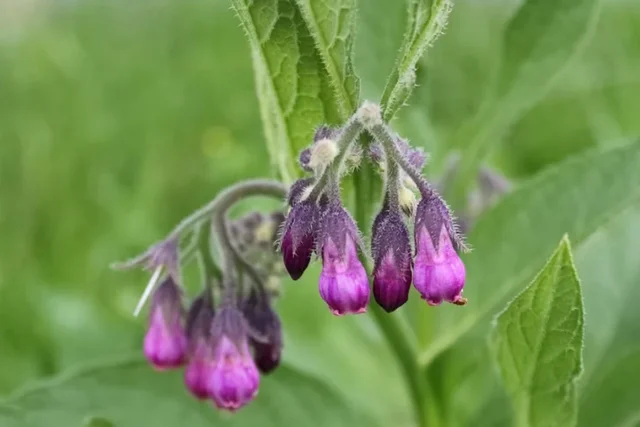
Its deep, bell‑shaped blooms suit long‑tongued bees, and you’ll often see early solitary bees visiting on mild days. We’ll show you how to grow it, how to make a simple comfrey feed, and how to pair it with other wildflowers, as well as dandelions, red dead‑nettle and cherry blossom, for an April buffet.
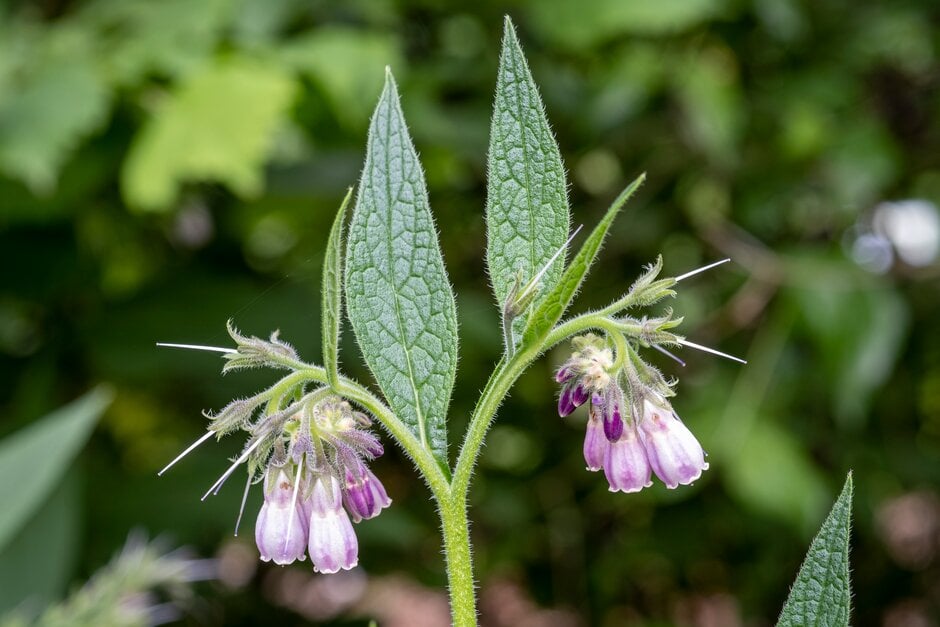
In addition, alongside the UK comfrey, Symphytum officinale, with blooms in shades of purple, pink or cream, there are a number of further species and cultivars that bring different strengths to the garden – so there’s a comfrey for every gardener.
What makes comfrey great for wildlife?
Comfrey’s spring blooms support nest‑building bees and help hoverflies and butterflies refuel after winter. The bell-shaped tubular flowers are ideal for long‑tongued bees such as the hairy‑footed flower bee.
Bumblebees also feed on the flowers, sometimes stealing nectar via small holes they chew in the side of the flower. This is a technique shorter-tongued bees use to access nectar in tubular flowers such as comfrey and salvias, though this shortcut means the flower misses out on , so it’s known as ‘nectar robbing’.
About the hairy-footed flower bee
Hairy-footed flower bees are among the first solitary bees to emerge in spring. Males are gingery, with a pale face and long black hairs on their feet. Females look like all-black bumblebees with orange hairs on the hind legs. Look out for their quick, darting flight around comfrey, dead‑nettles and pulmonaria by sunny walls and banks.
Later in spring, you may find bristly black and yellow caterpillars on the leaves – these are scarlet tiger moth larvae, which feed on comfrey before transforming into stunning day‑flying adults appear.
Scarlet tiger moth
Where and how to grow comfrey
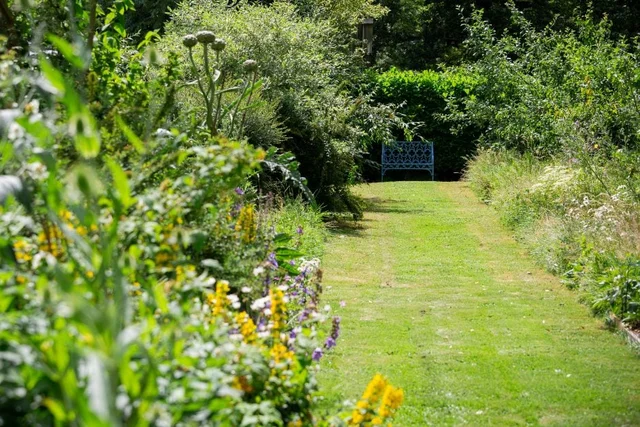
Plant comfrey in moist soil in sun or part‑shade and with homemade garden or leafmould. Water to establish; then let roots explore on their own. Allow the plants to bloom through April, then cut them back to stimulate fresh new leafy growth.
Once established, some comfreys spread readily and where they’re happy can have a mind to take over, so either choose a spot where you can let it romp away or be ready to keep it in check if the space is small.
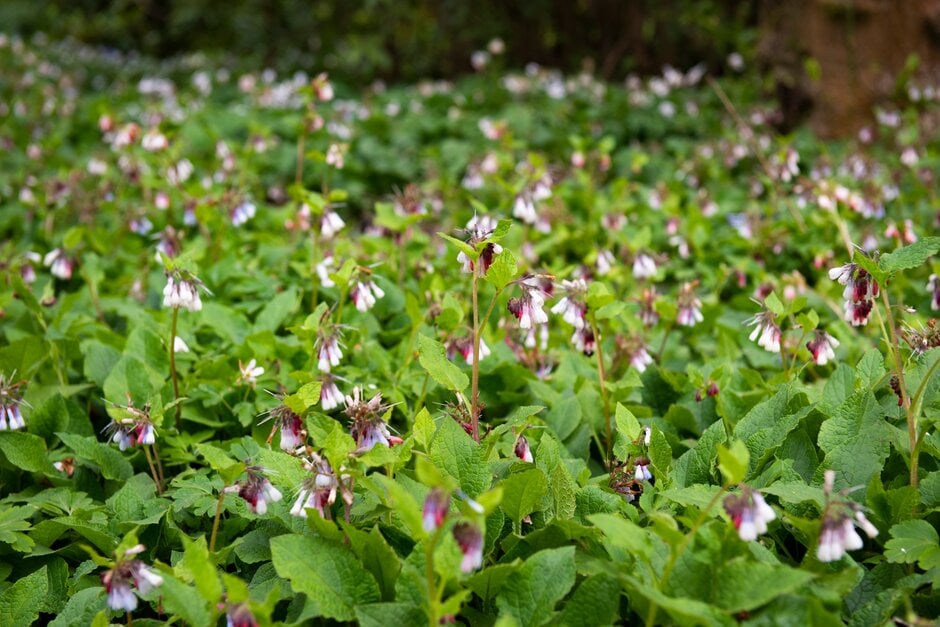
This property can be used to your advantage, though – low-growing comfreys such as Symphytum grandiflorum (creeping comfrey) make great low-maintenance groundcover for a tricky shady spot.
Symphytum grandiflorum is used as shady groundcover in a woodland area at Chatsworth, Derbyshire
For a space where you don’t want it to spread, or an allotment or veg patch, the ‘Bocking 14’ is ideal, as this is sterile so doesn’t seed around.
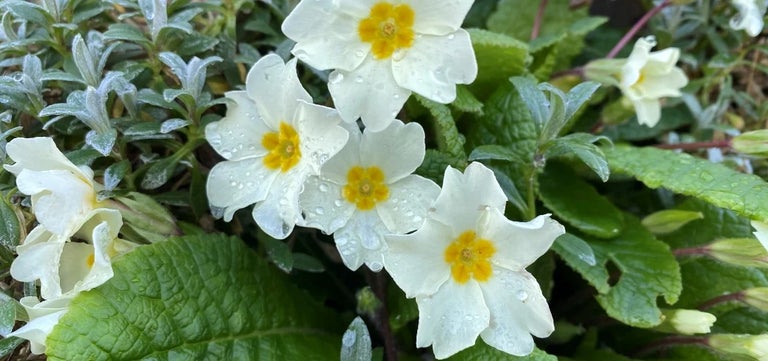
Try pairing comfrey with Pulmonaria (lungwort) in a shady spot to extend the flowering season.
Comfrey leaves can be used to make a free, natural liquid feed for all your plants. Here’s a quick way to make this sustainable feed after your comfrey has finished flowering.
Harvest – wearing gloves, cut comfrey plants back to the base to harvest the leaves. Remove tough stems and any flowers.
Steep – pack the leaves into a lidded bucket or water butt, weigh them down with a brick, and cover with enough water to submerge them.
Wait – leave this alone for 2–4 weeks. Expect a strong-smelling dark brown liquid to form, which is why it’s best to use a lid or sealed container.
Strain and store – decant the liquid into re-used bottles to use through the season.
Dilute and use – as a guide, dilute roughly one part comfrey liquid to 10 parts water, aiming for the colour of weak tea. Fill a watering can with a rose and water onto moist soil around hungry, flowering or fruiting plants.
Top tips for feeding with comfrey
Homemade feeds are variable and usually weaker than bought fertilisers. Feed little and often rather than drenching your plants.
Focus on feeding plants in containers and crops in active growth, and avoid overfeeding established shrubs in the ground.
Find more information on making homemade feeds, and easy recipes using different plants, here.
Other top wildlife plants for April
See how many of our April Wildlife Wonders supporting cast you can also sneak into your garden:
Dandelion (Taraxacum officinale) – this often-overlooked is a lifeline for bees and pollinating flies in early spring. Leave patches of dandelions in lawns to flower before the first cut. The seedheads are protein-rich food for bullfinches, greenfinches, goldfinches, siskins and linnets.
Red dead‑nettle (Lamium purpureum) – this charming little wildflower is brilliant for establishing in lawns and provides a steady trickle of nectar and pollen in cool weather, particularly for early bees.
Wild cherry (Prunus avium) – producing a mass of blossom, these stunning native trees are a magnet for bees. Wild bees and queen bumblebees are often especially effective at cross‑pollinating them so that cherries are produced.
Plant these wildflower wins – comfrey for continuity, dandelions for abundance, dead‑nettle for cool snaps and wild cherry for breathtaking blossom – for enough early nectar to bring a buzz to your garden.
1
of
2
of
About the author – Olivia Drake
With a background in biology, Olivia is passionate about biodiversity, sustainable horticulture and the role gardening can play in conservation. She is trained as a botanical horticulturist and previously worked in public gardens around the UK and abroad.