Embrace ivy in your garden this autumn
Not just background greenery, but an autumn wildlife support system – why this overlooked wildlife wonder plant deserves a spot in your garden

Full of autumn bounty and beauty, Viburnum opulus is the winter larder birds will thank you for
By November, many plants have packed away their colour and are hunkering down for winter. Guelder rose has done the opposite. Its leaves are infused with burgundy and cerise, and trusses of bright, translucent scarlet berries hang among the magenta foliage like a winter larder waiting to be discovered.
Guelder rose, Viburnum opulus, is our Wildlife Wonder Plant of the Month for November as part of our Bringing Nature Home campaign. This British shrub packs a punch with a whole year of interest, with lacy white flowerheads in late spring and early summer, fiery autumn foliage, and clusters of bright red berries that can persist on the bare twigs well into winter.

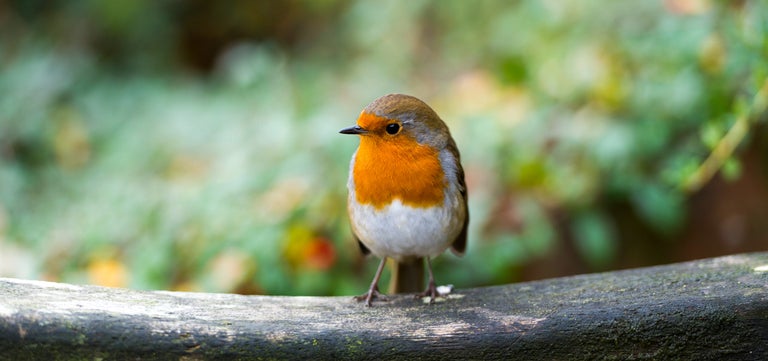
Unsurprisingly, it's those vibrant berries that make guelder rose our November Wildlife Wonder. They're tasty menu items for a wide range of birds, including blackbirds, fieldfares, mistle thrushes, redwings, bramblings, bullfinches and hawfinches, as well as blackcaps, marsh tits, jays, collared doves and garden warblers.
Beyond supplying a seasonal snack, the shrub itself adds cover to help birds safely feed and shelter, and perhaps even a spot for nesting in spring.
In May-June, the flat white flowerheads are also a perfect landing platform for short-tongued pollinators such as hoverflies to feed.
In fact, there's no part of this plant that doesn't provide, as the leaves go on to nourish viburnum beetles and caterpillars of moths such as the privet hawk moth, common quaker and yellow-barred brindle, which themselves are part of the bird menu.

Not all guelder roses are equal when it comes to their wildlife value.
In particular, there's one variety to avoid if wildlife provision is your goal: though stunning in bloom, the snowball form with round pom-pom-like flower heads, Viburnum opulus 'Roseum' , has only sterile flowers. This means that not only does it not provide for pollinators in spring, but the flowers also don't develop into autumn berries.
Of the varieties that do produce fruit, those with red berries are more attractive to birds than the yellow-berried forms.
If you have room, you can't go wrong with the straight wild species – simply Viburnum opulus . This eventually gets to around 5m tall – perfect for the back of a border or for keeping in check as part of a mixed native hedge .
If you're short on space, look for Viburnum opulus 'Compactum' . Bringing all the same wildlife benefits as its full-size counterpart and an abundance of flowers and fruit, this award-winning mini guelder rose cuts a compact figure at only 1.5m tall.
Coming in somewhere in the middle at 3–4m tall, with large berries and stunning autumn foliage colours, 'Notcutt's Variety' is another boasting an RHS Recommended: Award of Garden Merit, and features in our planting plan for hoverflies .

If growing the species Viburnum opulus or a sizeable cultivar such as 'Notcutt's Variety', you can expect a substantial shrub, so give it room. It thrives in sun or part shade, and prefers reasonably fertile soil that holds some moisture but still drains. It's a great addition to a mixed hedge or the back of a wildlife-friendly border.
Late autumn is the perfect time for planting – the soil is usually still workable, and the shrub can start to get itself established before spring and the droughts that can follow hot on spring's heels.
Other than that, it's best to hold off and let your guelder rose do its own thing. Avoid pruning off fruiting growth off in autumn, to retain as many berries as possible. When the leaves fall, let them gather beneath shrubs or in beds, where they can shelter insects and other small creatures that support a healthy ecosystem and help nourish birds.

Our November supporting cast are all aimed at bolstering guelder rose into the perfect bird buffet, offering a variety of fruits to extend and diversify the feast on offer.
Holly provides evergreen shelter as well as berries. Most hollies carry male and female flowers on separate plants, so choose a female cultivar for berries – such as 'J.C. van Tol' , 'Argentea Marginata' or 'Madame Briot' – and make sure a compatible male is growing nearby to ensure reliable fruiting. Examples of males with an RHS Recommended: Award of Garden Merit include 'Silver Queen' and 'Ovata Aurea' .
Cotoneaster conspicuus 'Decorus' is a lower, spreading evergreen shrub, useful where a large shrub or tree would be too much. Its red berries extend the display and add another food source for visiting birds.
Ideal for reliably moist soils, rowan 's clusters of berries on a small tree can attract blackbirds, thrushes and if you're lucky, winter visitors such as waxwings.

You may already have some of these plants in your garden, so see if you can add another one or two this autumn to transform your outdoor space into a planted winter larder and haven of sheltered habitat.
This is the RHS Bringing Nature Home campaign in action – seeing familiar garden plants as the foundation for a much wider web of life. You can discover all our Wildlife Wonder Plants of the Month here .