Quick Facts
Easy-to-grow shrubs of all sizes
1
Most like sun, but some are happy in shade
2
Many have fragrant flowers and colourful fruits
3
Evergreen or deciduous options
4
Smaller, scented types are ideal in patio containers
5
Evergreen species work well as flowering hedges
6


Before you get started
What are viburnums?
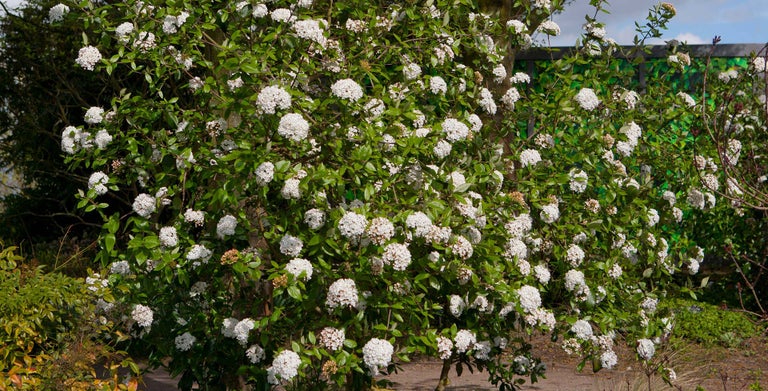
Viburnums are popular flowering and fruiting shrubs in all sizes and are either evergreen or (so they lose their leaves over winter). Most are robust, versatile and easy to grow, and there are options to suit all soil types, in sun or shade.
The small flowers, usually held in clusters, are often fragrant. They range in colour from white to cream to shades of pink, and appear at various times of year, depending on the species. Attractive berry-like fruits often follow, and some provide colourful autumn foliage too.
Viburnums offer shelter, nesting sites and food for a wide range of wildlife, including pollinating insects and birds.
Finding the right viburnums for you
There are so many excellent viburnums to choose from that it can be hard to know where to start. So to narrow down the choices, consider what you want from your plant:
Flowering season
Although many viburnum flower in spring and early summer, some are noted for being winter flowering and early spring flowering
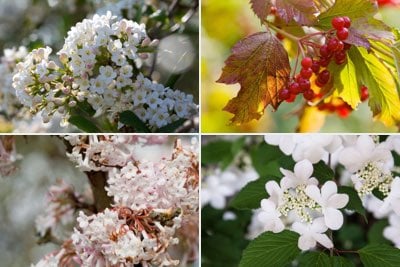
Flower types
The flowers are usually small and held in clusters. V. plicatum cultivars offer particularly showy flowerheads, either flat-topped, like lacecap hydrangeas, or rounded like snowballs
Scent
Many viburnums offer fragrant blooms, including V. farreri and V. × bodnantense cultivars
Fruits
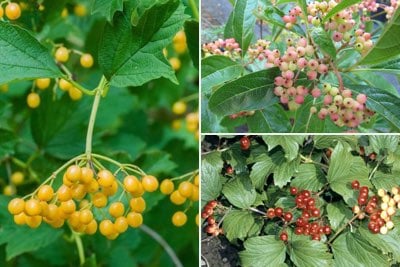
If you grow two or more of the same species (to ensure cross- ), many viburnums will produce clusters of ornamental berry-like fruits in autumn. The choice of colours includes red, pink, black and blue. These are often a valuable food source for birds in winter.
Evergreen
Some viburnums keep their leaves all year round, providing valuable structure and screening.
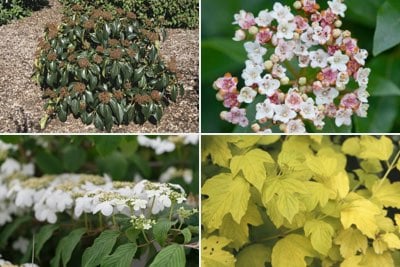
Deciduous
Many viburnums lose their leaves over winter, and some offer vibrant autumn foliage beforehand.
Hedges or ground cover
Evergreens such as V. tinus 'Eve Price' make excellent dense, flowering hedges, 1.5–1.8m (5–6ft) high, whileV. davidii is ideal as dense ground cover at 90cm (3ft) tall.
There are 25 Viburnum species and cultivars with an RHS Award of Garden Merit, which shows they performed well in RHS trials, so are reliable choices.
To browse photos and descriptions of viburnums, go to RHS Find a Plant. You can search by ultimate size, flowering time, growing conditions, RHS Award of Garden Merit and more, to help narrow down your choices.
To see and compare lots of viburnums in a garden setting, visit RHS Garden Hyde Hall, which holds the National Collection of Viburnum.
Always check plant labels or descriptions before buying, to make sure you have enough space for the plant’s eventual size.
Top tip
The snowy-white spring flowers and glossy red fruits of Viburnum opulus not only bring colour to the garden, they can also be used for indoor displays too.
How and what to buy
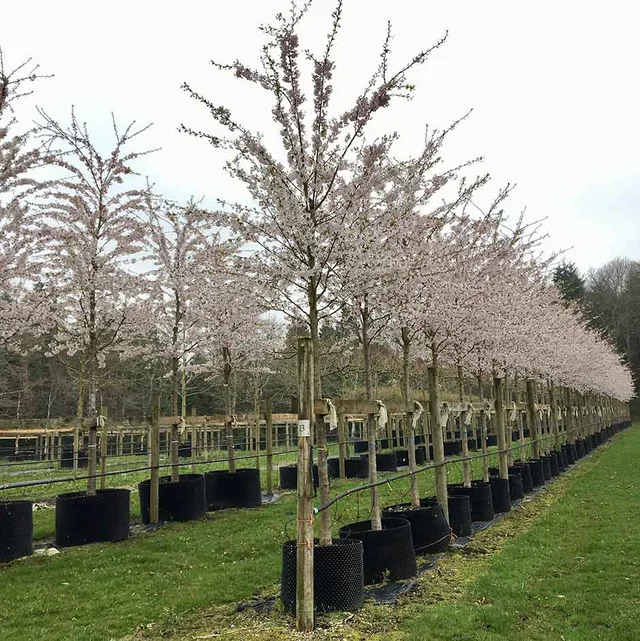
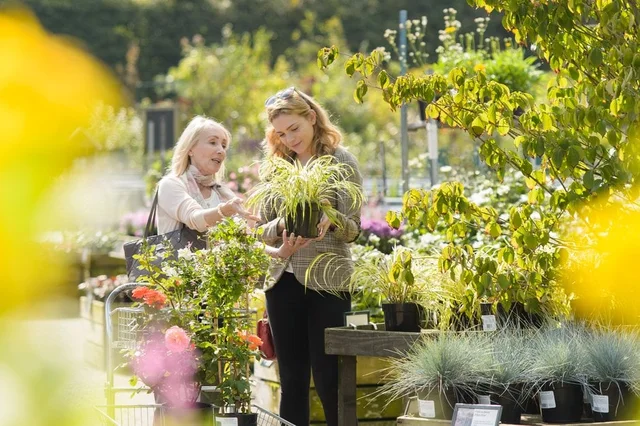
Viburnums are widely available all year round in garden centres, nurseries and online by mail order. They are usually sold in large containers, 2 litres and upwards, for immediate planting.
Use RHS Find a Plant to track down stockists of specific Viburnum species and cultivars.
Planting
When to plant
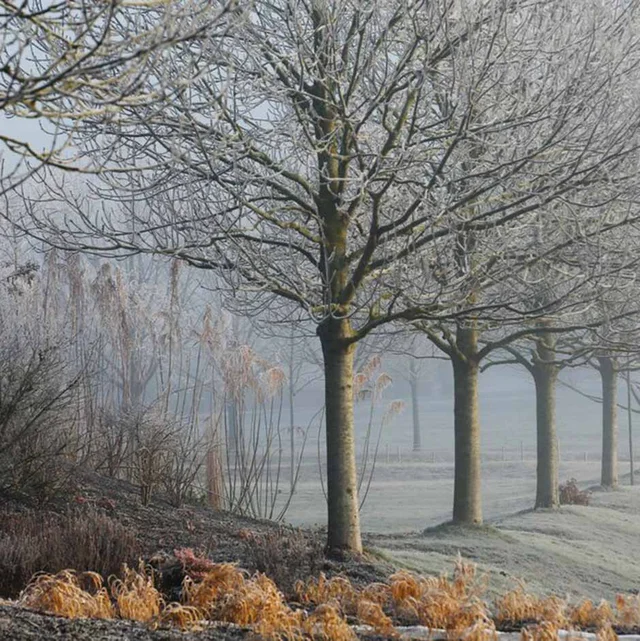
- viburnums, which lose their leaves over winter, should be planted from autumn to early spring, as long as the ground isn't very wet or frozen. This gives them plenty of time to settle in before any hot, dry summer weather
- Evergreens, which keep their leaves all year, are best planted in early spring or autumn
Viburnums can also be planted at other times, but try to avoid hot or dry spells, as they may struggle to establish. Take particular care to water regularly.
Where to plant
- Most viburnums like an open, sunny site
- Some species, such as Viburnum davidii, V. rhytidophyllum and V. × bodnantense, are also happy in shadier positions
How to plant
Planting a shrub is quick and easy, but worth doing carefully to ensure it settles in well and thrives for years to come.
Follow our guides for step-by-step advice:
Ongoing Care
Watering
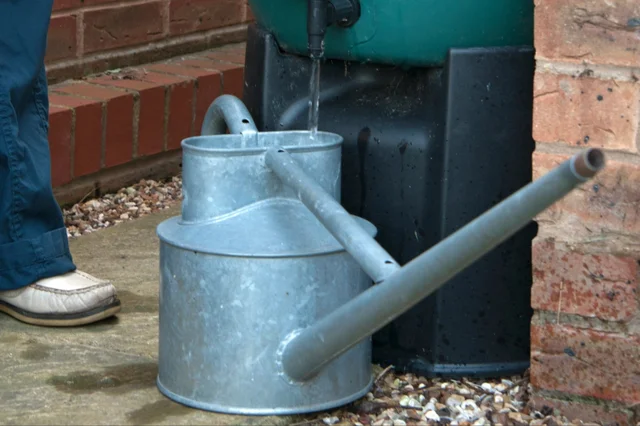
You should water newly planted viburnums as needed for their first year or two, especially in dry periods.
Even once established, shallow-rooted viburnums, especially many summer-flowering species, may need watering during summer if the soil dries out.
Evergreen viburnums are usually more drought tolerant and don’t generally need additional watering once established.
Feeding and mulching
Viburnums need little or no regular feeding in most garden soils. Annual mulching should be sufficient.
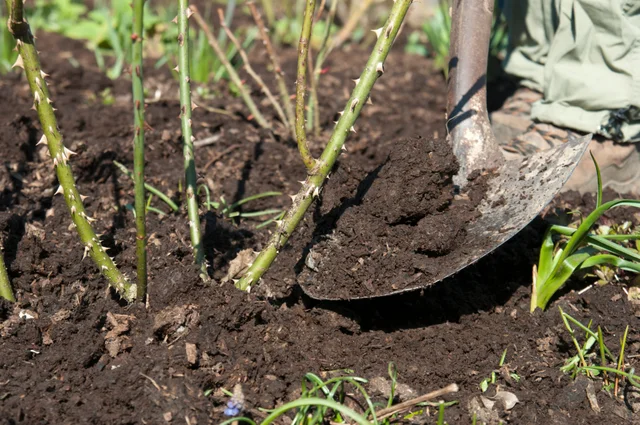
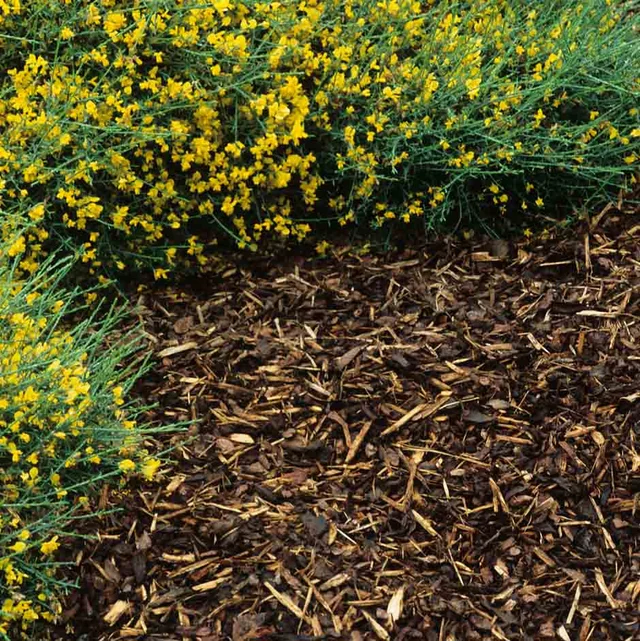
In early spring, apply a – a 5cm (2in) layer of bulky organic matter such as home-made compost or well-rotted manure. Leave a mulch-free circle immediately around the base of the plant to prevent rotting.
Pruning and Training
Pruning
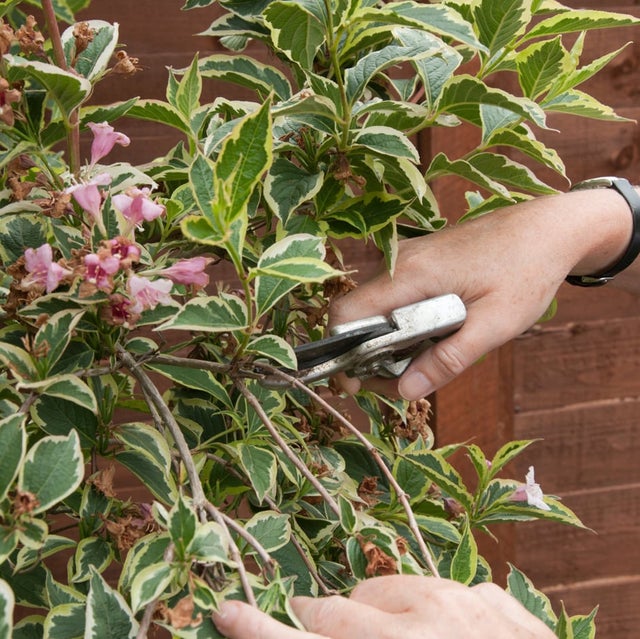
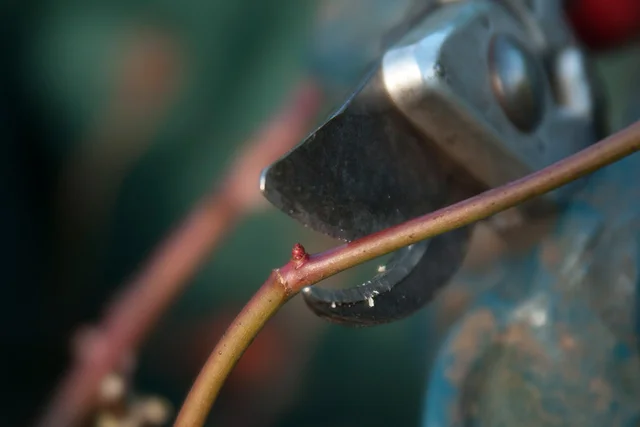
Many viburnums require little or no pruning, although most can be pruned if they outgrow their space. A few are best pruned annually to keep them well shaped and flowering strongly.
- Little or no pruning – Viburnum carlesii, V. ×carlcephalum, V. ×juddii, V. plicatum
- Little or no pruning needed, but they can be hard pruned to regenerate them – V. opulus, V. × burkwoodii, V. davidii
- Prune annually after flowering – V. × bodnantense and V. farreri, removing up to a third of the old wood at the base; V. tinus and V. rhytidophyllum, to control height and shape

Top tip
If pruning in spring or early summer, always check the shrub for active birds' nests before you start, and delay pruning if you find any.
Propagating
Most viburnums can be grown from , which can be taken at various times of year.
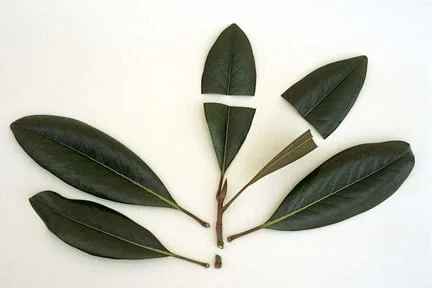
Semi-ripe cuttings
- Take between mid-summer and autumn
- Place cuttings in a to root
- Suitable for: Viburnum tinus, V. davidii,V. rhytidophyllum, V. × burkwoodii, V. opulus
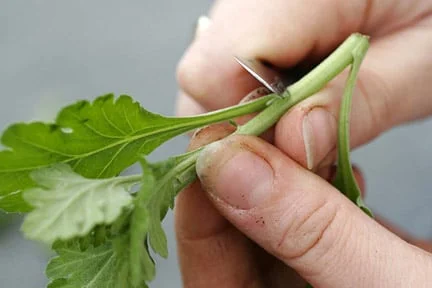
Softwood cuttings
- Take between late spring and mid-summer. For V. × carlcephalum and V. carlesii take early in the season
- Dip cuttings in rooting compound and keep warm and humid, ideally in a heated propagator
- Suitable for viburnums: V. × bodnantense,V. × burkwoodii,V. farreri, V. ×juddii,V. opulus, V. plicatum
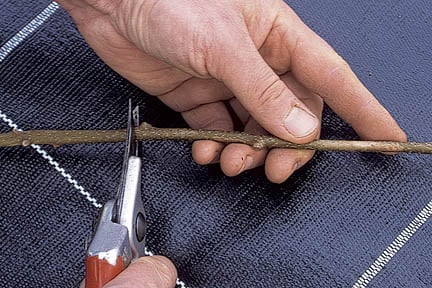
Hardwood cuttings
- Take from late autumn to winter, after the leaves have fallen
- Cutting should be 10–15cm (4–6in) long, and pencil thickness
- Suitable for deciduous viburnums: V. × bodnantense,V. farreri, V. opulus
Problems
Pests and diseases
Viburnums are generally robust and vigorous shrubs, however there are a few specific pests that may attack certain species:
- Viburnum beetle – V. tinusand V. opulus
- Viburnum scale and Viburnum whitefly – V. tinus
- Viburnum aphids – V. opulus and V. carlesii
All viburnums are susceptible to honey fungus and fungal leaf spot.
Growing conditions
- Drought conditions – can cause problems in summer for many shallow-rooted viburnums, especially the summer-flowering species. Water them regularly while the ground is dry
- Prolonged winter wet and cold – V. × bodnantense flowers in winter and the delicate blooms can be damaged by adverse weather. In prolonged wet spells, flowers may turn brown and rot, and harsh frost may also turn them brown. Plants usually produce more blooms, and you can pick off affected flowers to improve the appearance if you wish
More help
If you are a member of the RHS, you can use our online Gardening Advice Service, via MyRHS, for any gardening problems and queries.