Exotic RHS Partner Gardens to take inspiration from
Fancy a taste of subtropical garden style without the need for a passport? Then why not pack your bags and head out garden visiting to pick up some hints, tips and inspiration to get growing your own tropical paradise
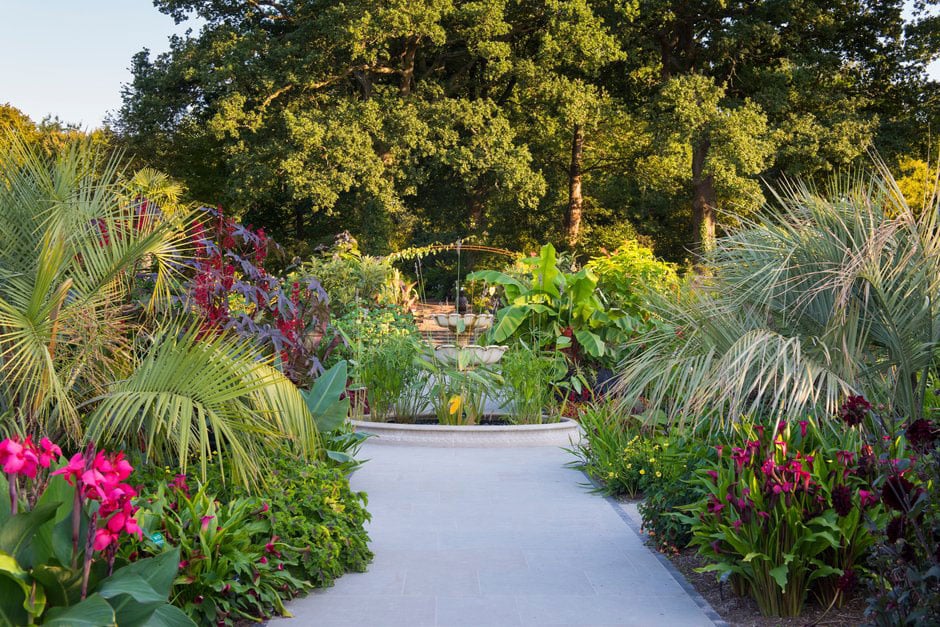
Many RHS Partner Gardens have exotic-themed areas planted with bold foliage and zingy, hot colours to create a lush, subtropical effect. Make a visit this summer to pick up ideas for your own planting schemes, or simply to enjoy a little taste of planting paradise.
The RHS Partner Gardens scheme allows RHS members free entry at selected times to more than 240 gardens in the UK and overseas. It's a great way to discover new gardens and new planting ideas wherever you are.
Abbotsbury Subtropical Gardens, Dorset
Exotic planting and the rope bridge at Abbotsbury Subtropical Gardens
The gardens at Abbotsbury Subtropical Gardens are celebrated as a world-renowned showcase of exotic and unusual planting, where rare subtropical species thrive in a rich and diverse landscape. A tapestry of bold foliage, vibrant blooms, and architectural plants creates an atmosphere that feels far removed from the English countryside that surrounds this site.
Famed for its spectacular collections, the Gardens feature sweeping groves of camellias and magnolias, alongside striking displays of rhododendrons and hydrangeas that flourish in this unique microclimate. At the heart of it all lies the charming Victorian Garden, offering contrast with its more formal elegance. Shaped by a legacy of adventurous plant hunting, the Gardens are home to species gathered from across the globe, many rarely seen elsewhere in the UK.
This international influence is especially evident in one of the country’s most significant collections of Mediterranean and subtropical plants. Winding paths lead visitors through a series of unforgettable scenes—from vivid red bridges and a swaying rope bridge to tranquil lily ponds—each framed by lush, exotic planting. Together, they create a truly immersive experience, transporting you to what feels like a distant, subtropical world.
Lullingstone Castle & The World Garden, Kent
Exotic plants in the Mexico garden area
This south-facing area reflects the garden's ethos and pioneering approach to planting, showcasing ornamental and architectural exotics that can be grown outdoors. Lullingstone Castle takes great pleasure in transporting visitors to a Mexican desert landscape. Highlights include the ‘Prickly Pear’ flowering cactus (opuntia), dasylirions, agaves and yuccas, all carefully positioned at an angle to maximise the sun’s rays. This is the only section of the garden planted in a mix of
During winter, the Mexican section of The World Garden is fully covered with a temporary polytunnel structure to protect it from the wet and wintry conditions and is removed at the end of March. While these exotic plants do require some care, they reward us with dramatic flowering and their architectural beauty. Remarkably, a Nolina hibernica (Irish bear grass) grown from seed in 2009 produced an extraordinary 12ft flower spike in 2025, with the dry summer providing the perfect conditions for it to flourish.
Sefton Park Palm House, Merseyside
Exotic planting in the Palm House
Sefton Park Palm House is part of the Liverpool Botanical Collection, which comprises over 20 different types of palms, numerous Hibiscus, bromeliads, ficus, Bougainvillea, and large Strelitzia. They include some very large specimens – many are over 20 ft tall!
When the Palm House was built in 1896, it was to house plants from all over the world. These plants had all kinds of different uses, such as for food, medicine and fibre. It was also a way for the people of Liverpool to have the opportunity to see plants from all over the world under one glass roof, at a time when the ability to travel was not so common.
Colin Hughes, Head Gardener, advises home growers to research the exotic plants you are wishing to grow and try to mimic their natural growing conditions. This will enable you to understand the plants water, soil, light and nutrient requirements and therefore achieve greater success.
Walmer Castle and Gardens, Kent
The Jungle Moat at Walmer Castle and Gardens
The Jungle Moat at Walmer Castle and Gardens has been developed since 2020. Before then, the borders around the castle were filled with shrubs and trees, which are the plant groups that historically were part of this dry moat, which has surrounded the castle since 1539 and was planted up from the early 1800s.
The climate in the moat is perfect for large foliage leaves as it is sheltered in many places. In spots where the walls create a wind funnel, evergreens have been used, such as Fatsia polycarpa, Pseudopanax ‘Chainsaw’ and Aucuba omeiensis. Sunnier and more sheltered spots are better suited to species such as Manihot grahamii, Coronilla and a large range of unusual tree dahlia. As the moat goes all around the castle, there are examples of plantings for all aspects, which can be used as inspiration for growing a jungle border at home.
The moat also holds the National Plant Collection of Tetrapanax, which currently consists of nine cultivars. It is a unique chance to see almost the entire range in one place.
Eden Project, Cornwall
Exotic planting in the rainforest biome
First opening its doors in 2001, The Eden Project transformed a former clay mine with no soil or plants into a beautiful global garden, which now sets the stage for an extraordinary range of exotic plants from across the world's rainforests. Explore massive covered Biomes and trek through the humid tropics from Southeast Asia, West Africa, Southern and Central America, to the tropical islands. This is one of the world’s largest indoor rainforests where visitors can venture up to the Rainforest Lookout, suspended high above the canopy, for breathtaking aerial views of the rainforest below. Discover the story of the Hawaiian canoe plants, stroll through the Malaysian Garden, find out more about the world-shaping rainforest crops such as coffee, chocolate and rubber, and learn about the vital role rainforests play in cooling the Earth and regulating our climate.
Other highlights include Strongylodon macrobotrys (Jade vine), which can grow up to 13m, is endangered in the wild and is even rarer to find in cultivation. They grow only in the damp riverine rainforests of the Philippines and are pollinated by bats at twilight. As well as Nepenthes spectabilis x ventricosa (Highland tropical pitcher plant), which is a semi-woody, carnivorous, climbing herb growing up to 15m tall with pitchers up to 35cm long. Inside these pitchers is where insects are digested as food, but also where water is stored, often enjoyed by monkeys or thirsty humans looking for a drink in the tropical heat.
The Lost Gardens of Heligan, Cornwall
The Heligan Jungle
Within The Lost Gardens of Heligan sits the Jungle, a steep-sided 10-acre valley garden where the conditions allow for something quite unusual in Cornwall. Mild winters and consistently high rainfall support a dense and varied range of planting, with species originating from places as far afield as the mountains of Yunnan to the wet slopes of Tasmania. The result is a garden that feels immersive and, at times, almost overwhelming, where visitors can step in and quickly forget that they are in the Cornish countryside.
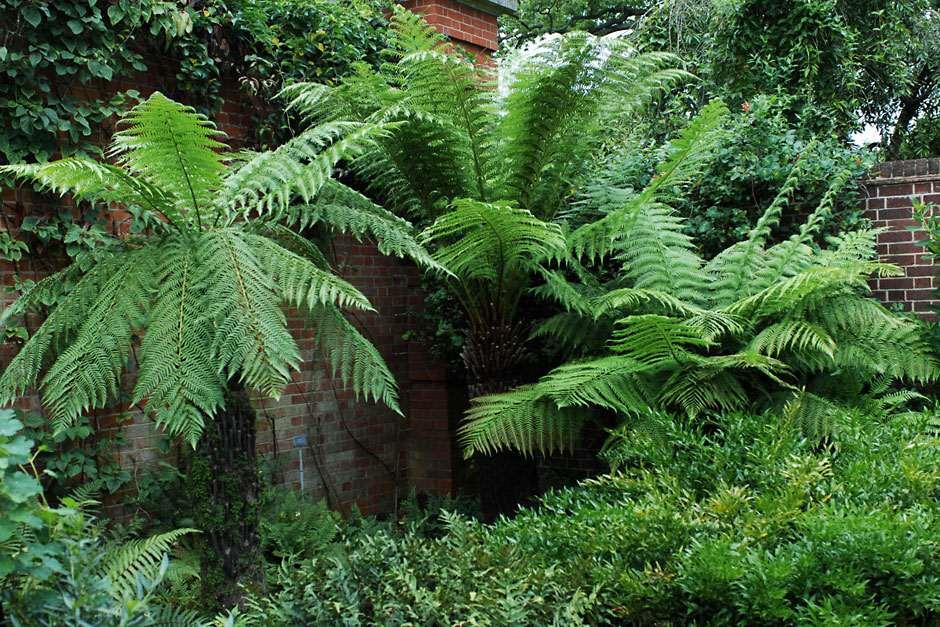
Exotic planting has been part of Heligan’s story from its early beginnings, but the person who has had the most lasting impact on the Jungle is John Claude Tremayne, better known as Jack Tremayne, the last squire of Heligan. His involvement with these plantings began in the 1880s, with introductions such as Chimonobambusa quadrangularis, and continued into the early 20th century with plants sourced from the nursery of Treseder’s, including Dicksonia antarctica and Trachycarpus fortunei. These early introductions laid the groundwork for the character of the Jungle today.
During the 1990s, when Heligan underwent one of the largest garden restorations of its time, the Jungle was gradually brought back after nearly a century of neglect. Rather than redesigning the space, the decision was made to continue in the spirit of Jack Tremayne and retain this exotic style of planting. Texture is a key consideration throughout, with contrasting foliage doing much of the work, while flowers act more as a seasonal bonus.
Aberglasney Gardens, Carmarthenshire
Stephanotis floribunda (Gloria superba)
Tucked into the hills between two castles above the Tywi Valley, Aberglasney Gardens spans ten acres and showcases 20 contrasting garden styles, including the only remaining Elizabethan cloister garden of its kind in the UK. It is here that you will find the Ninfarium. Completed in 2005, this remarkable garden is home to an extensive collection of sub‑tropical and exotic species. A contemporary glass atrium has been constructed over the crumbling central chambers of the former mansion, creating a dramatic and light‑filled growing environment.
Highlights of the planting include Gloriosa superba (climbing lily), Phalaenopsis orchids, Aristolochia gigantea (Dutchman’s pipe), Magnolia champaca (yellow jade orchid tree), fragrant Stephanotis floribunda (Madagascar jasmine), and Musa coccinea (scarlet banana). In 2024, this space saw some big changes, with the removal of a large amount of degraded growing substrate and the installation of two custom raised beds, which are now home to two majestic tree ferns.
This award‑winning garden takes inspiration from the renowned Gardens of Ninfa at the foot of the Lepini Mountains, south of Rome, where the remains of a medieval village have been creatively transformed through planting. The Ninfa gardens were developed by the Caetani family, notable patrons of the Welsh poet Dylan Thomas.
Please check the gardens’ websites before you visit, as times and access may change.